Balancing work, home responsibilities, commuting and personal time can make it difficult to set aside time for movement. A short yoga practice can be one way to pause, move gently and pay attention to how your body feels.
You do not need a full class or a complicated routine to begin. Some movements can be adapted for a chair or a short work break. Other poses, such as Boat Pose or Plough Pose, are better suited to a mat and may require more preparation.
This guide includes practical yoga poses, two gentle breathing practices and a short routine. Choose the options that fit your day, experience and body.
How Yoga May Fit Into a Busy Routine
Yoga combines movement with attention to breathing and body awareness. Some people use it as a way to take a break from daily tasks, while others include it in a regular exercise routine.
The experience varies. Yoga does not guarantee relief from stress, pain or a health condition, and it does not replace medical care. If a pose causes pain or discomfort, skip it or ask a qualified yoga teacher about a suitable modification.
You can practise at home, in a quiet space at work or in a yoga class. Choose a version that does not require you to rush or force a stretch.
Yoga Poses for Work Breaks
These chair and standing options can be done in regular clothing. Use a stable chair without wheels, and make sure you have enough space to move.
Seated Cat-Cow
This gentle movement takes the spine through comfortable rounding and extension.
- Sit toward the front of a stable chair with your feet flat on the floor.
- Rest your hands on your thighs.
- As you breathe in, gently lift your chest and look slightly forward.
- As you breathe out, round your upper back and let your chin move slightly toward your chest.
- Continue slowly for a few comfortable rounds.
Keep your movement within an easy range. Do not force your neck or lower back.
Seated Chest Opener
This movement offers a gentle change of position for the chest and shoulders.
- Sit upright with both feet grounded.
- Let your shoulders soften away from your ears.
- Place your hands on your hips or rest them beside you.
- Gently draw your shoulders back and lift your chest without arching your lower back.
- Breathe naturally, then return to a comfortable neutral position.
You can repeat this a few times. Stop if it causes pain or tingling.
Seated Side Stretch
- Sit with both feet flat on the floor.
- Rest your left hand on your thigh.
- Raise your right arm only as high as feels comfortable.
- Lean gently to the left without twisting or lifting your hips from the chair.
- Take a few natural breaths, return to the centre and switch sides.
Keep both sitting bones supported by the chair. The movement should feel easy rather than intense.
Standing Tree Pose
Tree Pose is a standing balance. Use a wall, desk or chair for support if needed.
- Stand beside a stable support and place one hand on it.
- Shift your weight onto one foot, keeping a soft bend in the standing knee.
- Place the other foot beside your ankle or against your calf.
- Avoid pressing the lifted foot directly into the side of your knee.
- Keep your gaze on a steady point and breathe naturally.
- Lower the foot and practise on the other side.
You can keep the toes of the lifted foot on the floor for extra balance. Skip the pose if balancing does not feel safe in your work environment.
Mat Poses for Home Practice
The following poses need more space and are generally better practised on a mat or another stable surface.
Boat Pose, or Navasana
Boat Pose is a seated balance pose. It is different from lying on your back and lifting your legs.
- Sit with your knees bent and your feet on the floor.
- Place your hands behind your thighs and lift your chest gently.
- Lean your torso back only a little while keeping your back long.
- If comfortable, lift one foot at a time until your shins are parallel to the floor.
- Keep your knees bent and your hands supporting your thighs, or extend your arms forward if you feel steady.
- Lower your feet and rest.
Keep your feet on the floor if your back rounds or your breathing becomes strained. Do not force your legs straight.
Child’s Pose
- Kneel on a mat and bring your big toes together.
- Separate your knees to a comfortable width.
- Move your hips back only as far as feels comfortable.
- Rest your chest on your thighs or on a cushion in front of you.
- Place your forehead on a blanket or cushion.
- Let your arms rest beside your body or extend them forward without straining.
If kneeling is uncomfortable, sit on a chair and rest your forearms on a cushion placed on your lap.
Plough Pose, or Halasana
Halasana is an advanced shoulder-supported inversion. It is not a work-break pose and is not suitable for everyone. Do not attempt it for the first time by following written instructions alone.
If you are interested in learning Halasana, practise with a qualified yoga teacher who can assess your readiness and guide you directly. Avoid forcing your feet toward the floor behind your head or putting pressure on your neck. If you are pregnant, have a neck or back condition, glaucoma, high blood pressure or another health concern, seek individual professional guidance before attempting inversions.
A gentle alternative is to lie on your back with your lower legs resting on a chair. This is a supported resting position, not a substitute for Halasana.
Gentle Breathing Practices
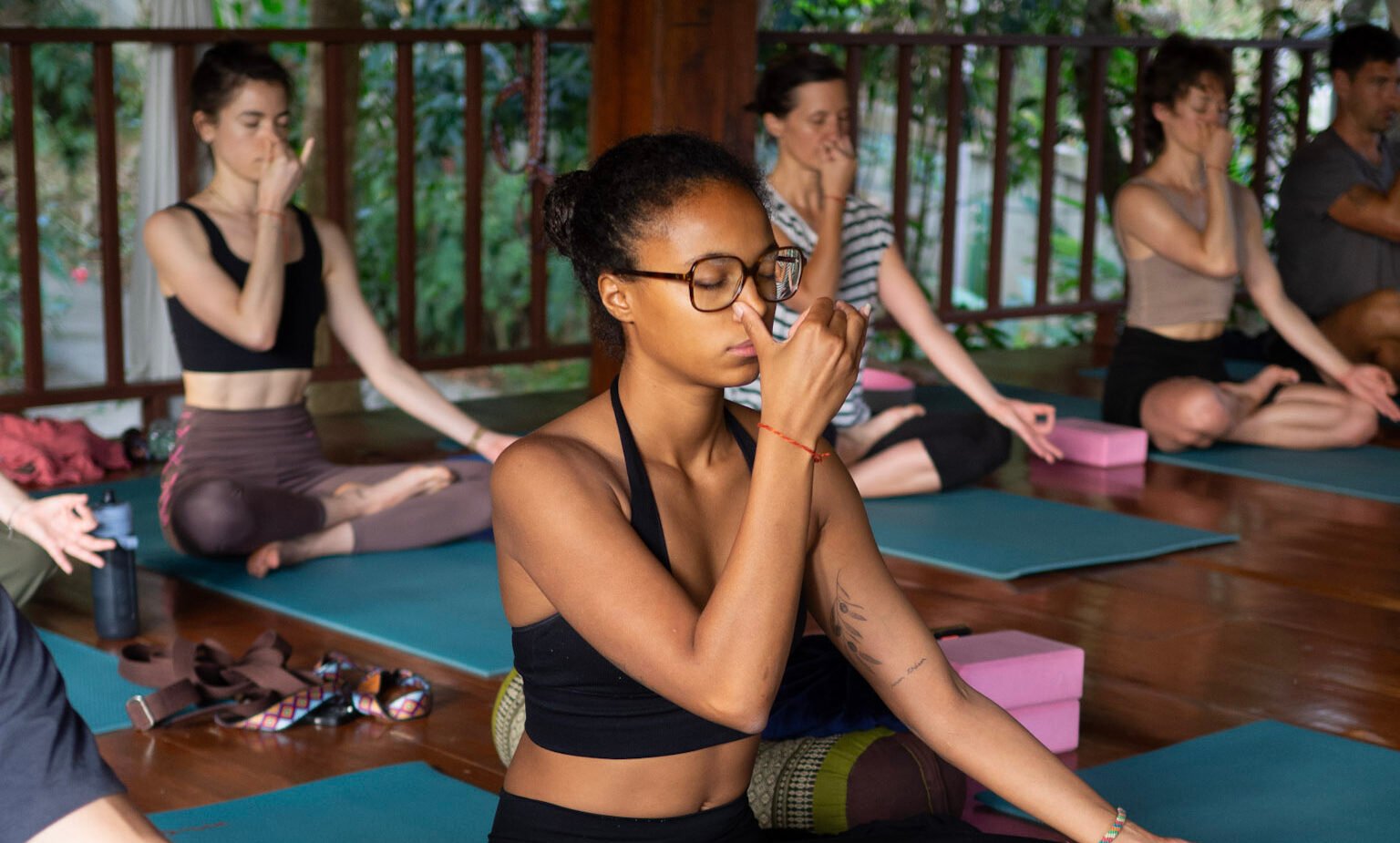
Breathing practices can be included in a short yoga break. Keep the breath comfortable. Do not hold it or force it.
Ujjayi Breath
Ujjayi is sometimes called “Victorious Breath” or “Ocean Breath.” It can create a soft sound at the back of the throat.
- Sit comfortably and breathe in and out through your nose.
- Relax your jaw and shoulders.
- As you breathe out, gently narrow the back of your throat so the breath makes a quiet whispering sound.
- If comfortable, keep the same soft quality as you breathe in.
- Continue for a few natural breaths, then release the sound.
Do not squeeze your throat or hold your breath. If it feels strained, return to ordinary breathing.
Bhramari, or Humming Bee Breath
- Sit comfortably with your shoulders relaxed.
- Breathe in gently through your nose.
- Keep your mouth closed and breathe out while making a soft humming sound.
- Repeat for a few comfortable rounds.
- Rest and breathe normally.
You do not need to make the sound loud. Stop if humming or focusing on your breath feels uncomfortable.
For more information on breathing practices, see our guide to pranayama in yoga.
A Short Routine for a Busy Day
If you have a few minutes, try this gentle sequence:
- Sit comfortably and notice your natural breathing.
- Practise Seated Cat-Cow for a few slow rounds.
- Add a Seated Chest Opener and Side Stretch on each side.
- Stand beside a stable support and try Tree Pose, or simply stand and shift your weight gently from one foot to the other.
- Finish with a few comfortable rounds of Bhramari or natural breath awareness.
You can leave out any movement that does not suit you. If you are at work, make sure there is enough space and that the movement will not make you lose balance or interfere with your tasks.
Tips for Making Yoga Easier to Maintain
- Keep the first routine short. A few comfortable movements may be easier to fit into a busy day.
- Use natural breaks. Try a short movement pause after a meeting or a period of sitting.
- Choose a time that works for you. Morning, lunchtime or after work may suit different schedules.
- Keep support nearby. A chair or wall can make standing poses more comfortable.
- Let the routine change. On a tiring day, choose gentle movement or rest.
- Avoid comparing your practice. Your movements do not need to look like someone else’s.
- Build gradually. Add more time or poses only when your current routine feels manageable.
People who spend long periods sitting may find it useful to change position and move regularly. If movement breaks are not possible at work, consider a short routine before or after your shift.
Common Mistakes to Avoid
- Treating every pose as suitable for everyone: Adapt the pose or skip it if it does not fit your body or setting.
- Practising advanced poses without instruction: Halasana needs more preparation and guidance than a seated stretch.
- Forcing Boat Pose: Keep your knees bent and feet supported until you can maintain a comfortable position.
- Holding your breath: Breathe naturally during poses and breathing practices.
- Continuing through pain: Stop if you feel sharp, unusual or worsening discomfort.
- Expecting yoga to fix every work-related problem: Movement can be one part of wellbeing, but persistent pain or health concerns may need professional attention.
Frequently Asked Questions
Can I practise yoga at my desk?
Some gentle movements, such as seated Cat-Cow and a seated side stretch, can be adapted for a stable chair. Keep your workspace clear and skip any movement that feels unsafe or disruptive.
How long should a work-break yoga routine take?
There is no fixed duration. A few comfortable movements can make a useful change of position. Take more time only if your schedule and body allow.
Is Halasana suitable for beginners?
Halasana is an advanced inversion and should not be learned from written instructions alone. Ask a qualified yoga teacher for individual guidance, and consider a supported resting alternative instead.
Can Ujjayi or Bhramari treat anxiety or depression?
These breathing practices should not be presented as treatments for anxiety or depression. Some people find gentle breathing calming, but results differ. Speak with a healthcare professional if symptoms are persistent or affect daily life.
Do I need yoga props?
Not for every pose. A stable chair, wall or folded blanket can provide support when useful. Choose props that do not slip or move unexpectedly.
Conclusion
A practical yoga routine can fit around a busy workday through gentle chair movements, standing balance and a few minutes of comfortable breathing. More advanced poses, such as Halasana, need appropriate preparation and guidance.
Choose movements that suit your body and work setting, keep the practice flexible and stop if you feel pain or unusual discomfort. A short, steady routine can be a realistic way to make room for yoga in a full schedule.