Yoga includes many postures, from gentle resting poses to challenging balances and inversions. Some familiar poses can still be confusing when their names or instructions are unclear. This guide explains ten common yoga poses with simple steps and practical modifications.
Move slowly and choose a version that feels comfortable. You do not need to reach the fullest expression of a pose. If you feel sharp pain, dizziness, numbness or unusual discomfort, stop and rest.
Before You Begin
Practise on a stable, nonslip surface with enough room to move. A yoga mat can provide cushioning, and a folded blanket, block or sturdy chair may help you feel supported.
If you are new to yoga, recovering from an injury or have a health condition, ask a qualified yoga teacher or healthcare professional about suitable modifications. Avoid attempting advanced inversions such as Headstand without proper preparation and direct instruction.
1. Camel Pose
Camel Pose, or Ustrasana, is a kneeling backbend. It can be practised with your hands on your hips or lower back. Reaching for your heels is optional.
- Kneel with your knees about hip-width apart and the tops of your feet resting on the mat.
- Place your hands on your hips or lower back.
- Gently lengthen through your spine and lift your chest.
- If comfortable, move your hands toward your heels one at a time. Keep your hips above your knees.
- Let your head remain in a comfortable position. Do not drop it back if that strains your neck.
- To come out, bring your hands back to your hips and slowly return to an upright kneeling position.
Keep the movement small if you are new to backbends. You can stay upright with your hands supporting your lower back.
2. Child’s Pose
Child’s Pose, or Balasana, is a kneeling resting position. Use a cushion or bolster if your hips, knees or forehead need support.
- Kneel on the mat and bring your big toes together.
- Separate your knees to a comfortable width.
- Slowly move your hips back toward your heels.
- Rest your chest over your thighs or on a cushion placed in front of you.
- Rest your forehead on the mat, a folded blanket or a block.
- Let your arms rest beside you or reach them forward without straining.
If kneeling is uncomfortable, sit on a chair and lean your forearms on a cushion placed on your lap. For more detailed guidance, see our Child’s Pose step-by-step guide.

3. Cat-Cow Pose
Cat-Cow is a gentle movement between spinal extension and flexion. It is usually practised on hands and knees.
- Begin on your hands and knees, with your hands under your shoulders and knees under your hips.
- As you breathe in, gently lift your chest and tailbone. Keep the movement comfortable.
- As you breathe out, press the floor away and round your upper back.
- Move slowly between the two positions for a few rounds.
- Return to a neutral spine and rest.
Avoid forcing your head or lower back. If your wrists are uncomfortable, try the movement seated with your hands on your thighs.

4. Downward-Facing Dog
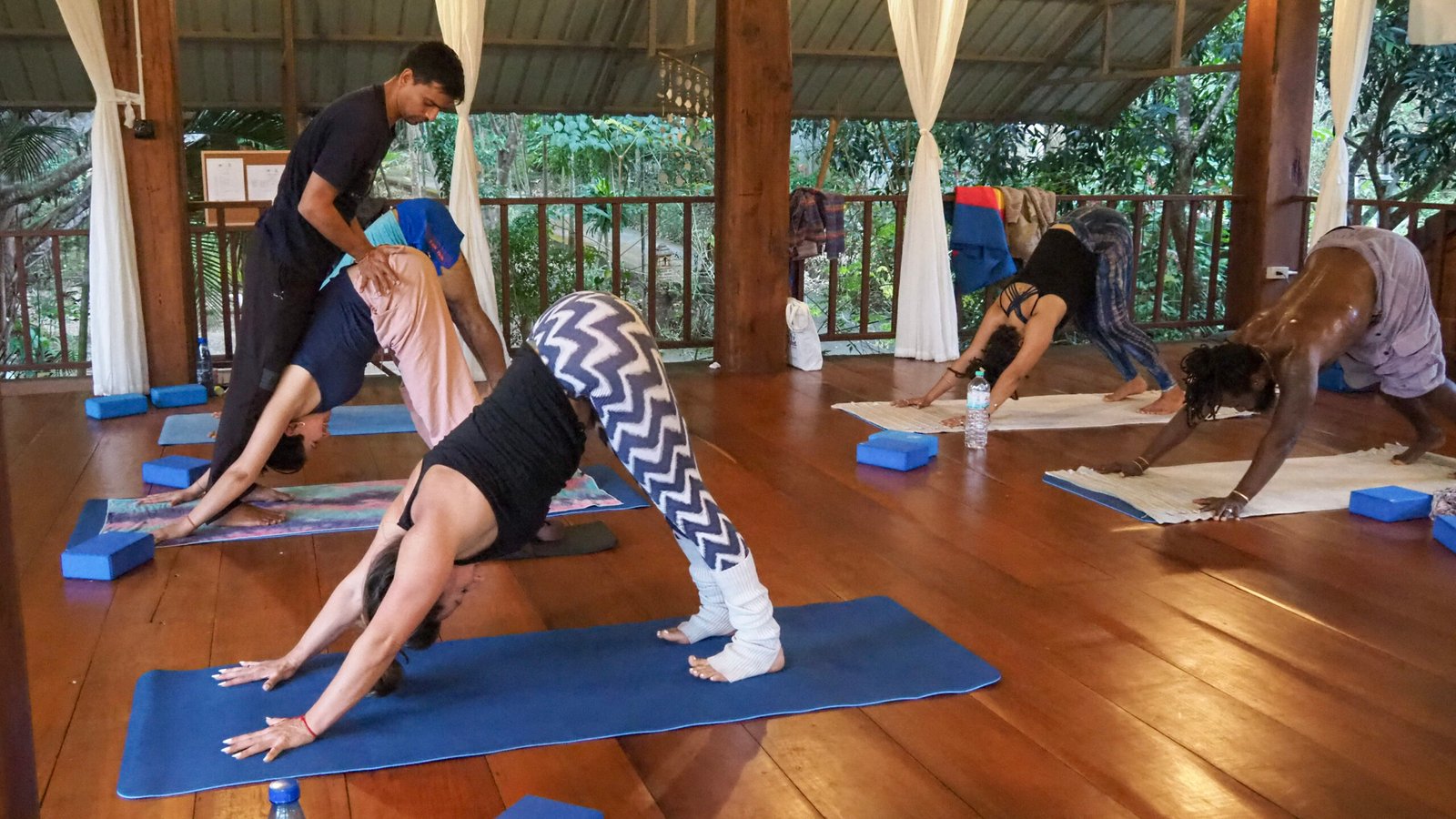
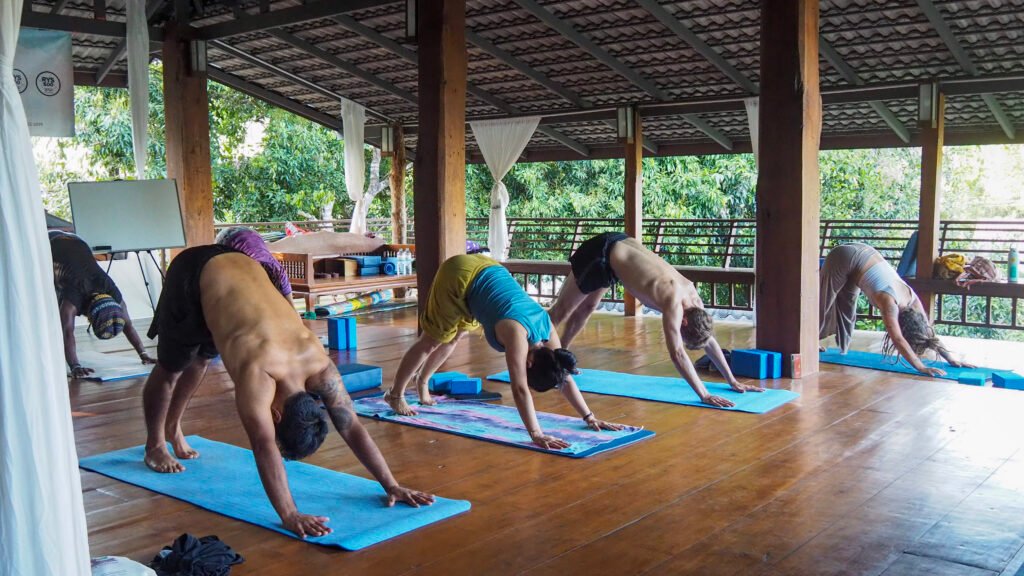
Downward-Facing Dog, or Adho Mukha Svanasana, begins on hands and knees. It is not necessary to straighten your legs or place your heels on the floor.
- Begin on your hands and knees, with your hands slightly forward of your shoulders.
- Spread your fingers and press gently through your palms.
- Tuck your toes and slowly lift your hips up and back.
- Bend your knees as needed and keep your spine long.
- Let your head rest between your upper arms without forcing your neck.
- To come out, lower your knees to the mat.
If the pose strains your wrists or shoulders, shorten the hold or try placing your hands on a sturdy chair or wall.
5. Warrior II
Warrior II, or Virabhadrasana II, is one of several Warrior variations. It is a standing pose with the feet apart and arms extended to the sides.
- Stand with your feet wide apart.
- Turn your right foot outward and angle your left foot slightly inward.
- Bend your right knee, keeping it directed toward your toes.
- Extend your arms to the sides at a comfortable height.
- Keep your torso upright and look over your right hand if your neck feels comfortable.
- Straighten your right leg and turn your feet to practise on the other side.
Use a shorter stance or bend the front knee less if that feels more stable. Keep breathing and avoid forcing the knee bend.

6. Side Plank Pose
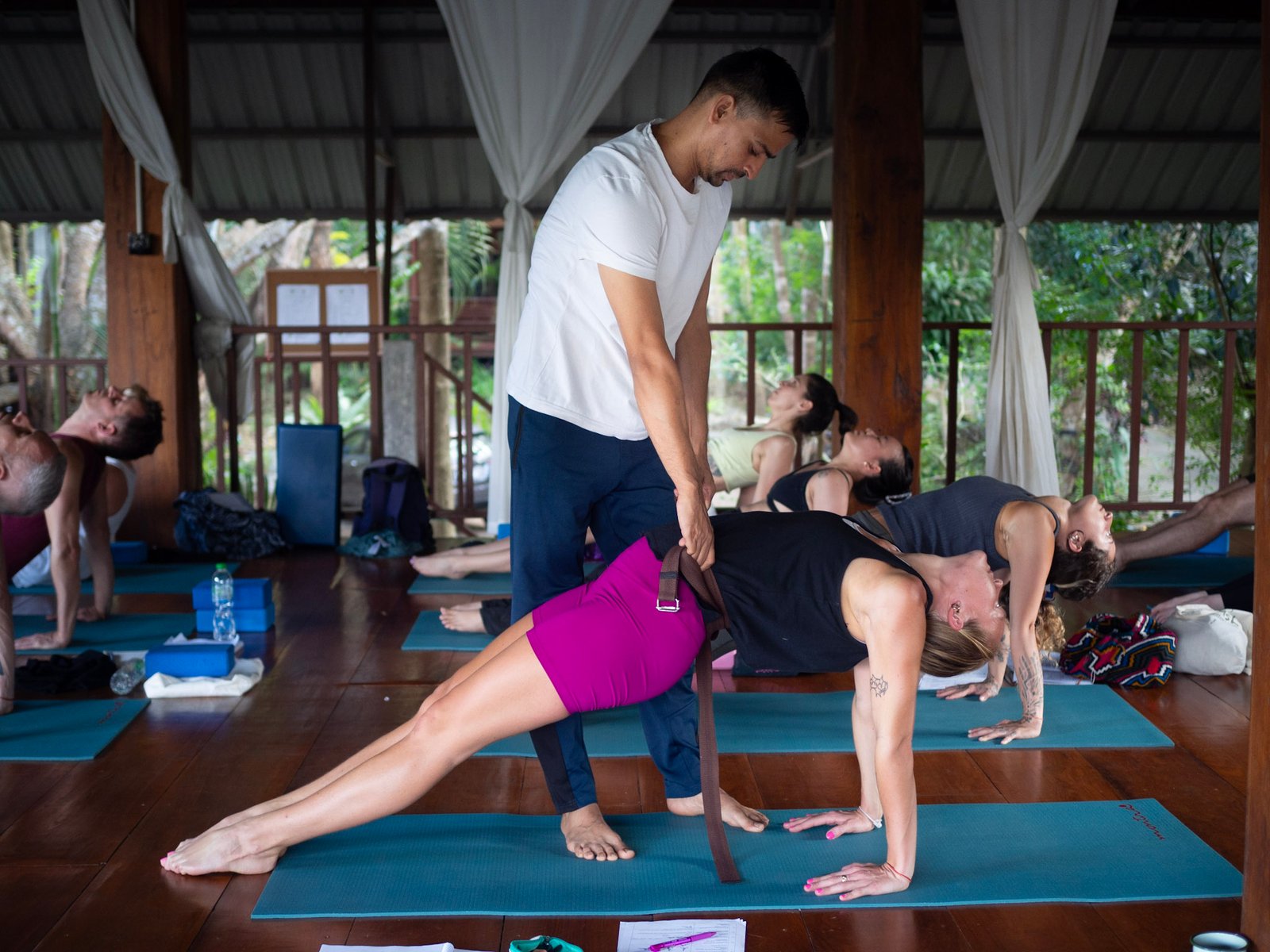
Side Plank, or Vasisthasana, is a balancing pose that supports the body on one hand and the outer edge of one foot. A lower-knee variation can make it more accessible.
- Begin in a high plank with your hands under your shoulders.
- Shift your weight into your right hand.
- Turn your body to the left and place your left foot on top of your right, or stagger your feet for more stability.
- Lift your left arm toward the ceiling only if your balance feels steady.
- Keep your body in a comfortable line and breathe naturally.
- Lower your hand and return to plank, then practise on the other side.
For a gentler version, keep your lower knee on the mat. Stop if your wrist or shoulder feels strained.
7. Upward-Facing Dog
Upward-Facing Dog, or Urdhva Mukha Svanasana, is a backbend that begins lying face down. It is different from Downward-Facing Dog and from Cobra Pose.
- Lie on your stomach with your legs extended behind you.
- Place your hands beside your lower ribs, with your elbows bent.
- Press through your hands and lift your chest.
- If comfortable, lift your thighs and knees from the mat while pressing the tops of your feet down.
- Keep your shoulders away from your ears and look forward without compressing your neck.
- Bend your elbows and lower down with control.
This pose may be too strong for some beginners. Practise Cobra Pose instead if you need a gentler backbend.

8. Cobra Pose
Cobra Pose, or Bhujangasana, is a backbend practised lying face down. Keep your pelvis and lower body on the mat and lift only as high as feels comfortable.
- Lie on your stomach with your legs extended behind you.
- Place your hands under or slightly ahead of your shoulders.
- Keep your elbows close to your sides.
- Press lightly through your hands and lift your chest a small amount.
- Keep your lower ribs and pelvis grounded. Avoid pushing hard through your arms.
- Slowly lower your chest to the mat.
You can keep your hands slightly forward and lift less if your lower back feels compressed. For more detailed guidance, see our Cobra Pose step-by-step guide.
9. Tree Pose
Tree Pose, or Vrksasana, is a standing balance. Place your lifted foot against your ankle, calf or inner thigh. Avoid pressing it directly into the side of your knee.
- Stand tall with both feet on the mat.
- Shift your weight onto your left foot and keep a soft bend in that knee.
- Place the sole of your right foot against your left ankle, calf or inner thigh.
- Bring your hands together at your chest or hold a wall or chair for support.
- Keep your gaze on a steady point and breathe naturally.
- Lower your foot and repeat on the other side.
Use a wall for balance and keep your toes on the floor if lifting the foot feels unsteady.
10. Headstand Pose
Headstand, or Sirsasana, is an advanced inversion. It places significant demands on balance, the shoulders and the neck. It is not a suitable pose to learn from written instructions alone.
If you are interested in Headstand, learn the preparation and alignment from a qualified yoga teacher who can supervise you directly. Do not place your full body weight on your head or neck, and do not attempt the pose if you are not properly prepared. Beginners can choose a non-inverted alternative, such as Legs Up the Wall, if that position is appropriate for them.
Common Yoga Practice Mistakes
- Trying to copy the final shape: Use the version that lets you breathe and stay in control.
- Forcing a stretch: A stronger sensation is not necessarily a better pose.
- Holding your breath: Ease out if you cannot breathe comfortably.
- Ignoring pain: Stop if you feel sharp, pinching or unusual pain.
- Treating all pose names as universal: Some pose names and variations differ between yoga traditions and teachers.
- Attempting advanced poses without guidance: Learn inversions and demanding arm balances with an appropriately qualified instructor.
Frequently Asked Questions
Are these yoga poses suitable for beginners?
Several poses in this guide have beginner-friendly options, including Child’s Pose, Cat-Cow, Downward-Facing Dog and Tree Pose with support. Headstand is advanced and should not be attempted without direct instruction.
Do I need to be flexible to practise yoga?
No. You can begin with comfortable movements and use modifications. Flexibility is not a requirement for starting yoga.
What is the difference between Cobra Pose and Upward-Facing Dog?
Both are backbends practised face down, but they differ in setup and how much of the body lifts. In Cobra Pose, the pelvis and lower body stay on the mat. In Upward-Facing Dog, the chest and thighs lift while the tops of the feet press into the floor.
What should I do if a pose hurts?
Stop the pose and rest. Do not push through sharp or unusual pain. A qualified yoga teacher or healthcare professional can help you decide whether a modification is appropriate.
Conclusion
Yoga poses should be practised with attention to alignment, comfort and personal ability. This guide covers ten familiar poses, including standing postures, floor poses and an advanced inversion.
Begin with the poses and variations that feel manageable. Use support when needed, keep breathing naturally and learn challenging postures from a qualified teacher.