
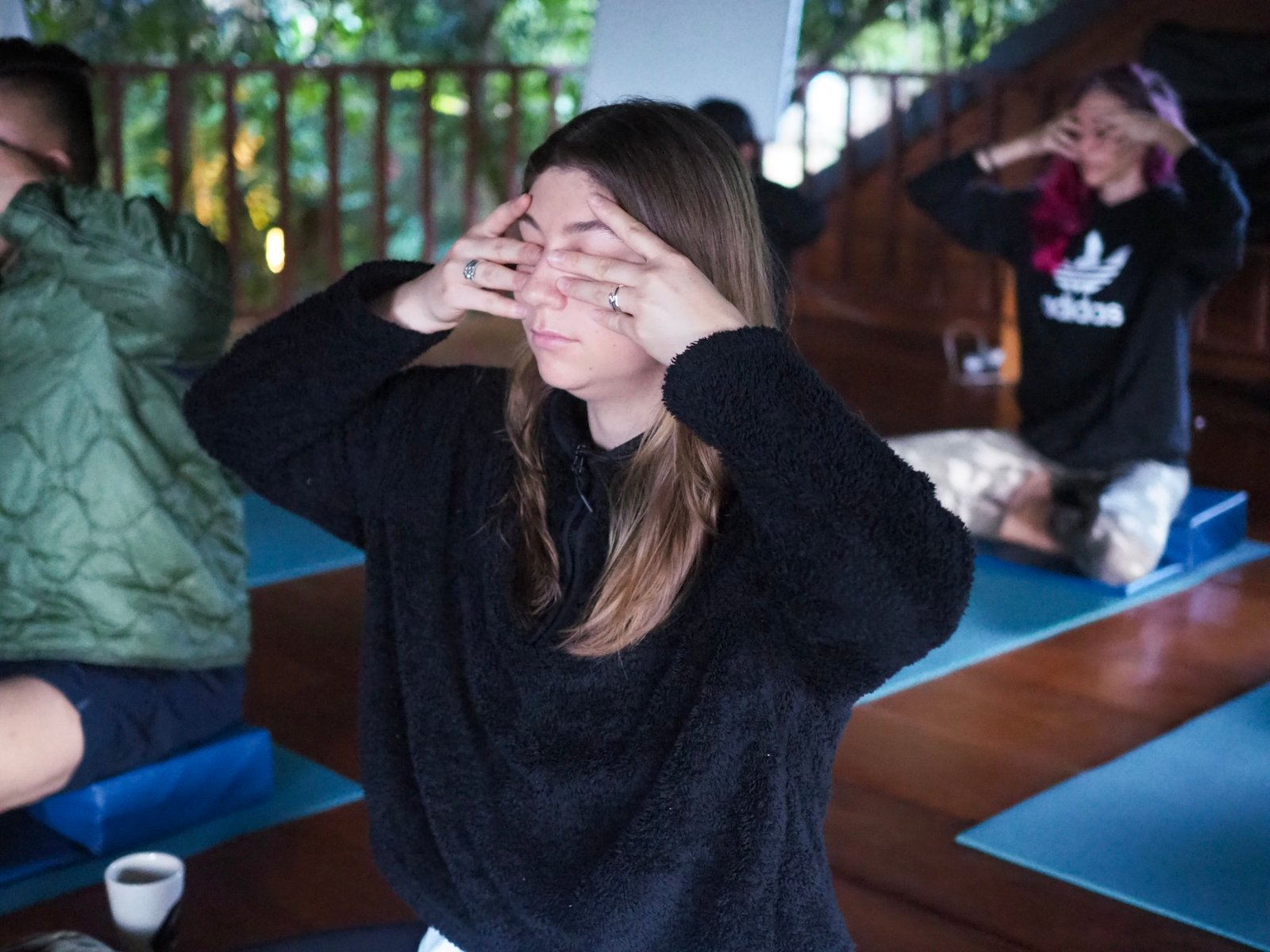
Booking your first yoga teacher training often brings a quiet wave of doubt. Am I flexible enough? Have I practiced long enough? Will everyone else be better than me?
Here is the reassuring part: you do not need to be an advanced practitioner to start. Most beginners who struggle in a training do so because of tiredness, unrealistic expectations, or poor planning, not because they cannot touch their toes.
To prepare for yoga teacher training well, you need four kinds of readiness: physical, mental, academic, and practical. That means building a steady practice, getting familiar with a few core ideas, knowing what a long training day feels like, and sorting out travel and packing early.
This guide covers all of it. You will find a straight answer on yoga experience, a simple study plan, a packing list, a 30-day timeline, questions to ask any school, and an honest look at what to expect at Yoga Samaadhi in Chiang Mai, Thailand.
To prepare for yoga teacher training, build a steady, gentle practice for four to eight weeks, learn a few basic terms, read about the Eight Limbs and basic anatomy, and sleep well. Check your school’s schedule and packing list, arrange travel and insurance early, and arrive rested, curious, and ready to learn rather than perfect.
What Does It Really Mean to Prepare for Yoga Teacher Training?
Most people picture preparation as stretching more. That is only one piece. A training asks you to move, study, sit still, listen, and practice teaching, often for weeks. Readiness covers five areas:
-
- Physical preparation. A steady practice builds the stamina to handle several sessions a day without injury.
-
- Mental and emotional preparation. Feedback, fatigue, and self-doubt are normal. Knowing that early keeps them from derailing you.
-
- Yoga knowledge and study. Light familiarity with terms and concepts helps lectures land faster.
-
- Lifestyle preparation. Sleep, food, hydration, and screen habits decide how you feel on day ten.
-
- Travel and practical preparation. Documents, insurance, packing, and climate planning remove stress before it starts.
Skipping one area usually shows up later. A flexible but sleep-deprived student struggles just as much as a rested one who has never opened a philosophy book.
Do You Need Yoga Experience Before Teacher Training?
It depends on the school. Requirements vary between programs. Some ask for a minimum period of regular practice, while others welcome complete beginners and begin with the fundamentals. Read the admission details and ask the school directly.
What is true across most good programs:
-
- Advanced flexibility is not a requirement. Teaching yoga depends on understanding, clear communication, and care for students, not on deep stretches.
-
- A basic, consistent practice beats advanced poses. Two months of gentle Hatha three times a week usually prepares you better than one intense month of advanced classes.
-
- Being physically capable is different from being ready to learn. A stiff but curious student often gets more from the course than a strong one who resists feedback.
At Yoga Samaadhi: the school’s FAQ says beginners are welcome in its 50, 100, 200, and 500-hour trainings, and its course page describes eligibility as open to all seekers. You can read more on its 200-hour yoga teacher training for beginners page.
Start Building a Consistent Yoga Practice
For many beginners, three to four sessions a week of 30 to 60 minutes is a reasonable target. If you are starting from zero, begin with two shorter sessions. The right amount depends on your health, schedule, and current activity level. This is general guidance, not medical advice. If you have an injury or health condition, speak with a doctor or qualified teacher first.
What to include in your practice:
-
- Hatha yoga: a slower, steady style for learning basic postures.
-
- Ashtanga or Vinyasa-style practice: if your course includes it, try a gentle class or a few easy sun salutations.
-
- Basic asanas: standing poses, forward folds, gentle backbends, twists, seated poses, and Savasana. Aim to feel them, not perfect them.
-
- Pranayama: five minutes of easy diaphragmatic breathing. Skip breath holding and forceful techniques unless a qualified teacher guides you.
-
- Meditation and relaxation: five minutes of sitting with your breath, and a few minutes of Savasana to finish.
-
- Body awareness: learn the difference between stretch, effort, and pain, and back off at pain.
-
- Rest and recovery: keep one or two lighter days each week.
A flexible 4 to 8 week approach
- Weeks 1 and 2: two or three easy sessions of 20 to 40 minutes, plus five minutes of gentle breathing.
- Weeks 3 and 4: three sessions a week. Add one longer class or one flowing class.
- Weeks 5 and 6: three or four sessions. Add 10 minutes of seated meditation on a few days.
- Weeks 7 and 8: hold steady rather than increasing. Protect your sleep and energy.
This is a guide, not a rule. If you already practice regularly, just keep going.
Learn the Basic Yoga Terminology Before You Arrive
You do not need to memorize Sanskrit before you arrive. A handful of words just makes the first days smoother.
| Term | Simple meaning |
|---|---|
| Asana | A physical posture. |
| Pranayama | Breathing practices. |
| Meditation (dhyana) | Practices that train steady attention. |
| Savasana | Final resting pose, lying on your back. |
| Drishti | A focal point for the gaze. |
| Bandha | A muscular “lock” used in some practices. |
| Mudra | A hand gesture used in breathing and meditation. |
| Mantra | A sound or phrase that is repeated or chanted. |
| Hatha | An umbrella term for physical yoga; often a slower, posture-focused class. |
| Vinyasa | Linking movement with breath in a flowing sequence. |
| Yoga Nidra | A guided deep-relaxation practice. |
| Alignment | How the body is positioned in a pose. |
| Sequencing | The order of poses in a class. |
| Shatkarma / Shatkriya | Traditional cleansing techniques, practiced only with guidance. |
Prepare Your Body Without Overtraining
Good physical preparation is quiet and gradual. Aim to arrive with energy left, not in the best shape of your life.
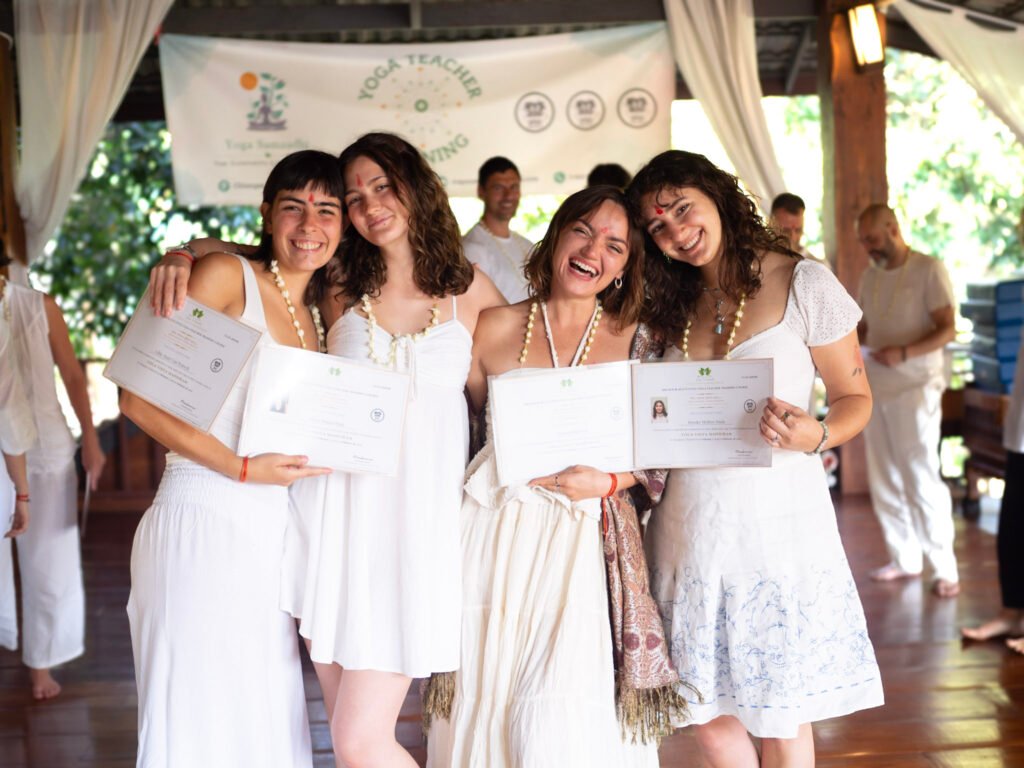
-
- Build consistency gradually. Add only a little time each week.
-
- Improve general mobility. Gentle movement for hips, shoulders, and spine helps. Daily walking counts.
-
- Develop basic strength and stability. Simple bodyweight work such as bridges, squats, and knee planks is enough.
-
- Practice sitting comfortably. Start with five to ten minutes on a cushion or folded blanket, or on a chair if the floor is hard.
-
- Prioritize sleep. If your course starts early, shift your wake-up time earlier a little each day.
-
- Stay hydrated and allow adequate recovery between harder sessions.
What to avoid:
-
- Trying to achieve advanced poses right before the course.
-
- Extreme stretching or forcing yourself deeper into a pose.
-
- Overtraining in the final weeks.
-
- Ignoring pain. Sharp pain, joint pain, or numbness is a reason to stop and seek professional advice.
-
- Suddenly doubling your practice time.
Prepare Your Mind for an Intensive Learning Experience
Training is as much mental as physical. A few attitudes help:
-
- Be open to feedback. Treat it as information, not judgment.
-
- Expect some difficult days. Fatigue builds, and a low day does not mean you are failing.
-
- Let go of perfectionism. Practice teaching feels awkward at first for almost everyone.
-
- Be willing to make mistakes, and practice patience with your body and memory.
-
- Reflect briefly. Five minutes of journaling each evening helps ideas settle.
-
- Manage expectations. A 200-hour course builds foundations, not total knowledge.
-
- Stay curious. Ask questions, including the basic ones.
Training can also challenge what you thought yoga was. Many students arrive believing yoga means poses, then meet philosophy, breath work, chanting, and silence. You do not have to love every part to learn from it. Before deciding something is not for you, ask what it is trying to teach.
What Should You Study Before Yoga Teacher Training?
The purpose of pre-course study is familiarity, not mastery. Your teachers will cover all of this properly. Arriving with a rough map simply helps you follow along.
-
- Basic yoga philosophy: a short introduction to Patanjali’s Yoga Sutras.
-
- The Eight Limbs of Yoga: yama, niyama, asana, pranayama, pratyahara, dharana, dhyana, and samadhi. Aim to name them in order and give a one-line idea of each.
-
- Basic anatomy and major muscle groups: the main joints, how they move, the spine’s natural curves, and muscles such as hamstrings, glutes, hip flexors, and core.
-
- Breath awareness: the role of the diaphragm and how the ribcage moves as you breathe.
-
- Basic yoga history: a short overview from ancient texts to modern posture-based yoga. Scholars still debate parts of it.
-
- Basic Sanskrit terminology: just the terms from the table above.
-
- Meditation fundamentals: what meditation is and is not, and one simple technique.
If your school sends a reading list, start there. Yoga Samaadhi’s FAQ says its course package includes a study manual and a text, so beginners need not buy a stack of books. The Yoga Samaadhi blog is a good place for extra reading.
Create a Simple Study Habit Before Your YTT
Short and regular beats long and rare. Try 15 to 30 minutes a day, three to five days a week, mixing reading, note-taking, journaling, reviewing terms, and reflecting on your practice.
Example weekly schedule:
| Day | Activity | Time |
|---|---|---|
| Monday | Read about the Eight Limbs; write three notes. | 20 min |
| Tuesday | Gentle Hatha practice; journal three lines. | 45 min |
| Wednesday | Anatomy: one joint or muscle group. | 20 min |
| Thursday | Practice plus easy breathing. | 40 min |
| Friday | Review five terms. | 15 min |
| Saturday | Longer practice or walk, then meditation. | 60 min |
| Sunday | Rest. Note what felt clearer. | 10 min |
Prepare for the Daily Routine of Yoga Teacher Training
Formats differ. Some trainings are part-time over months, some are online, and some are residential intensives with early mornings and full days: breath work, asana, anatomy and philosophy classes, teaching practice, meditation, self-study, and rest.
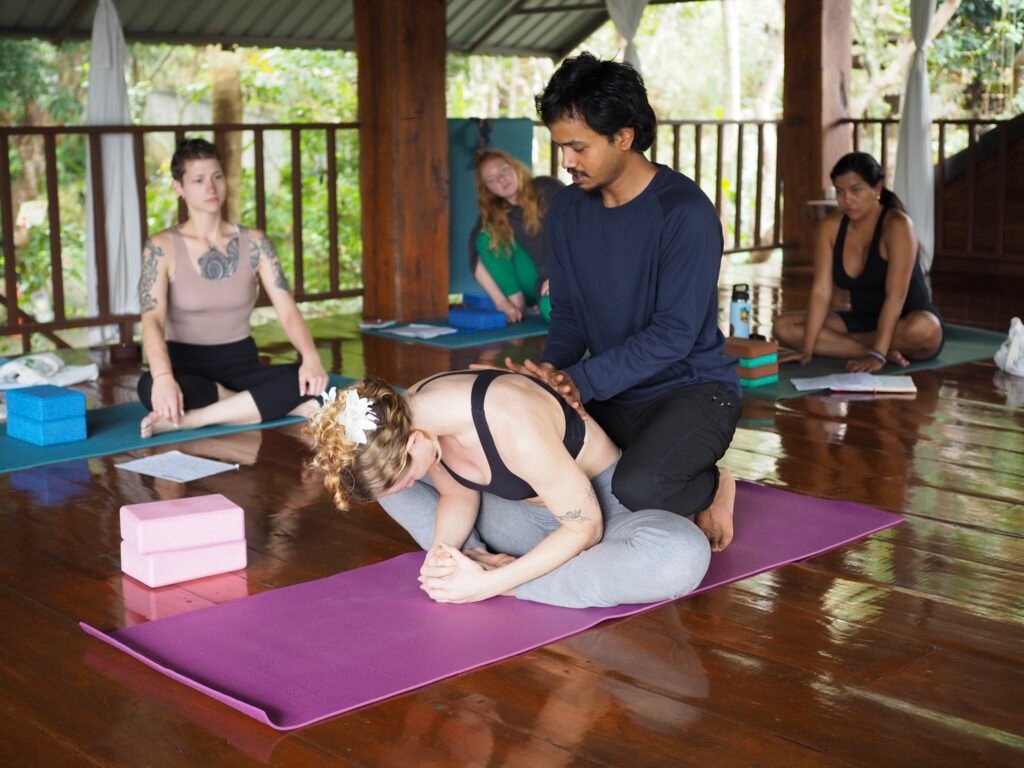
Example, Yoga Samaadhi: According to the school’s published information, its 200-hour program is a residential course of 22 days and 21 nights, with six training days each week and one rest day that includes an excursion. The tentative daily schedule runs from 6:15 am (mantra chanting) to around 9:00 pm. Mornings cover pranayama, asana, philosophy, and anatomy.
The early afternoon holds about three hours of self-study, silence practice, journaling, and rest. Evenings bring a second asana session, then Yoga Nidra and meditation. The timing may shift, and this is one school’s format, not a universal schedule.
To get ready, practice waking at the training time for a week beforehand, and plan how you will use the rest block.
What Should You Pack for Yoga Teacher Training?
Pack light, and check your school’s list first, because needs differ. The checklist below is general. School-specific notes are marked.
Yoga essentials
-
- Comfortable yoga clothes and loose clothing for meditation
-
- Yoga mat (many schools provide one, so check before you carry it across the world)
-
- Water bottle and a small towel
-
- Journal or notebook and pens
Travel essentials
-
- Passport and travel documents
-
- Insurance documents
-
- Printed and digital copies of important documents
-
- Phone, charger, and a universal adapter
-
- Personal medication
-
- Toiletries
Thailand and Chiang Mai considerations
-
- Lightweight, breathable clothing
-
- Modest clothing for temple or monastery visits (shoulders and knees covered)
-
- Walking shoes
-
- Sunscreen and mosquito repellent
-
- Rain or weather gear, depending on the season
-
- Warm layers for cooler mornings and evenings, especially from late in the year
-
- Earplugs, if you will share a room and sleep lightly
Yoga Samaadhi specifics: per its FAQ, mats and equipment are provided, along with a study manual, text, notebook, pen, and neti pot. Rooms have a fan, bedding, a towel, and a basic toiletry set. The school suggests a sweater or jacket for morning and evening classes, a thick shawl or blanket for evening relaxation, a non-revealing outfit for temple visits, walking shoes, sunscreen, mosquito repellent, and a power adapter. A white outfit for the ceremonies is optional.
Entry rules depend on your nationality and length of stay. Yoga Samaadhi’s FAQ notes that it cannot provide documents for a student visa. Check current requirements on official Thai government sources before you book flights.
Prepare for the Food, Sleep, and Lifestyle Changes
A residential training changes your daily rhythm. These habits help in the weeks before:
-
- Eat regular, balanced meals so your energy stays steady.
-
- Stay hydrated through the day.
-
- Cut back on alcohol and late nights in the final weeks.
-
- Get enough sleep and keep a consistent bedtime.
-
- Limit unnecessary screen time, especially before bed.
-
- Get used to a structured routine with set meal and class times.
No special diet is required for yoga teacher training in general. Meals depend on the school. At Yoga Samaadhi, the FAQ says meals are mostly Thai vegetarian (with milk but no eggs), vegan food is easy to arrange, and gluten-free meals are available on request. If you usually eat meat, try a few vegetarian meals beforehand. Tell any school about allergies and dietary needs well before you arrive.
What Should You Expect Emotionally During Your First YTT?
Students commonly report a mix of feelings, and the mix can change from day to day:
-
- Excitement and nervousness at the start
-
- Fatigue as the days add up
-
- Self-doubt, especially during practice teaching
-
- Growing confidence as routines become familiar
-
- Reflection on habits, goals, and assumptions
-
- Frustration when your body or memory does not cooperate
-
- A stronger sense of connection with classmates and teachers
These are common experiences, not guarantees. A yoga teacher training is an educational course, not a medical or therapeutic treatment. If you are going through a difficult period or have mental health concerns, talk with your health professional before you go, and let the school know what support you might need.
Common Mistakes to Avoid Before Yoga Teacher Training
-
- Trying to become “advanced” overnight.
-
- Overtraining.
-
- Arriving exhausted.
-
- Ignoring sleep.
-
- Not reading the course information.
-
- Packing too much. Lay everything out, then remove a fifth.
-
- Not preparing for the climate.
-
- Expecting to teach perfectly right away.
-
- Comparing yourself with other students.
-
- Trying to memorize everything beforehand.
-
- Ignoring rest days.
-
- Not asking questions. Teachers expect questions.
A 30-Day Yoga Teacher Training Preparation Plan
Use this as a flexible roadmap. Adjust it to your own timeline.
30 to 21 days before
-
- Establish a routine of about three practice sessions a week.
-
- Start basic study: 15 to 20 minutes, three times a week.
-
- Review logistics: dates, flights, entry requirements, and insurance.
20 to 14 days before
-
- Maintain your consistent practice without increasing it.
-
- Review terminology a few minutes a day.
-
- Prepare travel documents: check passport validity, make copies, and plan your airport transfer.
13 to 7 days before
-
- Organize your packing and trim it down.
-
- Reduce unnecessary commitments.
-
- Prioritize sleep and move your bedtime earlier.
6 to 1 days before
-
- Avoid overtraining. Keep practice light.
-
- Finalize documents and double-check bookings.
-
- Rest as much as you can.
-
- Prepare mentally: remember why you are going and pick one learning goal.
Arrival day and the day before
-
- Hydrate and eat proper meals.
-
- Settle in without rushing, and review the schedule.
-
- Sleep early.
-
- At Yoga Samaadhi, the FAQ says day one starts around 10:30 am with registration and an opening ceremony. Students can arrive that morning or a day early (extra charges apply).
Questions to Ask Your Yoga Teacher Training School Before You Enroll
Good schools welcome questions. Ask each school the same list and compare answers side by side:
-
- Is previous yoga experience required?
-
- What is the daily schedule?
-
- How many hours are practice, theory, and practice teaching?
-
- Which yoga styles are taught?
-
- Which subjects are included?
-
- Is accommodation included?
-
- Are meals included, and what food is served?
-
- What should I bring?
-
- What certification is provided?
-
- Is the school registered with Yoga Alliance?
-
- What are the attendance requirements?
-
- Are there assessments or exams?
-
- What happens if I need medical attention?
-
- What is the cancellation and refund policy?
-
- What is included in and excluded from the course fee?
A note on Yoga Alliance terms. A Registered Yoga School (RYS) is a school registered with Yoga Alliance. A Registered Yoga Teacher (RYT) is an individual who has completed training at an RYS and registered with Yoga Alliance. Registration is a credential, not a universal license. Whether you may teach, and what employers expect, varies by country, studio, and employer.
How to Choose the Right Yoga Teacher Training for You
Weigh these factors against your own goals:
-
- Teaching style and yoga tradition: traditional, modern, or a blend.
-
- Curriculum: how much time goes to asana, philosophy, anatomy, and teaching skills.
-
- Teacher experience: how long the teachers have taught and trained.
-
- Class size, location, duration, accommodation, and food: these shape your daily comfort and the feedback you receive.
-
- Certification: what the school offers and what it means for you.
-
- Student reviews: read several, including balanced ones.
-
- Teaching methodology: how much supervised practice teaching you will get.
-
- Personal goals: deepening your own practice, teaching professionally, or both.
The cheapest or shortest program is not automatically the best choice.
Why Chiang Mai Can Be a Meaningful Place for Yoga Teacher Training
Chiang Mai is a city in northern Thailand with a long cultural history, many temples, and mountain scenery nearby. For a training, that can mean a calmer setting than a big city, chances to see local culture on rest days, and fewer everyday distractions. A residential format keeps eating, sleeping, and studying in one place.
It is not automatically better than other destinations. Quiet, remote settings help some students concentrate and feel isolating to others, so think about which describes you.
Yoga Samaadhi is based in Chiang Mai province. The FAQ describes the venue as being in Mae Wang district, roughly 53 km south of Chiang Mai city, so expect a rural setting rather than a central city location.
Preparing for Yoga Teacher Training at Yoga Samaadhi
If you are considering Yoga Samaadhi, here is what its published information says, so you can judge whether it fits your goals:
-
- Location: Chiang Mai, Thailand.
-
- Programs: the FAQ lists 50, 100, 200, 300, and 500-hour trainings. The 300-hour course requires a completed Yoga Alliance USA certified 200-hour training.
-
- 200-hour format: an intensive residential program of 22 days and 21 nights. See the 200-hour yoga teacher training in Chiang Mai page for current details.
-
- Beginners: welcome, according to its FAQ and course page.
-
- Curriculum: Hatha and Ashtanga Vinyasa asana, pranayama, shat kriya, bandha, mudra, mantra chanting, yoga philosophy, anatomy and physiology, Yoga Nidra, meditation, and teaching methodology with a practicum. The course page also lists a final written exam.
-
- Certification: the school lists itself as a Registered Yoga School (RYS) at the 200, 300, and 500-hour levels with Yoga Alliance USA. Completing the training makes graduates eligible to apply for RYT registration. The Yoga Alliance registration fee is separate.
-
- Fee inclusions: per its course page, accommodation, meals, and weekly excursions. A non-refundable deposit secures your place; it can be kept for rescheduling if you ask at least seven days before the start date. Confirm current terms with the school.
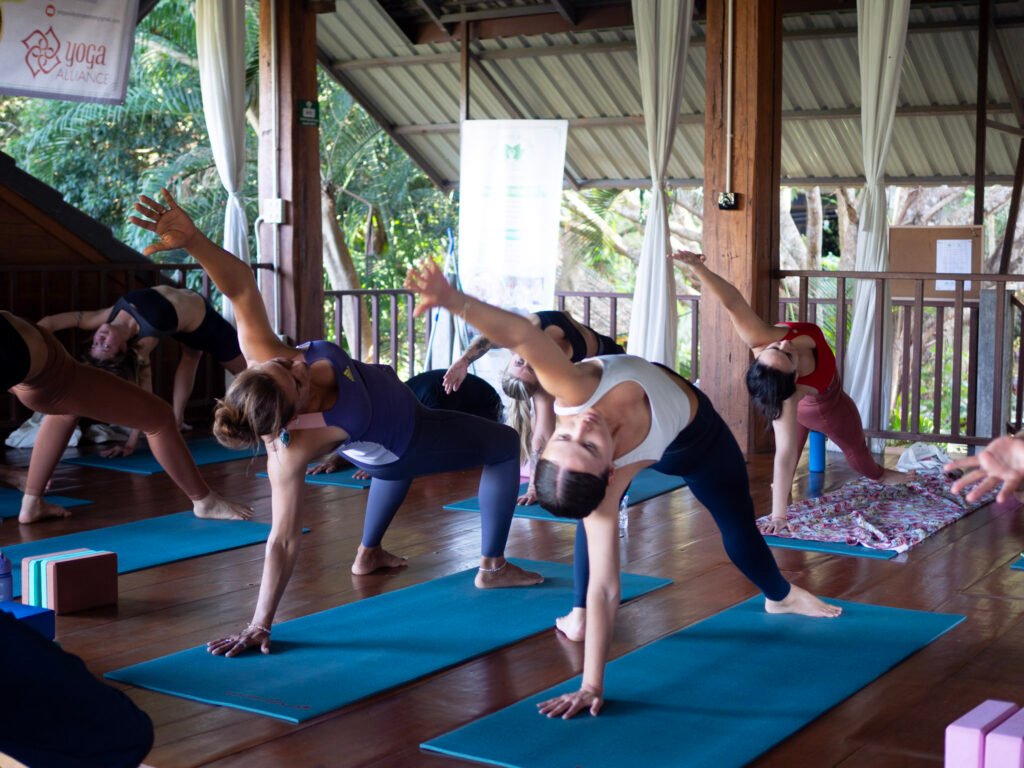
How to use this: the program leans toward traditional foundations, including philosophy, mantra, breath work, and cleansing practices. If that matches your goals, it may suit you. If you mainly want modern class design and sequencing, ask how many hours go to teaching methodology and practice teaching. Its yoga certification page is also worth reading; the school cautions that an RYT credential should be a beginning, not the finish line.
Final Checklist: Are You Ready for Your First Yoga Teacher Training?
☐ I have researched my course
☐ I understand the daily schedule
☐ I have a basic yoga practice
☐ I am not trying to become “perfect” before starting
☐ I have reviewed basic terminology
☐ I have prepared my travel documents
☐ I know what to pack
☐ I have arranged insurance if needed
☐ I am prepared for an intensive schedule
☐ I am ready to receive feedback
☐ I am willing to learn and make mistakes
☐ I have realistic expectations
What is the most important thing to bring to your first YTT?
Openness. Add consistency, curiosity, patience, and a willingness to learn. A teachable attitude carries you through the hard days better than strong poses do.
Frequently Asked Questions About Preparing for Yoga Teacher Training
How should I prepare for yoga teacher training?
Practice three or four short sessions a week, learn a few basic terms, and read simple introductions to the Eight Limbs and basic anatomy. Sleep well, and sort out travel, insurance, and packing early. Read your school’s schedule so day one holds no surprises.
How fit do I need to be for yoga teacher training?
You do not need athlete-level fitness. Comfort with regular movement, walking, and holding simple poses for a few breaths is a sensible baseline, though schools differ. With an injury or health concern, check with your doctor and the school first.
Can a beginner do yoga teacher training?
Often yes, but it depends on the school. Some require prior practice and others welcome beginners. Yoga Samaadhi’s FAQ says beginners are welcome in its 200-hour training. Ask any school what it expects.
How many weeks should I prepare for yoga teacher training?
Four to eight weeks of steady practice suits many beginners. If you already practice regularly, keep going and use the last 30 days for study, rest, and logistics.
What should I study before yoga teacher training?
Focus on the Eight Limbs, basic yoga philosophy, major joints and muscles, breath awareness, and a few Sanskrit terms. Aim for familiarity, not mastery.
What should I bring to yoga teacher training?
Comfortable clothes, a journal, a water bottle, travel documents, insurance papers, an adapter, personal medication, and layers for the climate. Check your school’s list, since some provide mats and materials.
Is yoga teacher training physically difficult?
It is usually more tiring than extreme. Long days and early starts add up, so rest matters as much as effort. Listen to your body and tell teachers about any injuries.
Do I need to be flexible to become a yoga teacher?
No. Teaching depends on understanding, clear communication, and safety, not deep stretches. Flexibility may improve with practice, but it is not a requirement.
Conclusion
You do not need to arrive as an expert. You need to arrive prepared, rested, curious, consistent, and willing to learn.
The best way to prepare for yoga teacher training is also the least dramatic: practice a few times a week, study a little, sleep well, sort out logistics early, and read your school’s information carefully. Those small habits matter more than any pose you manage to learn in the final week.
Expect some hard days, some awkward moments in practice teaching, and some ideas that challenge what you assumed about yoga. That is part of the course, not a sign you were unready.
If you are considering yoga teacher training in Thailand, take your time with the decision. Read the details of the 200-hour course at Yoga Samaadhi, check the FAQ for practical questions, and contact the school with anything the pages do not answer. Whether you choose Yoga Samaadhi or another school, pick the one that fits your goals, your learning style, and your pace.
Many 200-hour yoga teacher trainings welcome complete beginners, but not all of them do, and requirements differ from school to school. Previous yoga experience helps but usually isn’t mandatory. Advanced flexibility is not the same thing as readiness. Before enrolling, check the specific school’s prerequisites, schedule, curriculum, and attendance expectations rather than assuming one rule applies everywhere.
If you’re considering a 200 hour yoga teacher training for beginners, you’ve probably run into conflicting advice online. Some sources suggest you need years of practice first. Others claim anyone can join with no preparation at all. Neither is accurate. The real answer depends on the school, your current readiness, and what you’re hoping to get out of the training.
This guide walks through what a 200-hour YTT actually involves, whether beginners can realistically join, what to expect physically and academically, how to evaluate a program, and what happens after you finish.
At a Glance
| Factor | What Beginners Should Know |
|---|---|
| Previous experience | Not universally required; check the specific school |
| Flexibility | Not a prerequisite; it develops with practice |
| Fitness | General readiness helps; extreme fitness isn’t required |
| Age | Usually has a minimum (commonly 18), set by the school |
| Attendance | Full attendance is often required; confirm the policy |
| Curriculum | Covers asana, anatomy, philosophy, teaching skills, and more |
| Physical commitment | Training days are often long and repetitive |
| School prerequisites | Vary; always confirm directly with the program |
Can Beginners Join a 200-Hour Yoga Teacher Training?
In many cases, yes. A number of 200-hour programs are built specifically to bring students with no prior practice up to speed, teaching everything from basic poses to teaching methodology from the ground up. Other schools set a minimum level of prior practice as a prerequisite, often because the training pace assumes some baseline familiarity with the material.
Neither approach is the industry standard. It comes down to how a particular school designs its program. If you’re a complete beginner, the most reliable way to know whether a training fits you is to ask the school directly whether their curriculum is designed to support students at your level, rather than assuming acceptance either way.
Do You Need Previous Yoga Experience?
Not necessarily, but it’s worth understanding what experience actually provides. Prior practice can make some parts of training feel more familiar: certain poses, breathing techniques, or vocabulary won’t be entirely new. But practicing yoga and teaching yoga are different skills. Experienced practitioners can still have real gaps in anatomy knowledge, sequencing logic, or teaching communication, the exact areas a 200-hour program is designed to build.
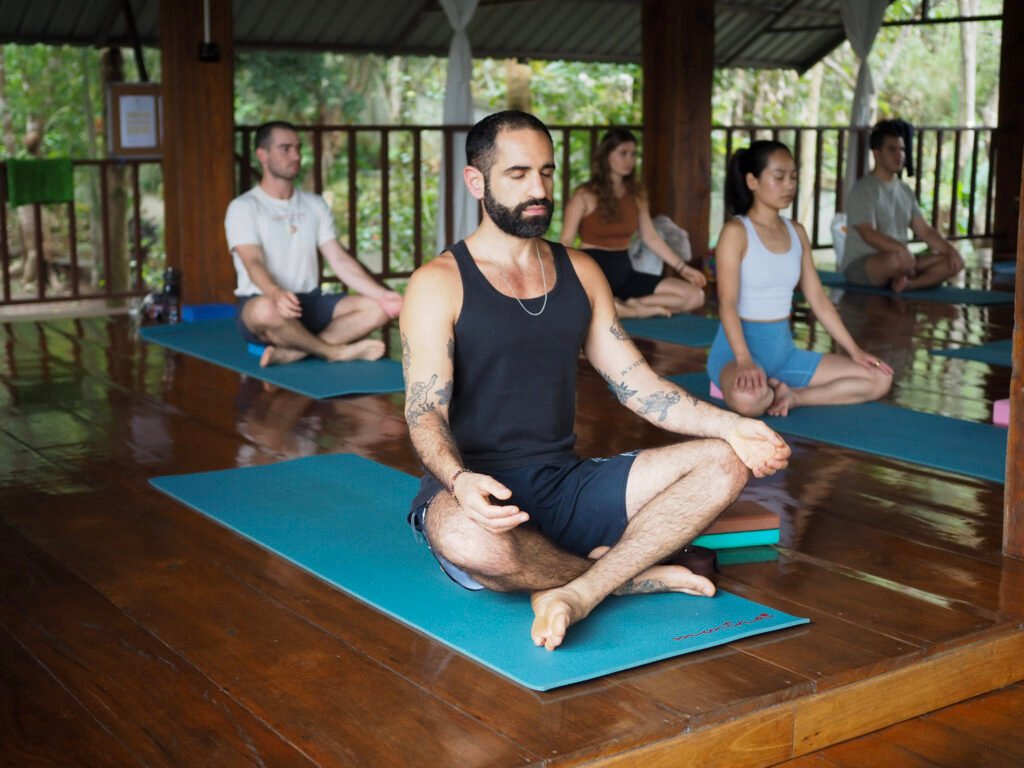
Beginners, meanwhile, get to build these foundations without first having to unlearn habits picked up outside a structured setting. What matters most is choosing a program that’s explicit about how it supports students at your experience level.
What Does “Beginner” Mean in Yoga Teacher Training?
“Beginner” isn’t one fixed category, and it’s worth being specific about which kind applies to you:
-
- Absolute beginner. Someone with little or no yoga practice before enrolling.
-
- New practitioner. Someone who has practiced occasionally, perhaps in classes or on their own, but has limited technical or anatomical knowledge.
-
- Beginner teacher. Someone who may have an established personal practice but has never taught professionally.
Each of these comes with different preparation needs. An absolute beginner may want more lead-in time to build a consistent practice. A new practitioner might focus more on filling knowledge gaps than building physical familiarity. A beginner teacher may already be comfortable on the mat but need to focus on communication and class management. Being a beginner in one of these senses doesn’t automatically mean you’re unprepared in the others.
What Is a 200-Hour Yoga Teacher Training?
A 200-hour YTT is a structured training program covering the foundational knowledge and skills needed to practice and teach yoga safely. The “200 hours” refers to the overall contact and learning structure of the course, not simply 200 hours of physical asana practice.
It’s worth understanding a few related terms, since they’re often used loosely:
-
- 200-hour YTT describes the length and general scope of the training itself.
-
- RYS 200 (Registered Yoga School) refers to a school that Yoga Alliance has recognized as meeting its standards for delivering a 200-hour training.
-
- RYT 200 (Registered Yoga Teacher) is the credential an individual can apply for through Yoga Alliance after completing training at an RYS.
Completing a 200-hour course is not automatically the same as holding an RYT 200 credential; the credential typically requires registering separately after graduation. It’s also not a universal legal license to teach in every country or setting. If credential recognition matters to you, confirm the school’s current registration status directly with the school or with Yoga Alliance, since these details can change over time.
What Will You Learn in a 200-Hour YTT?
Asana
Posture practice, alignment principles, and modifications, taught in a way that builds a working understanding of how poses function for different bodies, not just how to perform them.
Anatomy and physiology
A working understanding of muscles, joints, and movement patterns. This matters because it explains why a cue works, where a student’s limitations might come from, and how to teach more safely.
Yoga philosophy and ethics
Foundational philosophical concepts and the ethical responsibilities that come with guiding others, covered at a level useful for teaching rather than academic study for its own sake.
Pranayama and meditation
Breathing techniques and meditation approaches, along with how they might be incorporated into a class you eventually teach.
Teaching methodology
How to give clear instructions, demonstrate effectively, offer modifications, and manage a room of students with different needs.
Sequencing, alignment, and modifications
How individual poses are organized into a coherent class, and how to adapt a sequence for different bodies and ability levels.
Teaching practicum and assessment
Supervised opportunities to actually teach, with feedback from instructors and peers. Most schools also assess student competency in some form before certifying completion, whether through practical teaching evaluations, written work, or both.
For a beginner, these subjects matter together, not in isolation. Building teaching competence means understanding why a sequence works, not just memorizing one.
Is a 200-Hour YTT Physically Difficult for Beginners?
There’s no single honest answer here. Difficulty depends on several factors:
-
- The program’s daily schedule and number of practice sessions
-
- The yoga style being taught (a gentle hatha-based program differs from a vinyasa-intensive one)
-
- Whether the format is residential, part-time, or online
-
- Your current conditioning and movement background
-
- How well you manage recovery and sleep during training
Beginners commonly experience muscle soreness, fatigue, and the mental demands of sustained concentration and study, on top of the physical practice itself. None of this means beginners can’t manage a 200-hour program. It means it’s genuinely demanding and worth preparing for.
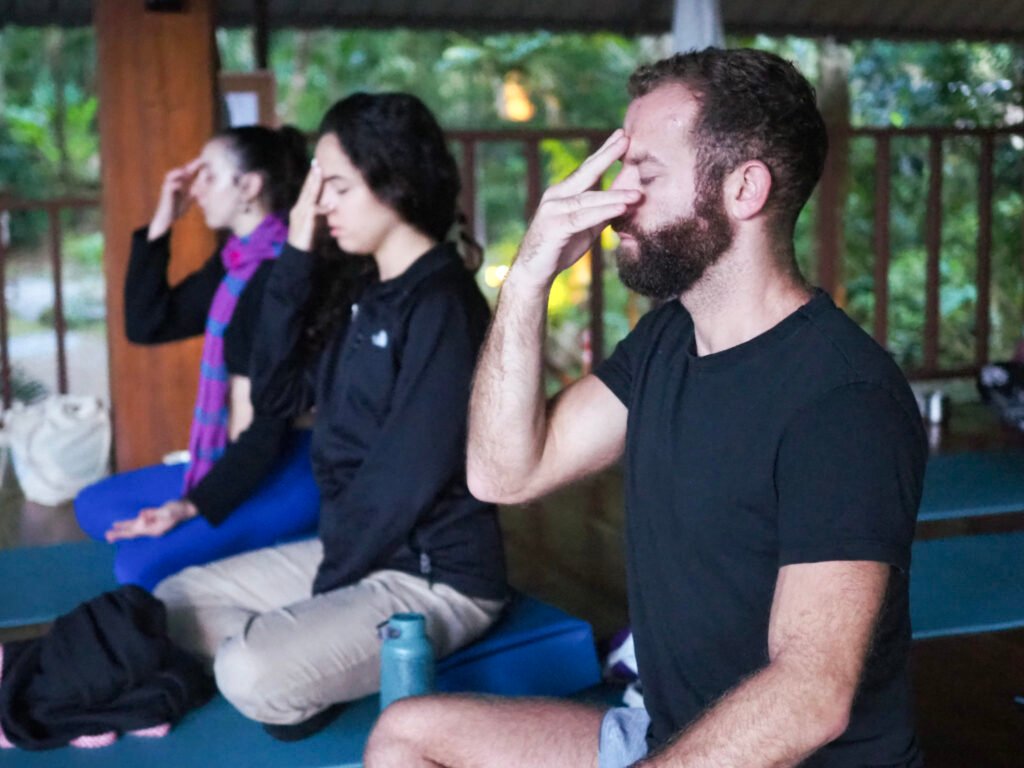
Practical ways students manage the physical load include using modifications rather than forcing a pose, resting when needed instead of pushing through fatigue, communicating injuries or limitations to instructors early, and progressing gradually rather than comparing themselves to other trainees.
What Are the Requirements for a 200-Hour Yoga Teacher Training?
| Requirement / Factor | What Beginners Should Know |
|---|---|
| Previous yoga experience | Varies by school; not universally required |
| Flexibility | Not typically an entry requirement; it develops with practice |
| Fitness | General physical readiness can help; extreme fitness isn’t expected |
| Age | Usually school-specific, commonly 18 and up |
| Attendance | Many programs require full attendance; confirm the specific policy |
| Teaching experience | Usually unrelated to admission; it’s what the training itself builds |
| Medical considerations | Follow appropriate professional advice for any existing condition or injury |
| Language | Confirm the training is delivered in a language you’re comfortable learning in |
| Commitment | Important, since training days are often long and intensive |
| School-specific prerequisites | Must be confirmed directly with the program you’re considering |
Are You Ready for a 200-Hour YTT?
Use this checklist as a starting point for your own reflection, not as a pass/fail test:
-
- I can commit to the required schedule, including full attendance where applicable.
-
- I’m comfortable learning unfamiliar yoga concepts and terminology.
-
- I understand that I don’t need advanced flexibility to begin.
-
- I’m willing to build a consistent practice, even if I’m starting from zero.
-
- I’m prepared for anatomy, philosophy, and theory classes, not just physical practice.
-
- I’m open to receiving feedback on my teaching.
-
- I understand that teaching requires communication skills beyond personal practice.
-
- I’ve reviewed the specific school’s prerequisites and curriculum.
-
- I understand the attendance and assessment requirements.
-
- I’ve considered tuition, accommodation, travel, and other costs, if applicable.
If most of these feel true, beginner status alone shouldn’t hold you back. If several feel uncertain, that’s useful information, not a reason to rule yourself out. It may just mean spending more time researching schools or building a foundation before you commit.
How Should Beginners Prepare for a 200-Hour YTT?
-
- Build a consistent yoga practice. Regular short sessions in the weeks or months before training matter more than reaching any particular pose or flexibility level.
-
- Learn basic yoga terminology. Getting familiar with common terms like asana, pranayama, alignment, and sequencing ahead of time makes the first days feel less overwhelming.
-
- Improve general physical readiness. Simple, non-medical movement habits, like regular walking or stretching, can help your body adjust to a more active training schedule.
-
- Practice observing your own body. Pay attention to how your body responds to movement and where your current limits are, rather than trying to force flexibility or strength before training starts.
-
- Develop study habits. A 200-hour course includes real academic content: anatomy, philosophy, and terminology that often involves memorization and written work, not just physical practice.
-
- Practice communication. Explaining a movement or instruction clearly to a friend or family member is a small, useful way to start building the communication skills teaching requires.
-
- Review the school’s curriculum. Understand exactly what subjects, hours, and assessments are included before you enroll.
-
- Understand the schedule. Know what daily time commitment you’re signing up for, including how demanding the days will realistically be.
What Does a Typical Day Look Like?
-
- Morning asana practice
-
- Breakfast and rest
-
- Anatomy or philosophy lecture
-
- Technique or alignment workshop
-
- Lunch and rest
-
- Teaching methodology session
-
- Supervised teaching practicum
-
- Evening meditation or pranayama practice
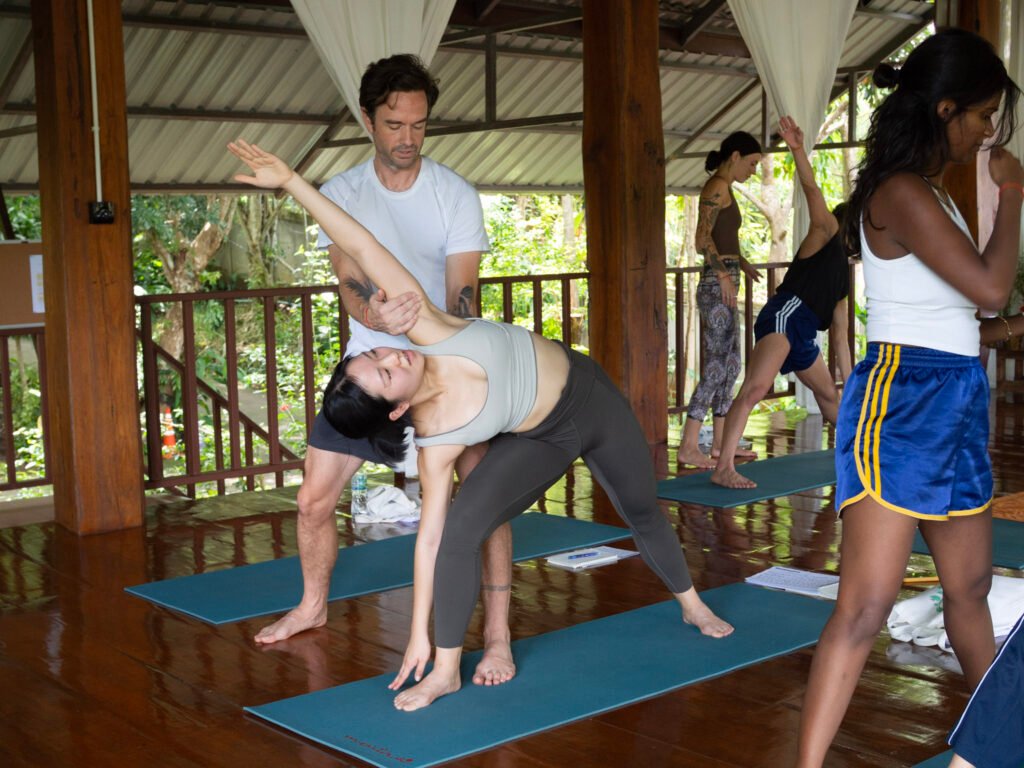
Some programs run this kind of schedule as an intensive residential format over several consecutive weeks; others spread similar content across a part-time schedule over months. Always ask a specific school for their actual daily structure before enrolling.
How to Choose a Beginner-Friendly Yoga Teacher Training
Not all 200-hour programs are structured the same way. When evaluating a school, consider:
-
- Curriculum. Does it clearly cover asana, anatomy, philosophy, teaching methodology, and practicum, not just physical practice?
-
- Beginner suitability. Does the school explain, specifically, how it supports students with no prior experience?
-
- Instructor qualifications. Who teaches the course, and what relevant teaching or training experience do they have?
-
- School credentials. Can you verify the school’s stated registration or credentialing claims independently, rather than taking their word for it?
-
- Teaching practice. Is supervised teaching practice actually included, with real feedback?
-
- Assessment. How is student competency evaluated before certification is awarded?
-
- Class size. How much individual instructor attention can you realistically expect?
-
- Schedule. How many hours per day, and over how many total days or weeks?
-
- Location and format. Residential, studio-based, online, or hybrid?
-
- Accommodation and meals. If residential, what’s actually included?
-
- Tuition inclusions. What’s covered, and what costs extra?
-
- Refund and cancellation policy. What happens if you can’t complete the training?
-
- Reviews. Look at recent, independent reviews in addition to testimonials the school displays itself.
-
- Post-training support. Does the school offer mentoring, further teaching opportunities, or alumni support after graduation?
How Much Does a 200-Hour YTT Cost?
Total cost varies too widely to state a meaningful average, and it depends on factors including:
-
- Country and city
-
- The specific school
-
- Residential versus non-residential format
-
- Online versus in-person delivery
-
- Accommodation and meals, if included
-
- Course materials
-
- Certification or registration-related fees
-
- Travel and, where relevant, visa costs
-
- Any additional workshops or assessments
It helps to separate tuition cost from total training cost. Tuition covers the course itself; total cost includes everything else you’ll need to budget for, from flights to daily meals if they aren’t included.
Before paying, it’s worth asking a school directly: What exactly does tuition include? Are accommodation and meals part of the price or separate? Are there additional fees for materials, certification, or assessments? What is the refund policy if your plans change?
Is Online 200-Hour YTT Suitable for Beginners?
It can be, depending on how the program is structured, but it’s worth weighing the trade-offs. Potential advantages of online training include scheduling flexibility, no need to relocate or travel, and often lower total cost since accommodation and travel aren’t factors.
Potential limitations include less in-person physical feedback on alignment, a different structure for teaching practicum since it often happens over video rather than in a shared room, and the fact that self-discipline and a stable setup matter more without the structure of being physically present. Credential recognition can also work differently for online formats, so it’s worth confirming this directly with any school and, if relevant, with the credentialing body.
The right format depends on how a specific program handles these trade-offs and what you personally need from the training, not on one format being universally better.
Beginner vs Experienced Yoga Students
| Area | Beginner | Experienced Practitioner |
|---|---|---|
| Yoga knowledge | Developing | More established |
| Asana familiarity | Basic or limited | Broader |
| Alignment knowledge | Developing | More familiar, though not always fully accurate |
| Philosophy | Often new | May have some prior exposure |
| Teaching | Usually new to both students | May have some prior teaching experience |
| Learning curve | More new terminology and concepts to absorb | More refinement of existing habits |
| Main challenge | Building foundational knowledge | Unlearning incorrect habits and deepening existing knowledge |
Neither starting point is an advantage across the board. Beginners build habits from scratch; experienced practitioners sometimes have to revise habits picked up informally. Both groups benefit from a program that’s honest about what it expects from each type of student.
What Can You Do After Completing a 200-Hour YTT?
Completing training opens up several possible paths, though what’s actually available to you depends on your location, the school’s credentials, and local regulations:
-
- Teaching beginner-level classes, where appropriate and permitted
-
- Assisting more experienced teachers
-
- Continuing to deepen your own personal practice
-
- Pursuing further, more specialized teacher education
-
- Teaching in studios or other settings, depending on local requirements and what the school’s certification actually covers
-
- Building experience gradually through supervised or assisted teaching
It’s worth being clear about one distinction: completing a 200-hour training is different from being automatically eligible for a specific registration or credential like RYT 200, which typically requires a separate application. It’s also different from being licensed to teach in every setting or country; requirements vary by employer, studio, and local regulation.
Is a 200-Hour YTT Right for You as a Beginner?
This isn’t a decision anyone else can make for you, but a few honest questions can help.
It may fit if:
-
- You enjoy structured learning and want to study yoga beyond physical exercise.
-
- You can genuinely commit to the training’s attendance and schedule.
-
- You’re interested in teaching, or in a much deeper level of personal study.
-
- You’re comfortable learning anatomy, philosophy, and teaching methodology alongside practice.
Consider carefully if:
-
- You can’t commit to the attendance requirements the program sets.
-
- You’re expecting the course to be purely physical practice.
-
- You’re really looking for a casual beginner class rather than an intensive training.
-
- You haven’t yet reviewed the specific school’s curriculum and prerequisites.
-
- You’re choosing a school mainly based on marketing rather than its curriculum and instructors.
Questions to Ask Before Enrolling
-
- Do you accept absolute beginners?
-
- Is prior yoga experience required, and if so, how much?
-
- What does the daily schedule actually look like?
-
- How many hours are spent in physical practice versus theory?
-
- Is supervised teaching practice included?
-
- How is student competency assessed before certification?
-
- What are the attendance requirements?
-
- What’s included in tuition, and what costs extra?
-
- Is accommodation included, if the program is residential?
-
- Are meals included?
-
- What is the refund or cancellation policy?
-
- What credentials or registrations does the school currently hold?
-
- Who are the instructors, and what’s their teaching background?
-
- What support, if any, is available after graduation?
Frequently Asked Questions
Can beginners do a 200-hour yoga teacher training?
Yes, in many cases. A number of 200-hour programs are designed to support students with no prior practice, teaching foundational skills from the ground up. Requirements vary by school, so it’s worth confirming a specific program’s stance on beginners before applying.
Do I need to be flexible to become a yoga teacher?
No, advanced flexibility isn’t a requirement to start training. Flexibility tends to develop with consistent practice over time. What matters more going in is your willingness to work safely within your current body’s limits and use modifications as needed.
What are the requirements for a 200-hour yoga teacher training?
Requirements vary by school but commonly include a minimum age, an application process, an attendance commitment, and sometimes a baseline of prior practice. There’s no single universal requirement across all programs, so confirming directly with a specific school is the most reliable approach.
Is a 200-hour YTT physically difficult?
It can be demanding, involving repeated physical practice, long training days, and sustained mental focus for study. Difficulty varies with the program’s schedule, yoga style, and your own conditioning. Most programs expect students to pace themselves rather than match everyone else’s intensity.
How long does a 200-hour yoga teacher training take?
This varies by school and format. Some run as an intensive over several consecutive weeks; others are spread part-time across several months, and some are offered online with flexible pacing. Checking a specific school’s schedule format is the best way to know what to expect.
What do you learn in a 200-hour YTT?
Typical subjects include asana, anatomy and physiology, yoga philosophy and ethics, pranayama, meditation, teaching methodology, sequencing, alignment and modifications, and supervised teaching practice, usually alongside some form of assessment before certification.
How much does a 200-hour yoga teacher training cost?
Cost varies widely based on country, school, format (online, in-person, or residential), and what’s included, such as accommodation and meals. Rather than relying on a general average, ask a specific school directly what tuition covers and what additional costs to expect.
Can I do a 200-hour YTT online?
Many schools now offer online 200-hour programs, which can suit beginners who need scheduling flexibility. Trade-offs can include less in-person physical feedback and a different structure for teaching practice, so it’s worth comparing formats against what you personally need.
Can I do YTT if I don’t want to become a teacher?
Yes, many students complete a 200-hour training purely to deepen their personal practice and understanding of yoga, without intending to teach professionally afterward. This is common and generally accepted by most schools.
How do I choose a beginner-friendly YTT?
Look for a school that explicitly explains how it supports beginners, has a clear and complete curriculum, includes real supervised teaching practice, and is transparent about instructor qualifications, costs, and its refund policy. Independent reviews can also help verify these claims.
What can I do after completing a 200-hour YTT?
Many graduates go on to teach beginner-level classes, assist more experienced teachers, or continue their own practice and education. What’s specifically available depends on your location, the school’s credentials, and local requirements, so it’s not automatically the same for everyone.
Summary
Being a beginner isn’t automatically a barrier to starting a 200-hour yoga teacher training, but it also isn’t a reason to skip due diligence. The most useful thing you can do before enrolling is look past general claims about who “can” or “can’t” join, and check a specific school’s curriculum, prerequisites, and support for students at your level directly.
In today’s competitive world, ladies always face challenges at home and at work. They are considered as the care givers, and take maximum pressure from all quarters of life. So, it is these women who need to engage in proper fitness practice. However, many women fail to do that, as life is hectic. You can If you are one of them, take this opportunity to go for the 50 Hr Yoga Teacher Training in Chiang Mai. Yoga Samadhi is one of the renowned schools in Chiang Mai, where you will be entitled to the best training and knowledge.
Head to the Best Yoga Retreat in Chiang Mai, so that you can get to learn of techniques that you can use in your daily life. The yoga retreat is one of the few, which is also interested in community service. So, you can very well understand that it is the right place for you.
What Is The 50 Hr Yoga Teacher Training In Chiang Mai?
The 50 Hr Yoga Teacher Training in Chiang Mai is one of the best yoga training sessions, that you can do, for self-development and teaching as well. If you manage to do the 200-hour yoga TTC, this can be the next step for you, to spread your wings. Chiang Mai is a safe place for all foreigners. It is located in North Thailand, and boasts of tranquil surroundings. Now, you can go there and be a part of the program. You should feel lucky to be able to visit the Buddhist temples and monasteries there.
The program includes daily Hatha Yoga practice and Ashtanga Yoga practice. Moreover, you will also learn about anatomy and physiology. Daily Pranayama and Karma yoga practice is also a part of the program. You will also indulge in Yoga Nidra sessions. This is the best short-term program for all yoga enthusiasts as well, as a standalone course. If you get the opportunity to head to Chiang Mai as a part of your daily routine, you should consider going to Yoga Samaadhi. It will be a life changer for you. Seven days of training, for a beginner can change the course of your life. The Best Yoga Retreat in Chiang Mai will provide you with the right ambience and training, so that you can get over your mental and fitness issues, due to excess work and other lifestyle factors.
Few Asanas Especially For Working Women
After a certain age, most women start suffering from several illness and menopause as well. The latter causes numerous hormonal changes in the body, which can affect women on a deep level. As fitness deteriorates, the mental health also goes down. But if you are a woman reading this, and can manage to introduce yoga in your life, then you can make great changes. Additionally, you should include Pranayama as well, with yoga asanas.
Here are a few poses that you can practice with least interference and without props.
Boat pose or Navasana
It is one of the easiest poses that any woman can do. You simply have to lie down on the floor, on your back. Keep the hands by your side, and lift them slowly, so that they are parallel to the ground. Lift the upper torso, from the shoulder and head upwards. The legs also go up, without being folded at the knees. Hold the pose for a few minutes to strengthen the core, shoulder muscles and the legs. You will also be able to lose flab.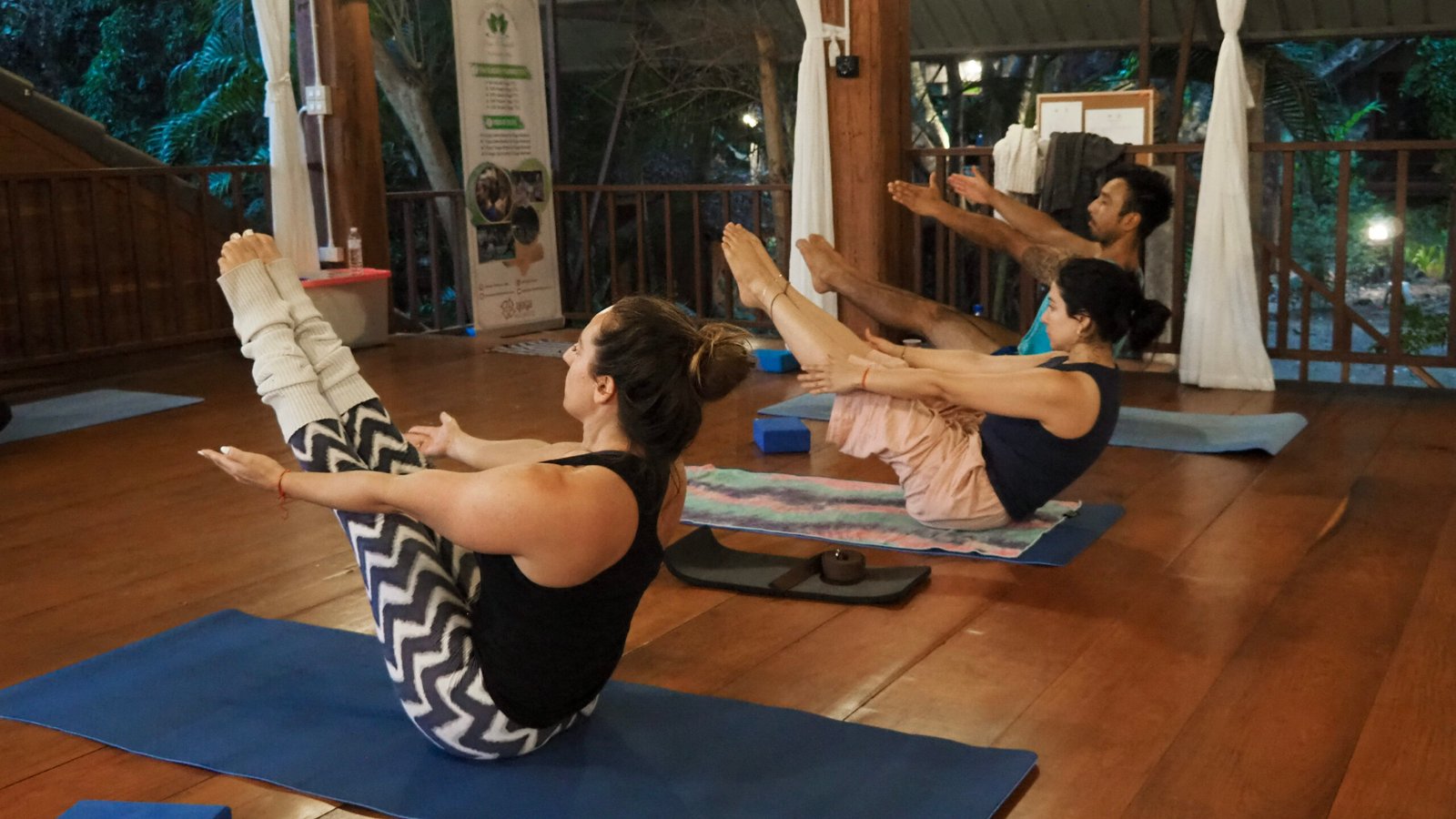
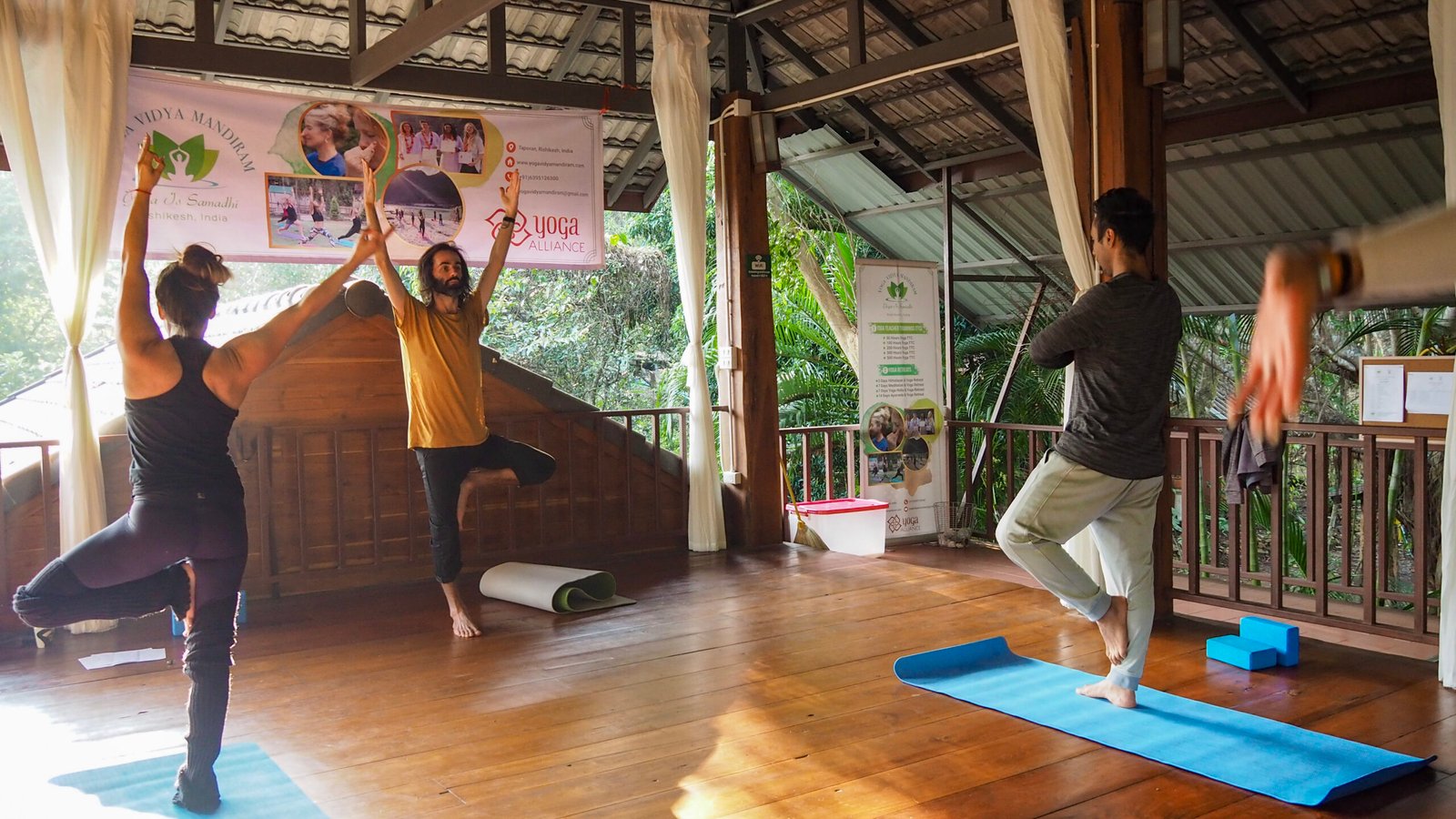
Vrikshasana or Tree pose
It is another pose, which you can practice with elan. You can actually bring stability into your life, through this asana. It also adds self-confidence and helps you to stand strong like a tree, no matter, what challenges life throws at you. You will be practicing this asana on one leg, while the other one rests on the thigh, with soles in contact. You can join both the hands at the chest or raise them above the head and balance your entire body on one foot. The body should be in a straight line. You can also strengthen your karma, by chanting a few mantras.
Halasana or Plough pose
It is another pose, which you should practice. You can even do it at night, before retiring. It is an effective stretching yoga asana. The body resembles a plough, when you are deep into the pose. Lie flat on the ground, with the hands by your sides. Raise both feet up in the air, together. Try to bring both in contact with the floor, on the opposite side of the head. Your body should only rest on the head and shoulders. It is an extremely effective asana that solves issues with your abdomen and digestive system.
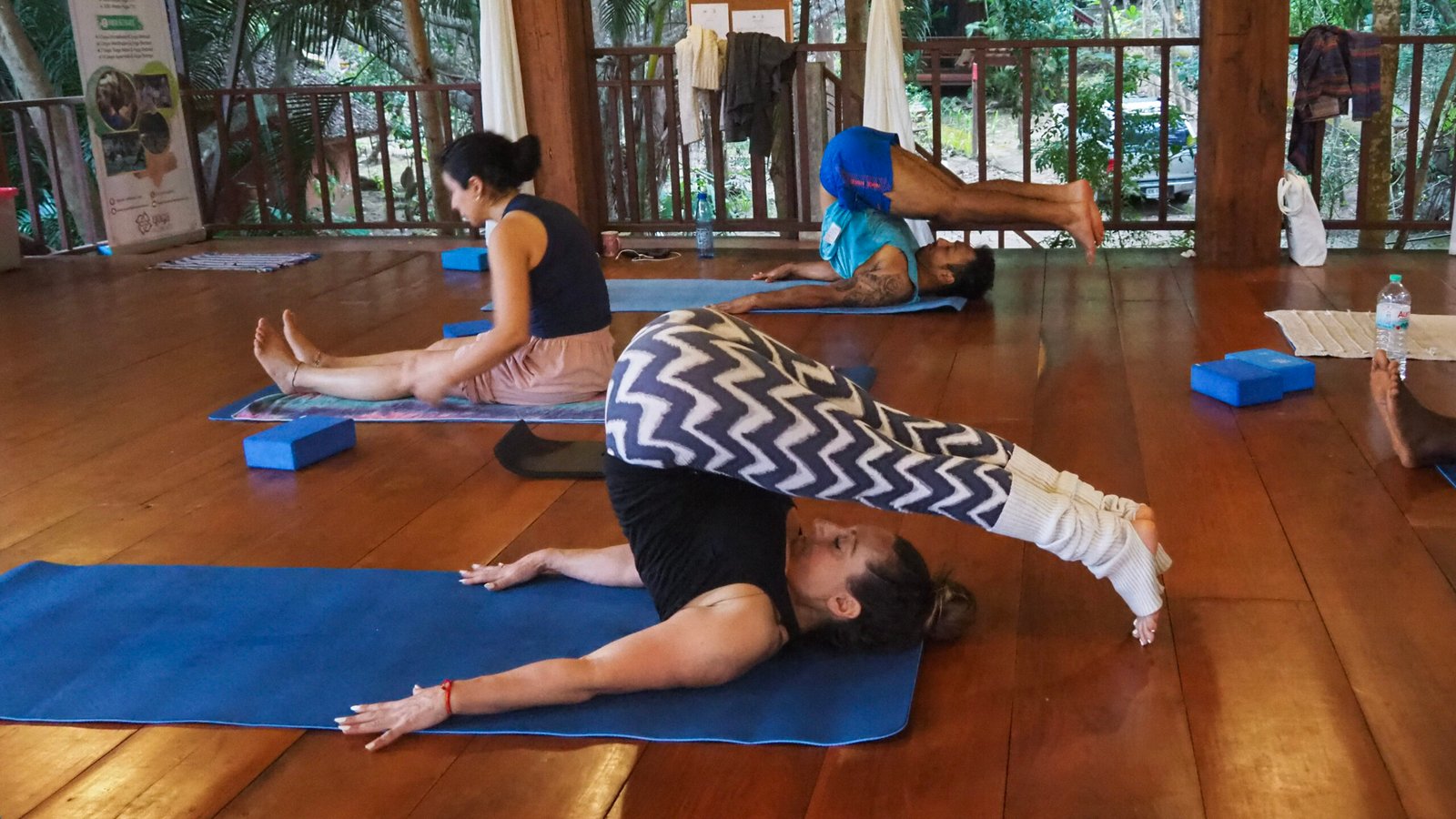
There is more to yoga, than asanas though. You can practice some of the breathing techniques like Ujjayi Pranayama and Bhramari Pranayama. You can practice both these.
Ujjayi Pranayama
It is also called Victorious breath. Inhale and exhale naturally. Then you have to bend your head towards the chin and block the flow of air. Inhale for a longer time and hold the breath in your throat. While inhaling, you have to make a sound, like a snake or that of the waves. Try to be calm and balance yourself. This is one of the best Pranayamas for women, who suffer from depression like symptoms.
Bhramari Pranayama
It is another breathing technique, which you can practice today. Many yogis also call it the humming bee breath. The basic Bhramari is the easiest one that you can practice, in your busy schedule. Sit with your eyes closed. Inhale and then make a slow pitched sound, while exhaling. The sound vibrations arise due to the vibration of the tongue and teeth. It will affect your entire brain. So, you can do it anywhere you want to. And, you can do it in the morning, before leaving for work. You will be able to get rid of anxiety-related problems.
Get ready to enjoy the amazing benefits of the breathing exercises, after completing the 50 Hr Yoga Teacher Training in Chiang Mai.
So, you have completed your yoga teacher training. Now what do you want to do? You must have studied yoga at one of the renowned schools in the Himalayas. There is an increasing number of yoga instructors in the market. You may run into some challenges, but there is always a way out. There are myriad things worth mention.
You may be a first-timer, so you may feel a bit lost. However, you need not have to worry. You can land your first teaching job, without any hassles.
Tips To Land Your First Job as a Yoga Teacher
Keep your patience intactand practice
This is the first and foremost thing you should do, as a practitioner of yoga. If you get depressed, things will only go downhill. You have to be patient and perfect your art at the same time. While maintaining your patience, you must continue to practice yoga. You may develop your home practice, and also ask your teachers back in school for flaws. It is the time you should utilize to revise what you learnt at school. Moreover, if you are not getting a job anytime soon, you will be able to utilize the time in hand.Discuss with the Teacher
A lot of important questions may get missed out, during Yoga TTC. However, when you start the actual practice, things may come up. There will be some business-oriented questions as well. No one will teach you that, except in a business management class. So, after you are done with the course, and have also given the examination, you must ensure to ask the queries to your teacher. A senior teacher who has been working in the industry for a long time, will have the best replies, regarding all your questions. Additionally, you will also learn how to start a yoga-related business.Do not be Choosy
Most people want to work as freelance yoga teachers. However, you cannot get students all of a sudden, before you have made a name for yourself in the market. So, in that case, you may have to rely on a job as a trainer in any of the well-established and renowned yoga schools. There will be a few gyms and recreation centres as well, where you can land a job. Gyms and such centres may keep a part of the cut and you may get the balance payment.Practice at a studio Near You
Most yoga schools and studios will allow a teacher into their premises, if they have ever practiced there. So, you stand chance, if you have practiced yoga at any of the neighbouring studios, where you might drop your CV. The studio owner may already know you, and it can help you to make an informed decision about whether or not, you really have the eligibility and style to teach at the incumbent’s place.Assist Other Teachers.
This is another way you can land your first teaching job. Assisting other teachers in teaching yoga at their studio, will also help to build trust. You may get paid, or you may not get paid. However, you will definitely get a lot of valuable insight on yoga practices. You will also get the first-hand knowledge of how to conduct yoga classes. Offering the services, without any cost, will also driver the idea that you can teach with a lot of commitment.Give a Demo
You can now arrange a demo session, to show your prospective students or at the yoga school, where you are probably planning to teach. You can keep two categories of classes – one basic and one advanced. You have to mimic real-world yoga classes for the same. You can also use soulful music to conduct the classes, as it will help you to create the perfect ambience for the class. A free demo also drives down the idea, in your student’s psyche that you are serious about your yoga career.Once you get a class, market it well
You can advertise, send emails, and also post about your classes on social media. Even if you do not get students almost immediately, you can be sure, that people will be watching you. You may also tur out to be the next yoga sensation. Increase your followers on your yoga platform. Moreover, when you post on social media, you get a lot of exposure. It is good for your publicity.Now, you need to also understand, that bagging a job may not be easy in a highly competitive market. You also need to display some traits, to be counted upon.
Qualities of a Yoga Teacher
You can become the teacher, that students can look up to. You should develop the ability to connect with students and their guardians in general. It will help you to build a rapport with them. Thus, your communication skills are highly important. A great yoga teacher should be able to connect with the audience.
You should also be able to command the attention of the students. It is another skill, that you need to master. Your confidence also matters a lot. It ultimately gives confidence to the students, that their education and future is in the right hands. Most successful yoga teachers have a great personality. Additionally, you should have a specific plan, to teach yoga. A routine may be a good idea to start with. Decide, beforehand, what you need to start with. This will show, that you are perfectly organized as a teacher.
Flexibility is highly important for a yoga teacher training in Chiang Mai. You need to show that, mentally as well as physically. You should also develop a personal style. Personalization is the key, to become a successful teacher today. You also need to develop some intuition to deal with your teachers.
So, after you have developed yourself on the above lines, it may be easy for you to land your first teaching job after all. So, get ready for a global yoga teaching career, today.
Yoga Samaadhi Upcoming Events Sustainability Activity | Outreach Program | Yoga Teacher Training (Chiang Mai, Thailand)

Read Our Blog
Read our articles on different topics of yoga, sustainability and community updates…
More Details
Yoga TTC in Thailand
Learn about yoga teacher training and how it guides you to a harmonious lifestyle…
More Details
Community Outreach Programs
Find out more about hill tribes, their ways of life and how we can take part in their progress…
More Details
Sustainability Activity
Find spirituality in sustainability, living in harmony with nature and adopting mindfulness…
More Details