Booking your first yoga teacher training often brings a quiet wave of doubt. Am I flexible enough? Have I practiced long enough? Will everyone else be better than me?
Here is the reassuring part: you do not need to be an advanced practitioner to start. Most beginners who struggle in a training do so because of tiredness, unrealistic expectations, or poor planning, not because they cannot touch their toes.
To prepare for yoga teacher training well, you need four kinds of readiness: physical, mental, academic, and practical. That means building a steady practice, getting familiar with a few core ideas, knowing what a long training day feels like, and sorting out travel and packing early.
This guide covers all of it. You will find a straight answer on yoga experience, a simple study plan, a packing list, a 30-day timeline, questions to ask any school, and an honest look at what to expect at Yoga Samaadhi in Chiang Mai, Thailand.
To prepare for yoga teacher training, build a steady, gentle practice for four to eight weeks, learn a few basic terms, read about the Eight Limbs and basic anatomy, and sleep well. Check your school’s schedule and packing list, arrange travel and insurance early, and arrive rested, curious, and ready to learn rather than perfect.
What Does It Really Mean to Prepare for Yoga Teacher Training?
Most people picture preparation as stretching more. That is only one piece. A training asks you to move, study, sit still, listen, and practice teaching, often for weeks. Readiness covers five areas:
-
- Physical preparation. A steady practice builds the stamina to handle several sessions a day without injury.
-
- Mental and emotional preparation. Feedback, fatigue, and self-doubt are normal. Knowing that early keeps them from derailing you.
-
- Yoga knowledge and study. Light familiarity with terms and concepts helps lectures land faster.
-
- Lifestyle preparation. Sleep, food, hydration, and screen habits decide how you feel on day ten.
-
- Travel and practical preparation. Documents, insurance, packing, and climate planning remove stress before it starts.
Skipping one area usually shows up later. A flexible but sleep-deprived student struggles just as much as a rested one who has never opened a philosophy book.
Do You Need Yoga Experience Before Teacher Training?
It depends on the school. Requirements vary between programs. Some ask for a minimum period of regular practice, while others welcome complete beginners and begin with the fundamentals. Read the admission details and ask the school directly.
What is true across most good programs:
-
- Advanced flexibility is not a requirement. Teaching yoga depends on understanding, clear communication, and care for students, not on deep stretches.
-
- A basic, consistent practice beats advanced poses. Two months of gentle Hatha three times a week usually prepares you better than one intense month of advanced classes.
-
- Being physically capable is different from being ready to learn. A stiff but curious student often gets more from the course than a strong one who resists feedback.
At Yoga Samaadhi: the school’s FAQ says beginners are welcome in its 50, 100, 200, and 500-hour trainings, and its course page describes eligibility as open to all seekers. You can read more on its 200-hour yoga teacher training for beginners page.
Start Building a Consistent Yoga Practice
For many beginners, three to four sessions a week of 30 to 60 minutes is a reasonable target. If you are starting from zero, begin with two shorter sessions. The right amount depends on your health, schedule, and current activity level. This is general guidance, not medical advice. If you have an injury or health condition, speak with a doctor or qualified teacher first.
What to include in your practice:
-
- Hatha yoga: a slower, steady style for learning basic postures.
-
- Ashtanga or Vinyasa-style practice: if your course includes it, try a gentle class or a few easy sun salutations.
-
- Basic asanas: standing poses, forward folds, gentle backbends, twists, seated poses, and Savasana. Aim to feel them, not perfect them.
-
- Pranayama: five minutes of easy diaphragmatic breathing. Skip breath holding and forceful techniques unless a qualified teacher guides you.
-
- Meditation and relaxation: five minutes of sitting with your breath, and a few minutes of Savasana to finish.
-
- Body awareness: learn the difference between stretch, effort, and pain, and back off at pain.
-
- Rest and recovery: keep one or two lighter days each week.
A flexible 4 to 8 week approach
- Weeks 1 and 2: two or three easy sessions of 20 to 40 minutes, plus five minutes of gentle breathing.
- Weeks 3 and 4: three sessions a week. Add one longer class or one flowing class.
- Weeks 5 and 6: three or four sessions. Add 10 minutes of seated meditation on a few days.
- Weeks 7 and 8: hold steady rather than increasing. Protect your sleep and energy.
This is a guide, not a rule. If you already practice regularly, just keep going.
Learn the Basic Yoga Terminology Before You Arrive
You do not need to memorize Sanskrit before you arrive. A handful of words just makes the first days smoother.
| Term | Simple meaning |
|---|---|
| Asana | A physical posture. |
| Pranayama | Breathing practices. |
| Meditation (dhyana) | Practices that train steady attention. |
| Savasana | Final resting pose, lying on your back. |
| Drishti | A focal point for the gaze. |
| Bandha | A muscular “lock” used in some practices. |
| Mudra | A hand gesture used in breathing and meditation. |
| Mantra | A sound or phrase that is repeated or chanted. |
| Hatha | An umbrella term for physical yoga; often a slower, posture-focused class. |
| Vinyasa | Linking movement with breath in a flowing sequence. |
| Yoga Nidra | A guided deep-relaxation practice. |
| Alignment | How the body is positioned in a pose. |
| Sequencing | The order of poses in a class. |
| Shatkarma / Shatkriya | Traditional cleansing techniques, practiced only with guidance. |
Prepare Your Body Without Overtraining
Good physical preparation is quiet and gradual. Aim to arrive with energy left, not in the best shape of your life.
-
- Build consistency gradually. Add only a little time each week.
-
- Improve general mobility. Gentle movement for hips, shoulders, and spine helps. Daily walking counts.
-
- Develop basic strength and stability. Simple bodyweight work such as bridges, squats, and knee planks is enough.
-
- Practice sitting comfortably. Start with five to ten minutes on a cushion or folded blanket, or on a chair if the floor is hard.
-
- Prioritize sleep. If your course starts early, shift your wake-up time earlier a little each day.
-
- Stay hydrated and allow adequate recovery between harder sessions.
What to avoid:
-
- Trying to achieve advanced poses right before the course.
-
- Extreme stretching or forcing yourself deeper into a pose.
-
- Overtraining in the final weeks.
-
- Ignoring pain. Sharp pain, joint pain, or numbness is a reason to stop and seek professional advice.
-
- Suddenly doubling your practice time.
Prepare Your Mind for an Intensive Learning Experience
Training is as much mental as physical. A few attitudes help:
-
- Be open to feedback. Treat it as information, not judgment.
-
- Expect some difficult days. Fatigue builds, and a low day does not mean you are failing.
-
- Let go of perfectionism. Practice teaching feels awkward at first for almost everyone.
-
- Be willing to make mistakes, and practice patience with your body and memory.
-
- Reflect briefly. Five minutes of journaling each evening helps ideas settle.
-
- Manage expectations. A 200-hour course builds foundations, not total knowledge.
-
- Stay curious. Ask questions, including the basic ones.
Training can also challenge what you thought yoga was. Many students arrive believing yoga means poses, then meet philosophy, breath work, chanting, and silence. You do not have to love every part to learn from it. Before deciding something is not for you, ask what it is trying to teach.
What Should You Study Before Yoga Teacher Training?
The purpose of pre-course study is familiarity, not mastery. Your teachers will cover all of this properly. Arriving with a rough map simply helps you follow along.
-
- Basic yoga philosophy: a short introduction to Patanjali’s Yoga Sutras.
-
- The Eight Limbs of Yoga: yama, niyama, asana, pranayama, pratyahara, dharana, dhyana, and samadhi. Aim to name them in order and give a one-line idea of each.
-
- Basic anatomy and major muscle groups: the main joints, how they move, the spine’s natural curves, and muscles such as hamstrings, glutes, hip flexors, and core.
-
- Breath awareness: the role of the diaphragm and how the ribcage moves as you breathe.
-
- Basic yoga history: a short overview from ancient texts to modern posture-based yoga. Scholars still debate parts of it.
-
- Basic Sanskrit terminology: just the terms from the table above.
-
- Meditation fundamentals: what meditation is and is not, and one simple technique.
If your school sends a reading list, start there. Yoga Samaadhi’s FAQ says its course package includes a study manual and a text, so beginners need not buy a stack of books. The Yoga Samaadhi blog is a good place for extra reading.
Create a Simple Study Habit Before Your YTT
Short and regular beats long and rare. Try 15 to 30 minutes a day, three to five days a week, mixing reading, note-taking, journaling, reviewing terms, and reflecting on your practice.
Example weekly schedule:
| Day | Activity | Time |
|---|---|---|
| Monday | Read about the Eight Limbs; write three notes. | 20 min |
| Tuesday | Gentle Hatha practice; journal three lines. | 45 min |
| Wednesday | Anatomy: one joint or muscle group. | 20 min |
| Thursday | Practice plus easy breathing. | 40 min |
| Friday | Review five terms. | 15 min |
| Saturday | Longer practice or walk, then meditation. | 60 min |
| Sunday | Rest. Note what felt clearer. | 10 min |
Prepare for the Daily Routine of Yoga Teacher Training
Formats differ. Some trainings are part-time over months, some are online, and some are residential intensives with early mornings and full days: breath work, asana, anatomy and philosophy classes, teaching practice, meditation, self-study, and rest.
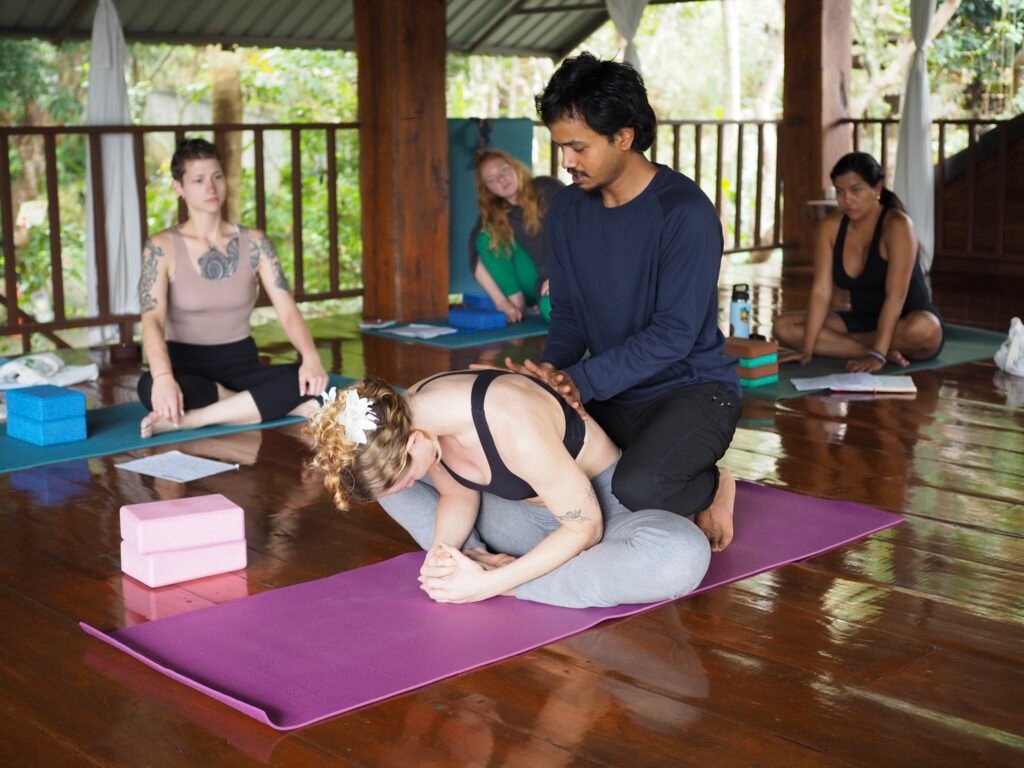
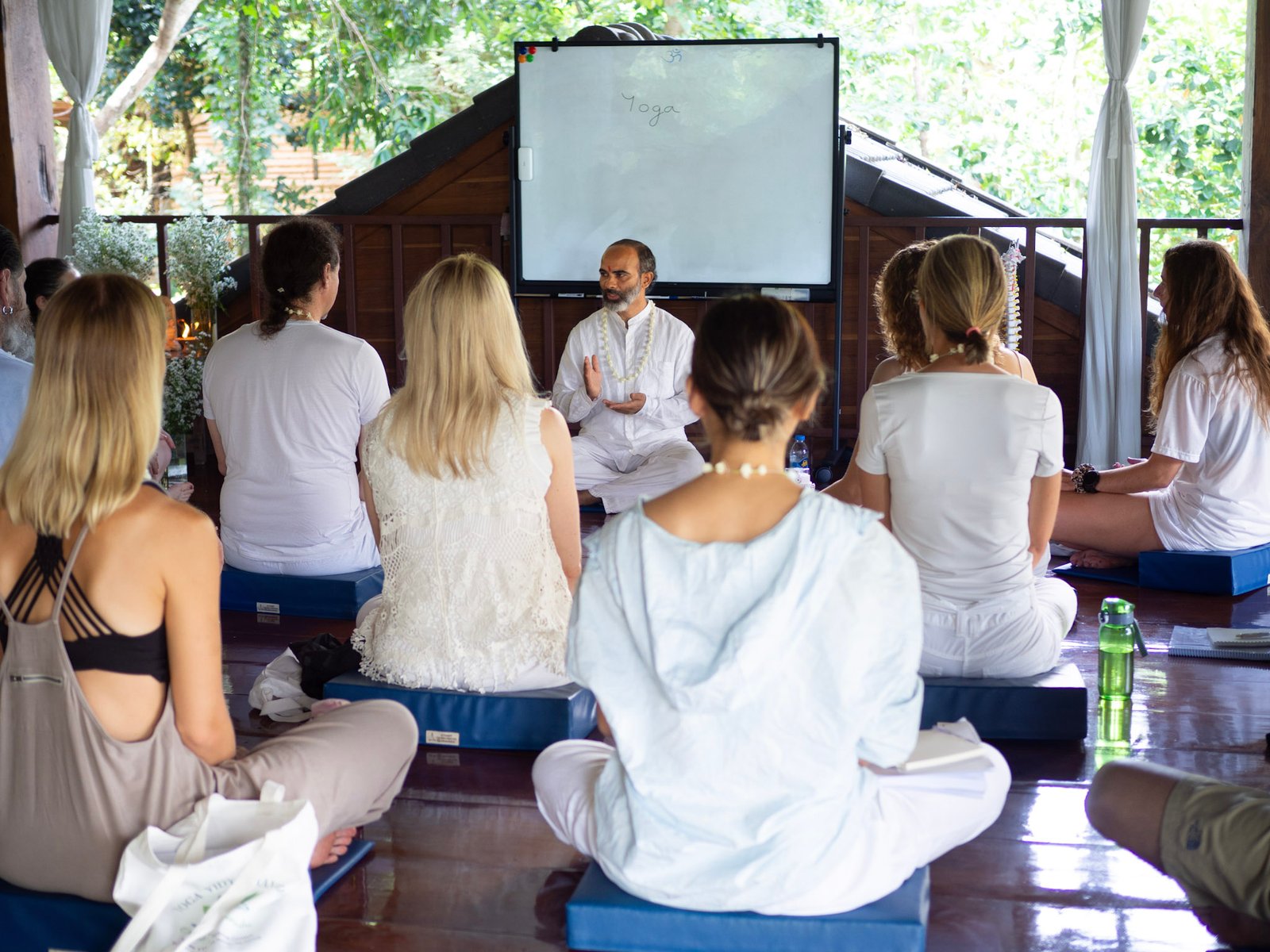
Example, Yoga Samaadhi: According to the school’s published information, its 200-hour program is a residential course of 22 days and 21 nights, with six training days each week and one rest day that includes an excursion. The tentative daily schedule runs from 6:15 am (mantra chanting) to around 9:00 pm. Mornings cover pranayama, asana, philosophy, and anatomy.
The early afternoon holds about three hours of self-study, silence practice, journaling, and rest. Evenings bring a second asana session, then Yoga Nidra and meditation. The timing may shift, and this is one school’s format, not a universal schedule.
To get ready, practice waking at the training time for a week beforehand, and plan how you will use the rest block.
What Should You Pack for Yoga Teacher Training?
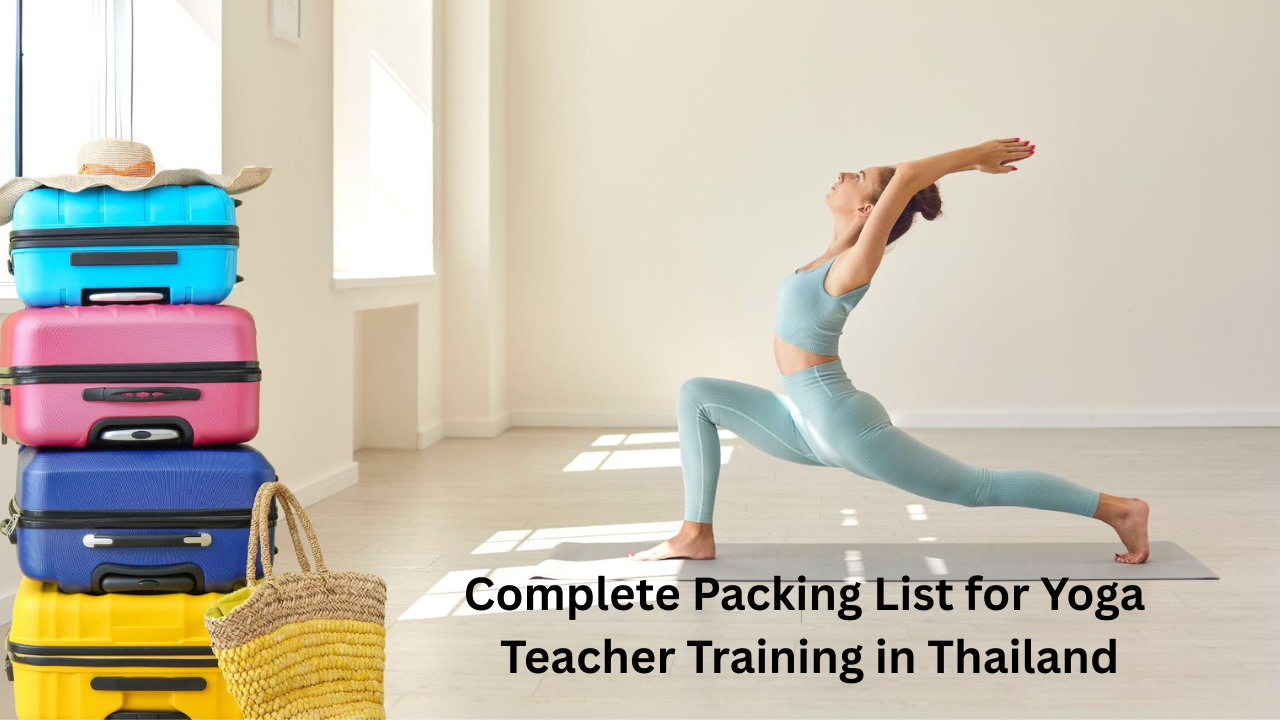
Pack light, and check your school’s list first, because needs differ. The checklist below is general. School-specific notes are marked.
Yoga essentials
-
- Comfortable yoga clothes and loose clothing for meditation
-
- Yoga mat (many schools provide one, so check before you carry it across the world)
-
- Water bottle and a small towel
-
- Journal or notebook and pens
Travel essentials
-
- Passport and travel documents
-
- Insurance documents
-
- Printed and digital copies of important documents
-
- Phone, charger, and a universal adapter
-
- Personal medication
-
- Toiletries
Thailand and Chiang Mai considerations
-
- Lightweight, breathable clothing
-
- Modest clothing for temple or monastery visits (shoulders and knees covered)
-
- Walking shoes
-
- Sunscreen and mosquito repellent
-
- Rain or weather gear, depending on the season
-
- Warm layers for cooler mornings and evenings, especially from late in the year
-
- Earplugs, if you will share a room and sleep lightly
Yoga Samaadhi specifics: per its FAQ, mats and equipment are provided, along with a study manual, text, notebook, pen, and neti pot. Rooms have a fan, bedding, a towel, and a basic toiletry set. The school suggests a sweater or jacket for morning and evening classes, a thick shawl or blanket for evening relaxation, a non-revealing outfit for temple visits, walking shoes, sunscreen, mosquito repellent, and a power adapter. A white outfit for the ceremonies is optional.
Entry rules depend on your nationality and length of stay. Yoga Samaadhi’s FAQ notes that it cannot provide documents for a student visa. Check current requirements on official Thai government sources before you book flights.
Prepare for the Food, Sleep, and Lifestyle Changes
A residential training changes your daily rhythm. These habits help in the weeks before:
-
- Eat regular, balanced meals so your energy stays steady.
-
- Stay hydrated through the day.
-
- Cut back on alcohol and late nights in the final weeks.
-
- Get enough sleep and keep a consistent bedtime.
-
- Limit unnecessary screen time, especially before bed.
-
- Get used to a structured routine with set meal and class times.
No special diet is required for yoga teacher training in general. Meals depend on the school. At Yoga Samaadhi, the FAQ says meals are mostly Thai vegetarian (with milk but no eggs), vegan food is easy to arrange, and gluten-free meals are available on request. If you usually eat meat, try a few vegetarian meals beforehand. Tell any school about allergies and dietary needs well before you arrive.
What Should You Expect Emotionally During Your First YTT?
Students commonly report a mix of feelings, and the mix can change from day to day:
-
- Excitement and nervousness at the start
-
- Fatigue as the days add up
-
- Self-doubt, especially during practice teaching
-
- Growing confidence as routines become familiar
-
- Reflection on habits, goals, and assumptions
-
- Frustration when your body or memory does not cooperate
-
- A stronger sense of connection with classmates and teachers
These are common experiences, not guarantees. A yoga teacher training is an educational course, not a medical or therapeutic treatment. If you are going through a difficult period or have mental health concerns, talk with your health professional before you go, and let the school know what support you might need.
Common Mistakes to Avoid Before Yoga Teacher Training
-
- Trying to become “advanced” overnight.
-
- Overtraining.
-
- Arriving exhausted.
-
- Ignoring sleep.
-
- Not reading the course information.
-
- Packing too much. Lay everything out, then remove a fifth.
-
- Not preparing for the climate.
-
- Expecting to teach perfectly right away.
-
- Comparing yourself with other students.
-
- Trying to memorize everything beforehand.
-
- Ignoring rest days.
-
- Not asking questions. Teachers expect questions.
A 30-Day Yoga Teacher Training Preparation Plan
Use this as a flexible roadmap. Adjust it to your own timeline.
30 to 21 days before
-
- Establish a routine of about three practice sessions a week.
-
- Start basic study: 15 to 20 minutes, three times a week.
-
- Review logistics: dates, flights, entry requirements, and insurance.
20 to 14 days before
-
- Maintain your consistent practice without increasing it.
-
- Review terminology a few minutes a day.
-
- Prepare travel documents: check passport validity, make copies, and plan your airport transfer.
13 to 7 days before
-
- Organize your packing and trim it down.
-
- Reduce unnecessary commitments.
-
- Prioritize sleep and move your bedtime earlier.
6 to 1 days before
-
- Avoid overtraining. Keep practice light.
-
- Finalize documents and double-check bookings.
-
- Rest as much as you can.
-
- Prepare mentally: remember why you are going and pick one learning goal.
Arrival day and the day before
-
- Hydrate and eat proper meals.
-
- Settle in without rushing, and review the schedule.
-
- Sleep early.
-
- At Yoga Samaadhi, the FAQ says day one starts around 10:30 am with registration and an opening ceremony. Students can arrive that morning or a day early (extra charges apply).
Questions to Ask Your Yoga Teacher Training School Before You Enroll
Good schools welcome questions. Ask each school the same list and compare answers side by side:
-
- Is previous yoga experience required?
-
- What is the daily schedule?
-
- How many hours are practice, theory, and practice teaching?
-
- Which yoga styles are taught?
-
- Which subjects are included?
-
- Is accommodation included?
-
- Are meals included, and what food is served?
-
- What should I bring?
-
- What certification is provided?
-
- Is the school registered with Yoga Alliance?
-
- What are the attendance requirements?
-
- Are there assessments or exams?
-
- What happens if I need medical attention?
-
- What is the cancellation and refund policy?
-
- What is included in and excluded from the course fee?
A note on Yoga Alliance terms. A Registered Yoga School (RYS) is a school registered with Yoga Alliance. A Registered Yoga Teacher (RYT) is an individual who has completed training at an RYS and registered with Yoga Alliance. Registration is a credential, not a universal license. Whether you may teach, and what employers expect, varies by country, studio, and employer.
How to Choose the Right Yoga Teacher Training for You
Weigh these factors against your own goals:
-
- Teaching style and yoga tradition: traditional, modern, or a blend.
-
- Curriculum: how much time goes to asana, philosophy, anatomy, and teaching skills.
-
- Teacher experience: how long the teachers have taught and trained.
-
- Class size, location, duration, accommodation, and food: these shape your daily comfort and the feedback you receive.
-
- Certification: what the school offers and what it means for you.
-
- Student reviews: read several, including balanced ones.
-
- Teaching methodology: how much supervised practice teaching you will get.
-
- Personal goals: deepening your own practice, teaching professionally, or both.
The cheapest or shortest program is not automatically the best choice.
Why Chiang Mai Can Be a Meaningful Place for Yoga Teacher Training
Chiang Mai is a city in northern Thailand with a long cultural history, many temples, and mountain scenery nearby. For a training, that can mean a calmer setting than a big city, chances to see local culture on rest days, and fewer everyday distractions. A residential format keeps eating, sleeping, and studying in one place.
It is not automatically better than other destinations. Quiet, remote settings help some students concentrate and feel isolating to others, so think about which describes you.
Yoga Samaadhi is based in Chiang Mai province. The FAQ describes the venue as being in Mae Wang district, roughly 53 km south of Chiang Mai city, so expect a rural setting rather than a central city location.
Preparing for Yoga Teacher Training at Yoga Samaadhi
If you are considering Yoga Samaadhi, here is what its published information says, so you can judge whether it fits your goals:
-
- Location: Chiang Mai, Thailand.
-
- Programs: the FAQ lists 50, 100, 200, 300, and 500-hour trainings. The 300-hour course requires a completed Yoga Alliance USA certified 200-hour training.
-
- 200-hour format: an intensive residential program of 22 days and 21 nights. See the 200-hour yoga teacher training in Chiang Mai page for current details.
-
- Beginners: welcome, according to its FAQ and course page.
-
- Curriculum: Hatha and Ashtanga Vinyasa asana, pranayama, shat kriya, bandha, mudra, mantra chanting, yoga philosophy, anatomy and physiology, Yoga Nidra, meditation, and teaching methodology with a practicum. The course page also lists a final written exam.
-
- Certification: the school lists itself as a Registered Yoga School (RYS) at the 200, 300, and 500-hour levels with Yoga Alliance USA. Completing the training makes graduates eligible to apply for RYT registration. The Yoga Alliance registration fee is separate.
-
- Fee inclusions: per its course page, accommodation, meals, and weekly excursions. A non-refundable deposit secures your place; it can be kept for rescheduling if you ask at least seven days before the start date. Confirm current terms with the school.
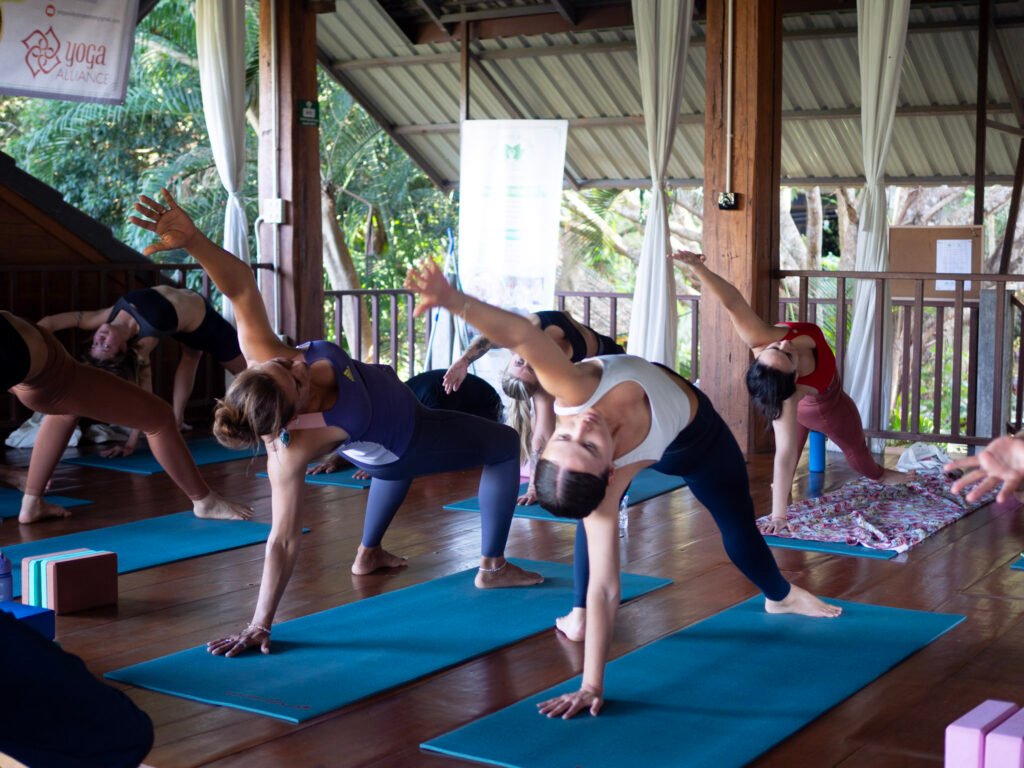
How to use this: the program leans toward traditional foundations, including philosophy, mantra, breath work, and cleansing practices. If that matches your goals, it may suit you. If you mainly want modern class design and sequencing, ask how many hours go to teaching methodology and practice teaching. Its yoga certification page is also worth reading; the school cautions that an RYT credential should be a beginning, not the finish line.
Final Checklist: Are You Ready for Your First Yoga Teacher Training?
☐ I have researched my course
☐ I understand the daily schedule
☐ I have a basic yoga practice
☐ I am not trying to become “perfect” before starting
☐ I have reviewed basic terminology
☐ I have prepared my travel documents
☐ I know what to pack
☐ I have arranged insurance if needed
☐ I am prepared for an intensive schedule
☐ I am ready to receive feedback
☐ I am willing to learn and make mistakes
☐ I have realistic expectations
What is the most important thing to bring to your first YTT?
Openness. Add consistency, curiosity, patience, and a willingness to learn. A teachable attitude carries you through the hard days better than strong poses do.
Frequently Asked Questions About Preparing for Yoga Teacher Training
How should I prepare for yoga teacher training?
Practice three or four short sessions a week, learn a few basic terms, and read simple introductions to the Eight Limbs and basic anatomy. Sleep well, and sort out travel, insurance, and packing early. Read your school’s schedule so day one holds no surprises.
How fit do I need to be for yoga teacher training?
You do not need athlete-level fitness. Comfort with regular movement, walking, and holding simple poses for a few breaths is a sensible baseline, though schools differ. With an injury or health concern, check with your doctor and the school first.
Can a beginner do yoga teacher training?
Often yes, but it depends on the school. Some require prior practice and others welcome beginners. Yoga Samaadhi’s FAQ says beginners are welcome in its 200-hour training. Ask any school what it expects.
How many weeks should I prepare for yoga teacher training?
Four to eight weeks of steady practice suits many beginners. If you already practice regularly, keep going and use the last 30 days for study, rest, and logistics.
What should I study before yoga teacher training?
Focus on the Eight Limbs, basic yoga philosophy, major joints and muscles, breath awareness, and a few Sanskrit terms. Aim for familiarity, not mastery.
What should I bring to yoga teacher training?
Comfortable clothes, a journal, a water bottle, travel documents, insurance papers, an adapter, personal medication, and layers for the climate. Check your school’s list, since some provide mats and materials.
Is yoga teacher training physically difficult?
It is usually more tiring than extreme. Long days and early starts add up, so rest matters as much as effort. Listen to your body and tell teachers about any injuries.
Do I need to be flexible to become a yoga teacher?
No. Teaching depends on understanding, clear communication, and safety, not deep stretches. Flexibility may improve with practice, but it is not a requirement.
Conclusion
You do not need to arrive as an expert. You need to arrive prepared, rested, curious, consistent, and willing to learn.
The best way to prepare for yoga teacher training is also the least dramatic: practice a few times a week, study a little, sleep well, sort out logistics early, and read your school’s information carefully. Those small habits matter more than any pose you manage to learn in the final week.
Expect some hard days, some awkward moments in practice teaching, and some ideas that challenge what you assumed about yoga. That is part of the course, not a sign you were unready.
If you are considering yoga teacher training in Thailand, take your time with the decision. Read the details of the 200-hour course at Yoga Samaadhi, check the FAQ for practical questions, and contact the school with anything the pages do not answer. Whether you choose Yoga Samaadhi or another school, pick the one that fits your goals, your learning style, and your pace.