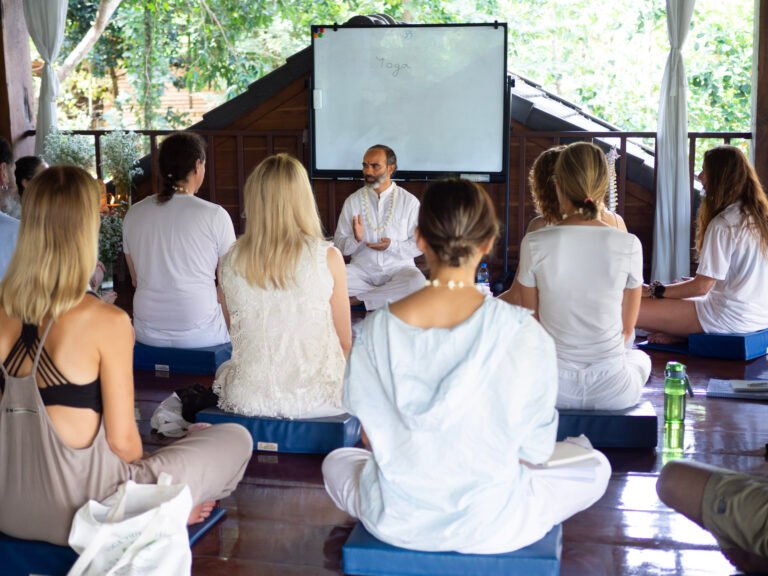
Many 200-hour yoga teacher trainings welcome complete beginners, but not all of them do, and requirements differ from school to school. Previous yoga experience helps but usually isn’t mandatory. Advanced flexibility is not the same thing as readiness. Before enrolling, check the specific school’s prerequisites, schedule, curriculum, and attendance expectations rather than assuming one rule applies everywhere.
If you’re considering a 200 hour yoga teacher training for beginners, you’ve probably run into conflicting advice online. Some sources suggest you need years of practice first. Others claim anyone can join with no preparation at all. Neither is accurate. The real answer depends on the school, your current readiness, and what you’re hoping to get out of the training.
This guide walks through what a 200-hour YTT actually involves, whether beginners can realistically join, what to expect physically and academically, how to evaluate a program, and what happens after you finish.
At a Glance
| Factor | What Beginners Should Know |
|---|---|
| Previous experience | Not universally required; check the specific school |
| Flexibility | Not a prerequisite; it develops with practice |
| Fitness | General readiness helps; extreme fitness isn’t required |
| Age | Usually has a minimum (commonly 18), set by the school |
| Attendance | Full attendance is often required; confirm the policy |
| Curriculum | Covers asana, anatomy, philosophy, teaching skills, and more |
| Physical commitment | Training days are often long and repetitive |
| School prerequisites | Vary; always confirm directly with the program |
Can Beginners Join a 200-Hour Yoga Teacher Training?
In many cases, yes. A number of 200-hour programs are built specifically to bring students with no prior practice up to speed, teaching everything from basic poses to teaching methodology from the ground up. Other schools set a minimum level of prior practice as a prerequisite, often because the training pace assumes some baseline familiarity with the material.
Neither approach is the industry standard. It comes down to how a particular school designs its program. If you’re a complete beginner, the most reliable way to know whether a training fits you is to ask the school directly whether their curriculum is designed to support students at your level, rather than assuming acceptance either way.
Do You Need Previous Yoga Experience?
Not necessarily, but it’s worth understanding what experience actually provides. Prior practice can make some parts of training feel more familiar: certain poses, breathing techniques, or vocabulary won’t be entirely new. But practicing yoga and teaching yoga are different skills. Experienced practitioners can still have real gaps in anatomy knowledge, sequencing logic, or teaching communication, the exact areas a 200-hour program is designed to build.
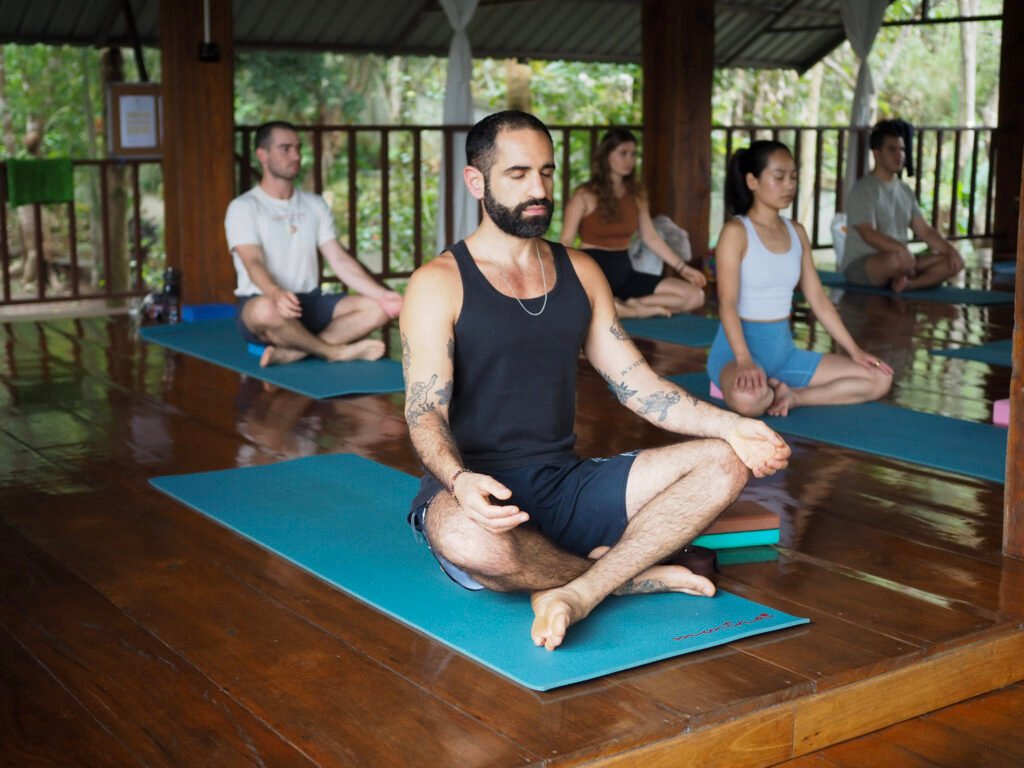
Beginners, meanwhile, get to build these foundations without first having to unlearn habits picked up outside a structured setting. What matters most is choosing a program that’s explicit about how it supports students at your experience level.
What Does “Beginner” Mean in Yoga Teacher Training?
“Beginner” isn’t one fixed category, and it’s worth being specific about which kind applies to you:
-
- Absolute beginner. Someone with little or no yoga practice before enrolling.
-
- New practitioner. Someone who has practiced occasionally, perhaps in classes or on their own, but has limited technical or anatomical knowledge.
-
- Beginner teacher. Someone who may have an established personal practice but has never taught professionally.
Each of these comes with different preparation needs. An absolute beginner may want more lead-in time to build a consistent practice. A new practitioner might focus more on filling knowledge gaps than building physical familiarity. A beginner teacher may already be comfortable on the mat but need to focus on communication and class management. Being a beginner in one of these senses doesn’t automatically mean you’re unprepared in the others.
What Is a 200-Hour Yoga Teacher Training?
A 200-hour YTT is a structured training program covering the foundational knowledge and skills needed to practice and teach yoga safely. The “200 hours” refers to the overall contact and learning structure of the course, not simply 200 hours of physical asana practice.
It’s worth understanding a few related terms, since they’re often used loosely:
-
- 200-hour YTT describes the length and general scope of the training itself.
-
- RYS 200 (Registered Yoga School) refers to a school that Yoga Alliance has recognized as meeting its standards for delivering a 200-hour training.
-
- RYT 200 (Registered Yoga Teacher) is the credential an individual can apply for through Yoga Alliance after completing training at an RYS.
Completing a 200-hour course is not automatically the same as holding an RYT 200 credential; the credential typically requires registering separately after graduation. It’s also not a universal legal license to teach in every country or setting. If credential recognition matters to you, confirm the school’s current registration status directly with the school or with Yoga Alliance, since these details can change over time.
What Will You Learn in a 200-Hour YTT?
Asana
Posture practice, alignment principles, and modifications, taught in a way that builds a working understanding of how poses function for different bodies, not just how to perform them.
Anatomy and physiology
A working understanding of muscles, joints, and movement patterns. This matters because it explains why a cue works, where a student’s limitations might come from, and how to teach more safely.
Yoga philosophy and ethics
Foundational philosophical concepts and the ethical responsibilities that come with guiding others, covered at a level useful for teaching rather than academic study for its own sake.
Pranayama and meditation
Breathing techniques and meditation approaches, along with how they might be incorporated into a class you eventually teach.
Teaching methodology
How to give clear instructions, demonstrate effectively, offer modifications, and manage a room of students with different needs.
Sequencing, alignment, and modifications
How individual poses are organized into a coherent class, and how to adapt a sequence for different bodies and ability levels.
Teaching practicum and assessment
Supervised opportunities to actually teach, with feedback from instructors and peers. Most schools also assess student competency in some form before certifying completion, whether through practical teaching evaluations, written work, or both.
For a beginner, these subjects matter together, not in isolation. Building teaching competence means understanding why a sequence works, not just memorizing one.
Is a 200-Hour YTT Physically Difficult for Beginners?
There’s no single honest answer here. Difficulty depends on several factors:
-
- The program’s daily schedule and number of practice sessions
-
- The yoga style being taught (a gentle hatha-based program differs from a vinyasa-intensive one)
-
- Whether the format is residential, part-time, or online
-
- Your current conditioning and movement background
-
- How well you manage recovery and sleep during training
Beginners commonly experience muscle soreness, fatigue, and the mental demands of sustained concentration and study, on top of the physical practice itself. None of this means beginners can’t manage a 200-hour program. It means it’s genuinely demanding and worth preparing for.
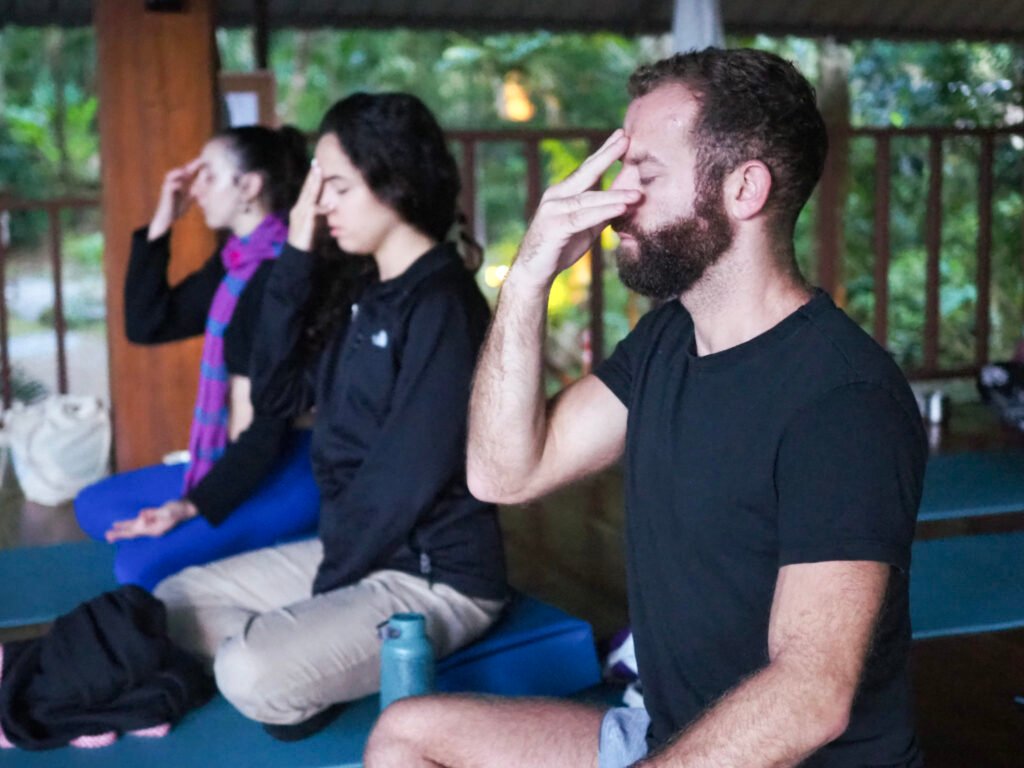
Practical ways students manage the physical load include using modifications rather than forcing a pose, resting when needed instead of pushing through fatigue, communicating injuries or limitations to instructors early, and progressing gradually rather than comparing themselves to other trainees.
What Are the Requirements for a 200-Hour Yoga Teacher Training?
| Requirement / Factor | What Beginners Should Know |
|---|---|
| Previous yoga experience | Varies by school; not universally required |
| Flexibility | Not typically an entry requirement; it develops with practice |
| Fitness | General physical readiness can help; extreme fitness isn’t expected |
| Age | Usually school-specific, commonly 18 and up |
| Attendance | Many programs require full attendance; confirm the specific policy |
| Teaching experience | Usually unrelated to admission; it’s what the training itself builds |
| Medical considerations | Follow appropriate professional advice for any existing condition or injury |
| Language | Confirm the training is delivered in a language you’re comfortable learning in |
| Commitment | Important, since training days are often long and intensive |
| School-specific prerequisites | Must be confirmed directly with the program you’re considering |
Are You Ready for a 200-Hour YTT?
Use this checklist as a starting point for your own reflection, not as a pass/fail test:
-
- I can commit to the required schedule, including full attendance where applicable.
-
- I’m comfortable learning unfamiliar yoga concepts and terminology.
-
- I understand that I don’t need advanced flexibility to begin.
-
- I’m willing to build a consistent practice, even if I’m starting from zero.
-
- I’m prepared for anatomy, philosophy, and theory classes, not just physical practice.
-
- I’m open to receiving feedback on my teaching.
-
- I understand that teaching requires communication skills beyond personal practice.
-
- I’ve reviewed the specific school’s prerequisites and curriculum.
-
- I understand the attendance and assessment requirements.
-
- I’ve considered tuition, accommodation, travel, and other costs, if applicable.
If most of these feel true, beginner status alone shouldn’t hold you back. If several feel uncertain, that’s useful information, not a reason to rule yourself out. It may just mean spending more time researching schools or building a foundation before you commit.
How Should Beginners Prepare for a 200-Hour YTT?
-
- Build a consistent yoga practice. Regular short sessions in the weeks or months before training matter more than reaching any particular pose or flexibility level.
-
- Learn basic yoga terminology. Getting familiar with common terms like asana, pranayama, alignment, and sequencing ahead of time makes the first days feel less overwhelming.
-
- Improve general physical readiness. Simple, non-medical movement habits, like regular walking or stretching, can help your body adjust to a more active training schedule.
-
- Practice observing your own body. Pay attention to how your body responds to movement and where your current limits are, rather than trying to force flexibility or strength before training starts.
-
- Develop study habits. A 200-hour course includes real academic content: anatomy, philosophy, and terminology that often involves memorization and written work, not just physical practice.
-
- Practice communication. Explaining a movement or instruction clearly to a friend or family member is a small, useful way to start building the communication skills teaching requires.
-
- Review the school’s curriculum. Understand exactly what subjects, hours, and assessments are included before you enroll.
-
- Understand the schedule. Know what daily time commitment you’re signing up for, including how demanding the days will realistically be.
What Does a Typical Day Look Like?
-
- Morning asana practice
-
- Breakfast and rest
-
- Anatomy or philosophy lecture
-
- Technique or alignment workshop
-
- Lunch and rest
-
- Teaching methodology session
-
- Supervised teaching practicum
-
- Evening meditation or pranayama practice
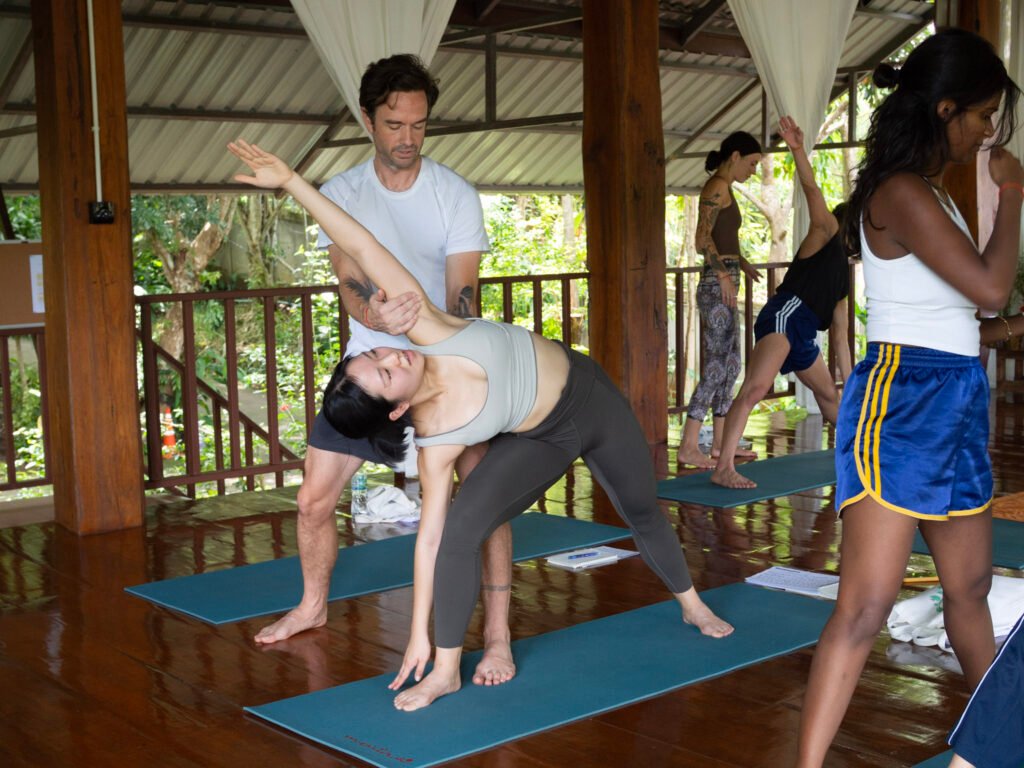
Some programs run this kind of schedule as an intensive residential format over several consecutive weeks; others spread similar content across a part-time schedule over months. Always ask a specific school for their actual daily structure before enrolling.
How to Choose a Beginner-Friendly Yoga Teacher Training
Not all 200-hour programs are structured the same way. When evaluating a school, consider:
-
- Curriculum. Does it clearly cover asana, anatomy, philosophy, teaching methodology, and practicum, not just physical practice?
-
- Beginner suitability. Does the school explain, specifically, how it supports students with no prior experience?
-
- Instructor qualifications. Who teaches the course, and what relevant teaching or training experience do they have?
-
- School credentials. Can you verify the school’s stated registration or credentialing claims independently, rather than taking their word for it?
-
- Teaching practice. Is supervised teaching practice actually included, with real feedback?
-
- Assessment. How is student competency evaluated before certification is awarded?
-
- Class size. How much individual instructor attention can you realistically expect?
-
- Schedule. How many hours per day, and over how many total days or weeks?
-
- Location and format. Residential, studio-based, online, or hybrid?
-
- Accommodation and meals. If residential, what’s actually included?
-
- Tuition inclusions. What’s covered, and what costs extra?
-
- Refund and cancellation policy. What happens if you can’t complete the training?
-
- Reviews. Look at recent, independent reviews in addition to testimonials the school displays itself.
-
- Post-training support. Does the school offer mentoring, further teaching opportunities, or alumni support after graduation?
How Much Does a 200-Hour YTT Cost?
Total cost varies too widely to state a meaningful average, and it depends on factors including:
-
- Country and city
-
- The specific school
-
- Residential versus non-residential format
-
- Online versus in-person delivery
-
- Accommodation and meals, if included
-
- Course materials
-
- Certification or registration-related fees
-
- Travel and, where relevant, visa costs
-
- Any additional workshops or assessments
It helps to separate tuition cost from total training cost. Tuition covers the course itself; total cost includes everything else you’ll need to budget for, from flights to daily meals if they aren’t included.
Before paying, it’s worth asking a school directly: What exactly does tuition include? Are accommodation and meals part of the price or separate? Are there additional fees for materials, certification, or assessments? What is the refund policy if your plans change?
Is Online 200-Hour YTT Suitable for Beginners?
It can be, depending on how the program is structured, but it’s worth weighing the trade-offs. Potential advantages of online training include scheduling flexibility, no need to relocate or travel, and often lower total cost since accommodation and travel aren’t factors.
Potential limitations include less in-person physical feedback on alignment, a different structure for teaching practicum since it often happens over video rather than in a shared room, and the fact that self-discipline and a stable setup matter more without the structure of being physically present. Credential recognition can also work differently for online formats, so it’s worth confirming this directly with any school and, if relevant, with the credentialing body.
The right format depends on how a specific program handles these trade-offs and what you personally need from the training, not on one format being universally better.
Beginner vs Experienced Yoga Students
| Area | Beginner | Experienced Practitioner |
|---|---|---|
| Yoga knowledge | Developing | More established |
| Asana familiarity | Basic or limited | Broader |
| Alignment knowledge | Developing | More familiar, though not always fully accurate |
| Philosophy | Often new | May have some prior exposure |
| Teaching | Usually new to both students | May have some prior teaching experience |
| Learning curve | More new terminology and concepts to absorb | More refinement of existing habits |
| Main challenge | Building foundational knowledge | Unlearning incorrect habits and deepening existing knowledge |
Neither starting point is an advantage across the board. Beginners build habits from scratch; experienced practitioners sometimes have to revise habits picked up informally. Both groups benefit from a program that’s honest about what it expects from each type of student.
What Can You Do After Completing a 200-Hour YTT?
Completing training opens up several possible paths, though what’s actually available to you depends on your location, the school’s credentials, and local regulations:
-
- Teaching beginner-level classes, where appropriate and permitted
-
- Assisting more experienced teachers
-
- Continuing to deepen your own personal practice
-
- Pursuing further, more specialized teacher education
-
- Teaching in studios or other settings, depending on local requirements and what the school’s certification actually covers
-
- Building experience gradually through supervised or assisted teaching
It’s worth being clear about one distinction: completing a 200-hour training is different from being automatically eligible for a specific registration or credential like RYT 200, which typically requires a separate application. It’s also different from being licensed to teach in every setting or country; requirements vary by employer, studio, and local regulation.
Is a 200-Hour YTT Right for You as a Beginner?
This isn’t a decision anyone else can make for you, but a few honest questions can help.
It may fit if:
-
- You enjoy structured learning and want to study yoga beyond physical exercise.
-
- You can genuinely commit to the training’s attendance and schedule.
-
- You’re interested in teaching, or in a much deeper level of personal study.
-
- You’re comfortable learning anatomy, philosophy, and teaching methodology alongside practice.
Consider carefully if:
-
- You can’t commit to the attendance requirements the program sets.
-
- You’re expecting the course to be purely physical practice.
-
- You’re really looking for a casual beginner class rather than an intensive training.
-
- You haven’t yet reviewed the specific school’s curriculum and prerequisites.
-
- You’re choosing a school mainly based on marketing rather than its curriculum and instructors.
Questions to Ask Before Enrolling
-
- Do you accept absolute beginners?
-
- Is prior yoga experience required, and if so, how much?
-
- What does the daily schedule actually look like?
-
- How many hours are spent in physical practice versus theory?
-
- Is supervised teaching practice included?
-
- How is student competency assessed before certification?
-
- What are the attendance requirements?
-
- What’s included in tuition, and what costs extra?
-
- Is accommodation included, if the program is residential?
-
- Are meals included?
-
- What is the refund or cancellation policy?
-
- What credentials or registrations does the school currently hold?
-
- Who are the instructors, and what’s their teaching background?
-
- What support, if any, is available after graduation?
Frequently Asked Questions
Can beginners do a 200-hour yoga teacher training?
Yes, in many cases. A number of 200-hour programs are designed to support students with no prior practice, teaching foundational skills from the ground up. Requirements vary by school, so it’s worth confirming a specific program’s stance on beginners before applying.
Do I need to be flexible to become a yoga teacher?
No, advanced flexibility isn’t a requirement to start training. Flexibility tends to develop with consistent practice over time. What matters more going in is your willingness to work safely within your current body’s limits and use modifications as needed.
What are the requirements for a 200-hour yoga teacher training?
Requirements vary by school but commonly include a minimum age, an application process, an attendance commitment, and sometimes a baseline of prior practice. There’s no single universal requirement across all programs, so confirming directly with a specific school is the most reliable approach.
Is a 200-hour YTT physically difficult?
It can be demanding, involving repeated physical practice, long training days, and sustained mental focus for study. Difficulty varies with the program’s schedule, yoga style, and your own conditioning. Most programs expect students to pace themselves rather than match everyone else’s intensity.
How long does a 200-hour yoga teacher training take?
This varies by school and format. Some run as an intensive over several consecutive weeks; others are spread part-time across several months, and some are offered online with flexible pacing. Checking a specific school’s schedule format is the best way to know what to expect.
What do you learn in a 200-hour YTT?
Typical subjects include asana, anatomy and physiology, yoga philosophy and ethics, pranayama, meditation, teaching methodology, sequencing, alignment and modifications, and supervised teaching practice, usually alongside some form of assessment before certification.
How much does a 200-hour yoga teacher training cost?
Cost varies widely based on country, school, format (online, in-person, or residential), and what’s included, such as accommodation and meals. Rather than relying on a general average, ask a specific school directly what tuition covers and what additional costs to expect.
Can I do a 200-hour YTT online?
Many schools now offer online 200-hour programs, which can suit beginners who need scheduling flexibility. Trade-offs can include less in-person physical feedback and a different structure for teaching practice, so it’s worth comparing formats against what you personally need.
Can I do YTT if I don’t want to become a teacher?
Yes, many students complete a 200-hour training purely to deepen their personal practice and understanding of yoga, without intending to teach professionally afterward. This is common and generally accepted by most schools.
How do I choose a beginner-friendly YTT?
Look for a school that explicitly explains how it supports beginners, has a clear and complete curriculum, includes real supervised teaching practice, and is transparent about instructor qualifications, costs, and its refund policy. Independent reviews can also help verify these claims.
What can I do after completing a 200-hour YTT?
Many graduates go on to teach beginner-level classes, assist more experienced teachers, or continue their own practice and education. What’s specifically available depends on your location, the school’s credentials, and local requirements, so it’s not automatically the same for everyone.
Summary
Being a beginner isn’t automatically a barrier to starting a 200-hour yoga teacher training, but it also isn’t a reason to skip due diligence. The most useful thing you can do before enrolling is look past general claims about who “can” or “can’t” join, and check a specific school’s curriculum, prerequisites, and support for students at your level directly.