By mid-afternoon, your shoulders have crept up toward your ears and your neck feels like a tight rope. Sound familiar? It’s one of the most common complaints among people who sit, scroll and stress for a living, and it’s also one of the things gentle yoga handles well.
This guide covers nine beginner-friendly yoga poses for neck and shoulder tension, how to do each one without strain, a 10-minute floor sequence, and a 5-minute desk reset you can do in a chair. We’ll also cover what to avoid, because the neck is a place where forcing things backfires.
Quick answer: The best yoga poses for neck and shoulder tension are gentle ones: chin tucks, shoulder rolls, a seated neck side stretch, cat-cow, thread the needle, eagle arms, cow face arms, puppy pose and a supported final rest. Hold each for about five slow breaths, never pull on your head, and stop if you feel sharp pain, tingling or dizziness.
The short version:
- Move slowly and let your breath set the pace
- Stretch the neck by letting gravity work, not by pulling
- Pair neck stretches with upper-back and shoulder-blade work
- Short daily sessions beat one long session a week
- Numbness, tingling or pain that spreads down your arm means see a doctor first
Why Neck and Shoulders Get So Tight
Your head weighs roughly as much as a bowling ball, and your neck muscles work all day to hold it up. When you lean toward a screen, that job gets harder. The muscles at the back of your neck and top of your shoulders stay switched on for hours, and tension builds.
A few everyday habits usually feed it:
- Sitting with your head pushed forward, especially at a laptop or phone
- Shrugging your shoulders when you’re stressed or concentrating
- Holding your breath, which keeps the upper chest and shoulders working
- Carrying a heavy bag on one shoulder
- Sleeping in a position that leaves your neck bent
Yoga helps in two ways. The stretches ease tight spots, and the breathing and body awareness help you catch the shrug before it turns into a knot. Neither is magic, and results vary, but a few minutes a day adds up.
Safety Rules Before You Start
The neck is delicate, so a few ground rules matter more here than in a hamstring stretch.
- Never pull on your head. If you use your hand for a stretch, let its weight rest there. No yanking.
- Skip big, fast neck circles. Slow, small movements are fine for many people. Forcing your head back is not.
- Stop at tingling, numbness or sharp pain. A mild stretch is the goal, not intensity.
- Keep your breath smooth. If you’re holding it, you’re pushing too hard.
- Warm up first. A minute of shoulder rolls before deeper stretches makes everything easier.
9 Yoga Poses for Neck and Shoulder Tension
Each pose below tells you what to do, what you should feel, and what to avoid. Hold for about five slow breaths unless stated otherwise.
1. Chin Tuck
Sit tall. Without tilting your head, slide your chin straight back, as if making a gentle double chin. Hold for five breaths, then release. Do three rounds. You should feel the back of your neck lengthen. Avoid: tipping your head down or jamming it back hard. Small and gentle is right.
2. Shoulder Rolls
Inhale and lift your shoulders toward your ears, exhale and roll them back and down. Do five slow rolls, then five in the other direction. You should feel the muscles around your shoulder blades loosen. Avoid: rushing. Slow rolls do more than fast ones.
3. Seated Neck Side Stretch
Sit tall and drop your right ear toward your right shoulder. Rest your left hand on the floor or seat beside you to keep that shoulder down. You should feel a stretch along the left side of your neck. Hold five breaths and switch. Avoid: pulling your head with your hand or lifting the opposite shoulder.
4. Cat-Cow
On hands and knees, inhale to lift your chest, exhale to round your spine. Press the floor away so your shoulder blades spread wide. Do six slow rounds. You should feel movement along your whole back, not just your neck. Avoid: letting your head swing. Move it with your spine.
5. Thread the Needle
From hands and knees, slide your right arm under your left arm along the floor until your right shoulder and the side of your head rest down. Put a folded blanket under your head if the floor feels far. Hold five breaths each side. You should feel a stretch across the upper back and shoulder. Avoid: cranking your head to the floor. Keep your neck long.
6. Eagle Arms (Seated)
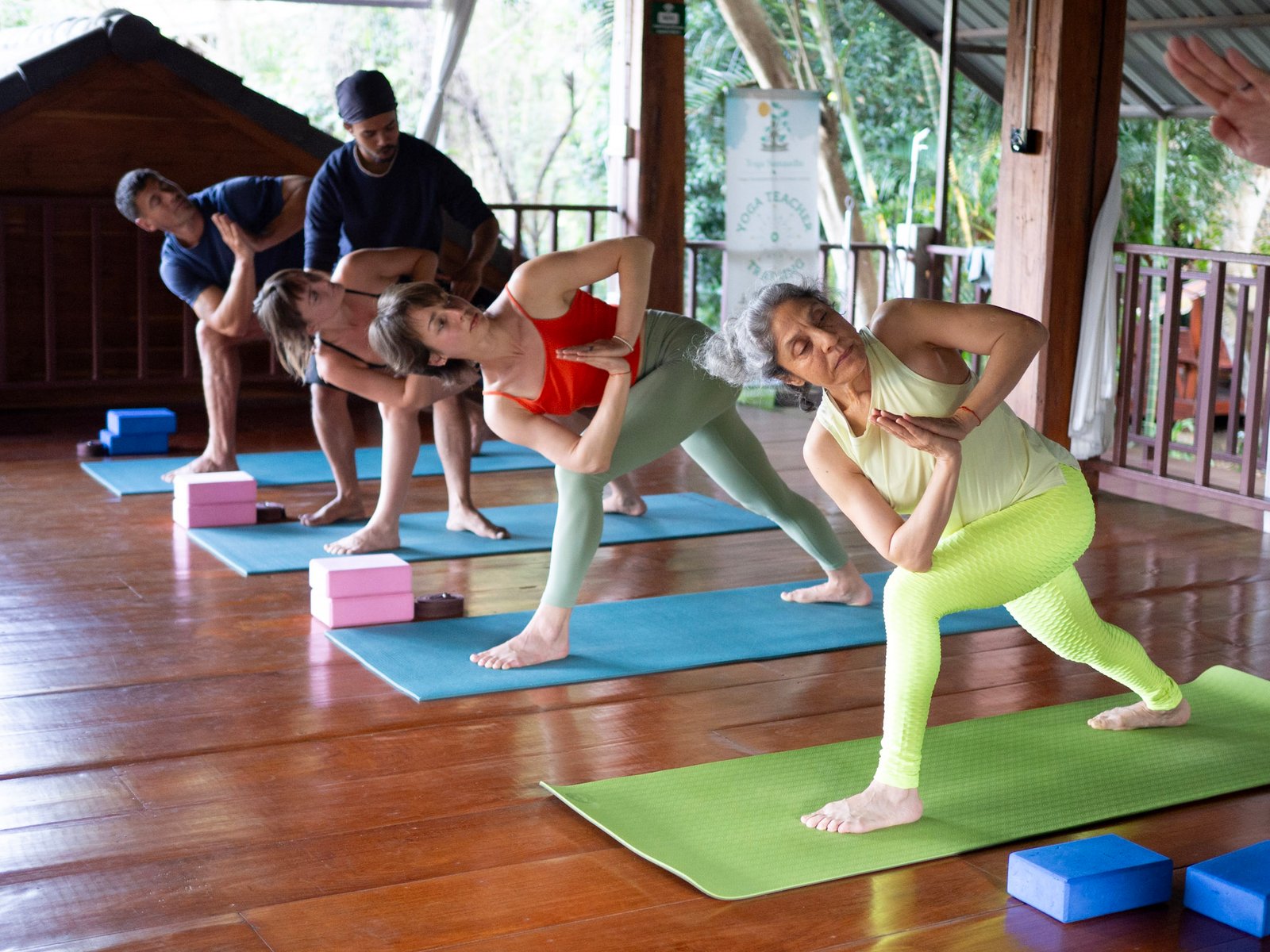
Sit tall, cross your left elbow over your right and wrap your forearms if you can. Lift your elbows slightly and keep your shoulders away from your ears. You should feel it between your shoulder blades. Hold five breaths and switch. Modify: if wrapping feels tight, just hug yourself with crossed arms. Avoid: hiking your shoulders up.
7. Cow Face Arms with a Strap
Reach your right arm overhead, bend the elbow and let your hand drop behind your head. Reach your left hand behind your back and hold a strap or towel between them. You should feel a stretch through the shoulder and upper arm. Hold five breaths and switch. Modify: just reach one arm overhead with a bent elbow. Avoid: letting your ribs flare or your neck jut forward.
8. Puppy Pose
From hands and knees, walk your hands forward and lower your chest toward the floor while your hips stay above your knees. Rest your forehead down on a cushion. You should feel the stretch across your upper back and shoulders. Hold five breaths. Avoid: collapsing into your shoulders. Bend your elbows or place a pillow under your chest if you feel a pinch.
9. Supported Final Rest
Lie on your back with a small folded towel under your head if your chin tips up. Arms by your sides, palms up. Let your shoulders soften away from your ears and breathe naturally for two minutes. You should feel heavy and quiet. Avoid: skipping it. This is where your muscles actually let go.
A 10-Minute Sequence for Neck and Shoulder Tension
When you have a little time, string the poses together in this order. It warms up first and releases deeper after.
| # | Pose | Time | Focus |
|---|---|---|---|
| 1 | Chin tuck | 1 min | Wake up the neck gently |
| 2 | Shoulder rolls | 1 min | Warm up the shoulders |
| 3 | Seated neck side stretch | 2 min | Both sides, five breaths each |
| 4 | Cat-cow | 1 min | Mobilize the upper back |
| 5 | Thread the needle | 2 min | Both sides, five breaths each |
| 6 | Puppy pose | 1 min | Open shoulders and upper back |
| 7 | Eagle arms | 1 min | Release between shoulder blades |
| 8 | Supported final rest | 1 min | Let everything settle |
Short on time? Do steps 1 to 3 and 8. Want more? Add cow face arms after step 7.
A 5-Minute Desk Reset
You don’t need a mat for this. Do it at your desk every couple of hours, especially when you notice your shoulders creeping up.
- Sit tall and do three chin tucks, five breaths each.
- Roll your shoulders back five times, then forward five times.
- Do the neck side stretch on each side for five breaths.
- Do seated eagle arms on each side for five breaths.
- Finish with three slow breaths, shoulders relaxed.
It also helps to stand up and move every 30 to 60 minutes, and to raise your screen closer to eye level so your head isn’t pushed forward all day.
How Often Should You Practice?
Short and regular beats long and rare. Five to ten minutes a day usually does more than one long session on the weekend. If your neck feels sore the next day, ease off and shorten your holds. A good session leaves you feeling looser, not beaten up.
Common Mistakes to Avoid
- Stretching only the neck. Tight shoulder blades and upper back are often part of the story.
- Pulling the head. Gravity and your hand’s weight are enough.
- Big, fast neck circles. Slow and small is safer.
- Holding your breath. If you can’t breathe easily, back off.
- Expecting instant results. One session can feel good, but change builds over weeks.
- Ignoring your setup. Stretching won’t fully undo hours of looking down at a screen.
When to See a Doctor
Yoga is not a substitute for medical care. Talk to a doctor before practicing if you have numbness, tingling or weakness in your arms or hands, pain that spreads down your arm, neck pain after a fall or accident, severe or unusual headaches, or dizziness. If your tension doesn’t ease after a couple of weeks of gentle practice, get it checked. This is general information, not medical advice.
Want to Learn More?
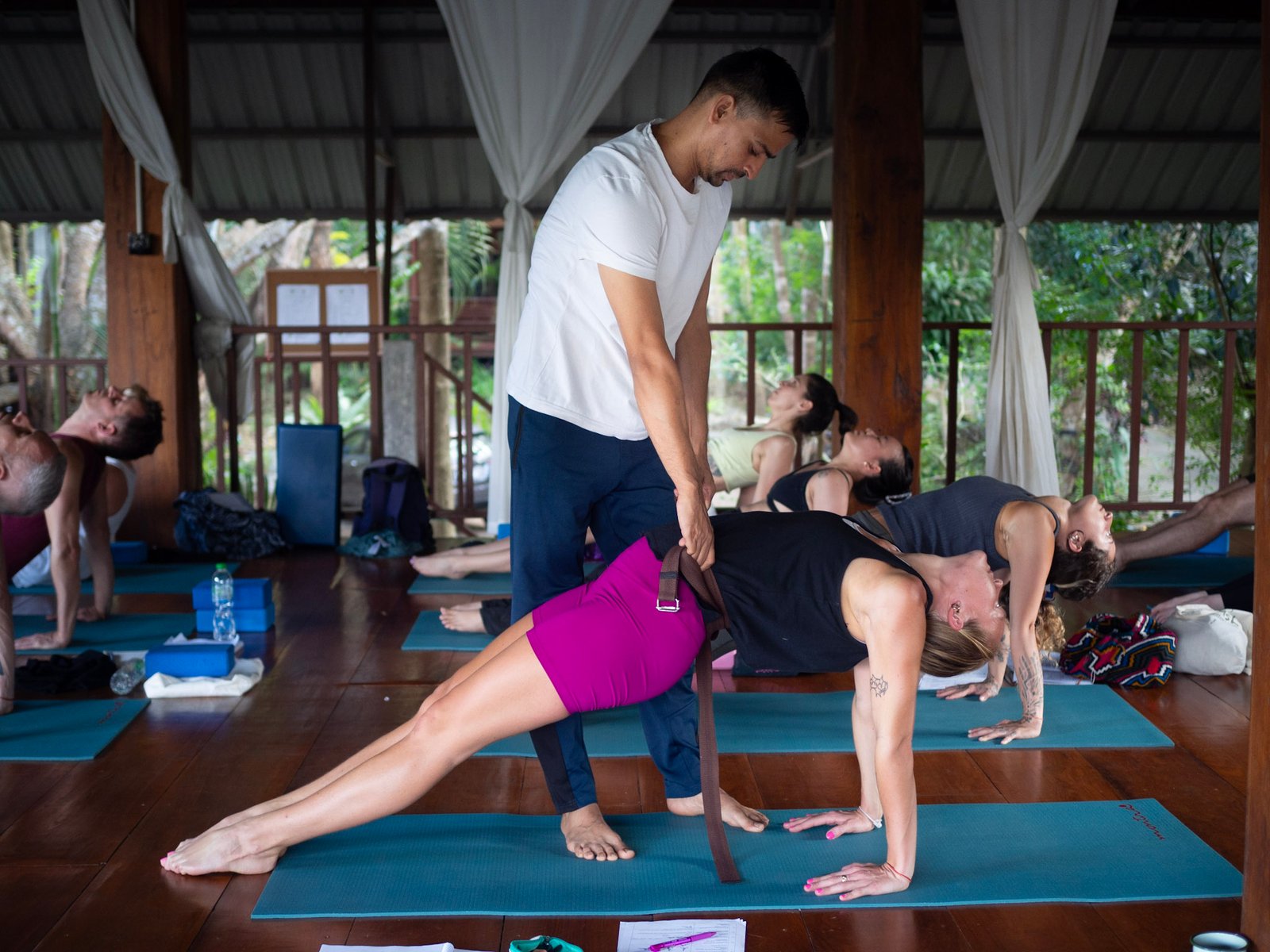
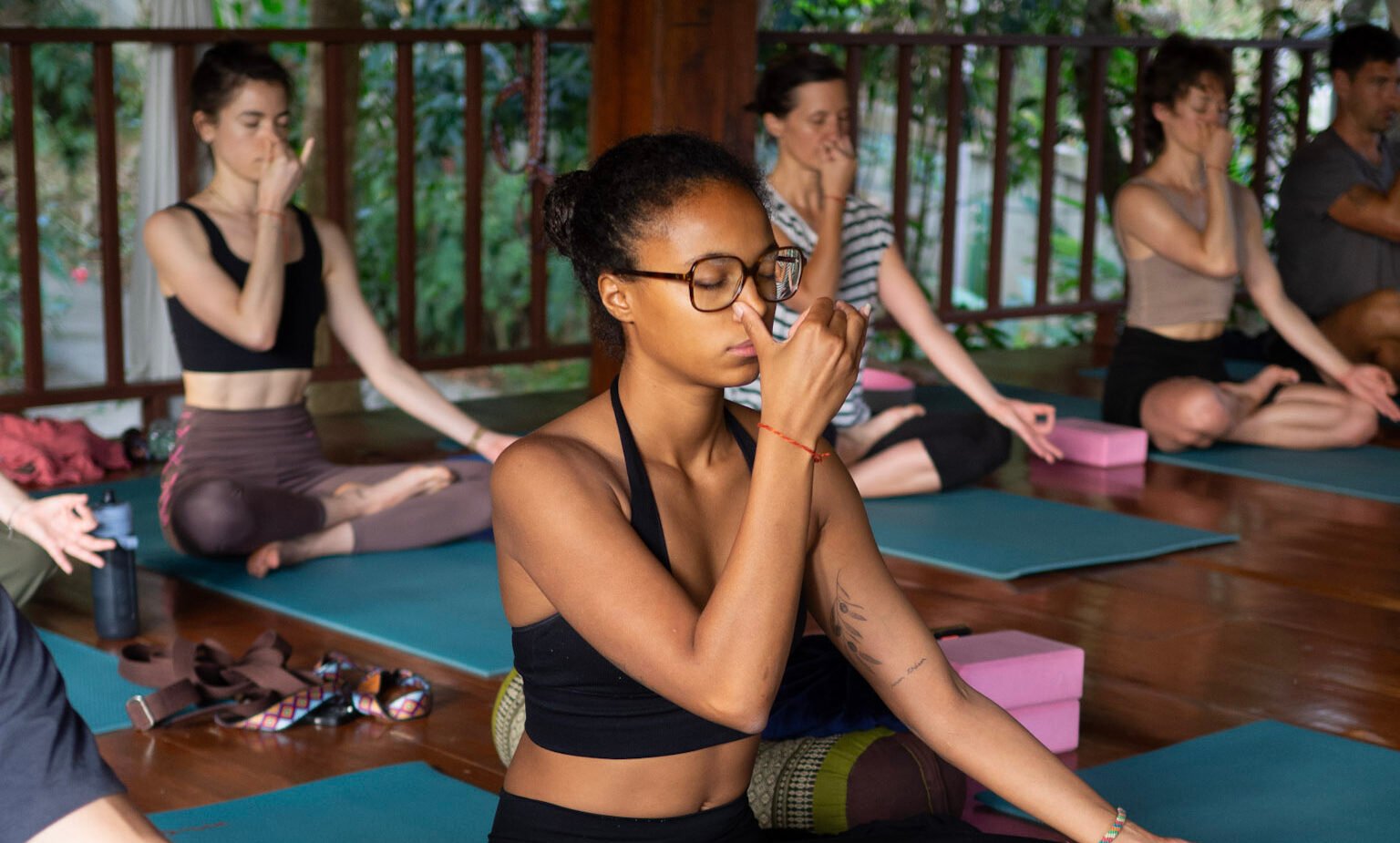
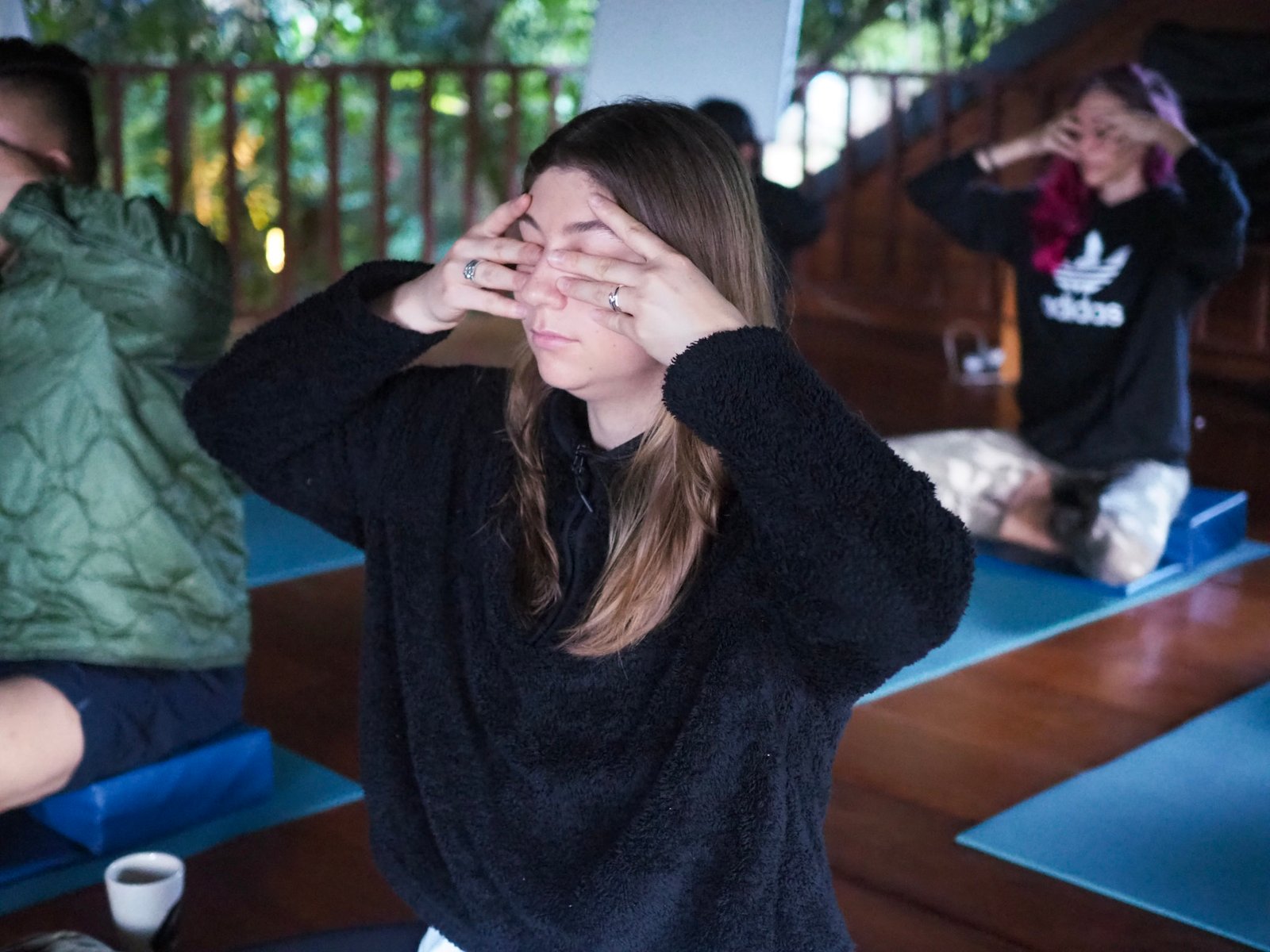
A beginner class helps because a teacher can see what you can’t feel, like a lifted shoulder or a head that’s jutting forward. If you want to go deeper into how yoga works, a teacher training is a bigger step, and it isn’t only for people who plan to teach. The 200-hour training at Yoga Samaadhi runs in Chiang Mai, and the FAQ says beginners are welcome. Yoga Samaadhi also has a guide on how to prepare for your first yoga teacher training.
FAQs About Yoga for Neck and Shoulder Tension
What is the best yoga pose for neck and shoulder tension?
There’s no single best pose. For most beginners, a seated neck side stretch, shoulder rolls and thread the needle make a good starting trio because they’re gentle and easy to control.
How long should I hold each pose?
About five slow breaths, roughly 20 to 30 seconds, is a good starting point. Never hold into pain.
Are neck circles safe in yoga?
Slow, small movements are comfortable for many people, but big fast circles or forcing your head back can irritate the neck. Chin tucks and side stretches are gentler. Skip circles if you feel dizzy or have a neck injury.
How often should I do these poses?
Five to ten minutes a day works well. You can also do the 5-minute desk reset a few times during the workday.
Can yoga fix tension from desk work?
Yoga can ease it and help you notice habits like shrugging. It works best alongside regular movement breaks, a good screen setup and enough sleep. If the pain keeps coming back, see a doctor.
Conclusion
Neck and shoulder tension builds slowly, and it eases slowly too. A handful of gentle poses, slow breathing and a few desk resets are enough to start. Move softly, never pull on your head, and show up again tomorrow.
If you’d like more guidance, explore Yoga Samaadhi’s yoga teacher training programs in Chiang Mai, or get in touch with any questions.