Boat Pose, known in Sanskrit as Navasana, is a seated yoga posture that challenges your core strength, balance and concentration. As you lift your feet and hold your body in a V shape, your abdominal muscles, hip flexors and thighs work together to keep you steady.
The pose can be adapted for different levels of experience. You can begin with your knees bent and your feet close to the floor, then gradually explore a fuller version as your strength and control develop. In this guide, you’ll learn about the physical and mental benefits of Boat Pose, how to practise it with care, and how to adjust it to suit your body.
“Nava” means boat in Sanskrit, and “asana” means posture or seat. In Boat Pose, you balance on your sitting bones while lifting your legs and lengthening your torso. The shape resembles a small boat held steady on water.
Navasana is often described as a posture of strength, focus and balance. The image of a boat navigating changing waters can also serve as a reminder of the steadiness and resilience we develop through practice. In this way, the pose connects physical balance with the idea of meeting life’s challenges with patience and determination.
Navasana has its roots in the long tradition of yoga, where physical postures are practised to develop strength, balance and concentration. The name comes from the Sanskrit words nava, meaning “boat,” and asana, meaning “posture” or “seat.” Together, they describe the shape of the body as it balances on the sitting bones with the legs lifted.
The boat also offers a meaningful image for the practice. Just as a boat needs steadiness to travel through changing waters, a practitioner needs balance and focus to remain in Navasana. This image is often connected with the journey of life, where steadiness and determination can help us meet challenges.
In yoga practice, holding the pose calls for more than physical effort. It asks you to stay attentive, breathe steadily and find stability while the body works. This connection between strength and concentration is part of what gives Navasana meaning both on the mat and beyond it.
Boat Pose asks several muscle groups to work together. The experience and results vary from person to person, but regular, comfortable practice can offer these benefits.
The abdominal muscles engage to help keep your torso lifted and steady. The deeper core muscles also contribute to stability while you balance on your sitting bones. Building this strength can support control in other yoga postures and movements.
Holding Navasana requires sustained effort from the abdominal muscles, including the rectus abdominis. With consistent practice, this can contribute to abdominal strength and muscle definition. A visible six-pack is not guaranteed by one pose or exercise. It depends on several factors, including a person’s overall training, body composition and individual physiology.
Your hip flexors help lift and hold your legs, while the quadriceps work to keep the knees extended in the full version. The inner thighs also help maintain steadiness. The bent-knee variation still engages these areas while offering a more accessible starting point.
Balancing on your sitting bones requires awareness of how your torso and legs move together. Developing this control may help you feel steadier during yoga and everyday movements such as standing, walking or changing position.
The abdominal and hip muscles contribute to the support and control of the torso. Building strength through a balanced yoga practice may support comfortable posture and help reduce the chance of some strain-related back issues. Boat Pose is not a treatment for back pain, and it cannot guarantee that back problems will be prevented. If you already have back pain or an injury, choose a comfortable variation and seek qualified guidance.
Navasana is physically demanding, but it also asks you to direct your attention. Staying with the pose while breathing steadily can offer a focused moment in your practice.
Balancing requires attention to your body, breath and position. Returning your focus to these details can help you practise concentration on the mat.
The pose can feel challenging at first. Beginning with bent knees and progressing only when you feel ready can help you recognise your progress and build confidence in your practice.
You do not need to reach the fullest version of the posture for the practice to be worthwhile. Learning to adjust, rest and try again can help cultivate patience and resilience.
Boat Pose can make it tempting to hold your breath. Keeping your breathing smooth gives you a useful way to check whether the variation is manageable. If you cannot breathe comfortably, lower your feet or rest.
Move slowly and stay with a version that allows you to breathe without strain.
Sit on your mat with your legs extended in front of you. Place your hands beside your hips or slightly behind you for support. Lengthen your spine and allow your shoulders to soften.
Bend your knees and place your feet on the mat. Hold the backs of your thighs if that helps you stay upright. Shift your weight gently onto your sitting bones. Avoid rolling back onto your lower back.
Keep your chest lifted as you lean back a little. Aim to maintain a long spine rather than rounding your back. Use your hands behind you or on your thighs if you need extra support.
If you feel steady, lift one foot at a time. Keep your knees bent and bring your shins towards parallel with the floor. This is a useful version of Boat Pose in its own right.
When you can balance comfortably, bring your arms forward at about shoulder height, with your palms facing one another. Keep your shoulders relaxed and your chest open. You can continue holding your thighs if reaching forward makes your back round.
Only if your spine stays long and your breath remains smooth, begin to straighten your legs gradually. You do not need to straighten them fully. Return to bent knees whenever you feel your back rounding or your balance becoming strained.
Stay for a few comfortable breaths. Begin with a short hold and build gradually if you remain steady and relaxed. To come out, bend your knees if needed, lower your feet to the mat and sit upright. Take a moment to rest before repeating.
Keep your knees bent and your shins lifted. Hold the backs of your thighs, or keep your fingertips on the floor behind you. This variation can make it easier to maintain a long spine.
Keep one foot on the mat while lifting the other foot. Lower it and switch sides. This lets you practise the balance and movement in smaller steps.
Stay seated with your knees bent and feet grounded. Lean back slightly while keeping your chest lifted. This is a good place to begin if lifting both feet feels too difficult.
If you have a yoga strap, place it around the soles of your feet and hold an end in each hand. Keep your knees bent as you lean back slightly. Use the strap for light support without pulling yourself into the pose.
If sitting directly on the mat feels uncomfortable, sit on a folded yoga mat or firm blanket. Choose a stable height that helps you sit upright.
Rounding often happens when the legs are lifted too high or straightened before you are ready. Bend your knees, lower your feet or hold your thighs until you can lengthen your spine again.
The goal is to keep control and breathe, not to make the legs as high or straight as possible. Lower them to a position where you can stay steady.
Avoid drawing your shoulders up towards your ears or pushing your chin forward. Let your shoulders soften and keep your head aligned with your spine.
If you notice that you are holding your breath, make the pose easier. Lower your feet, bend your knees or rest before continuing.
Effort in the abdominal muscles is different from sharp pain or joint discomfort. Come out of the pose if you feel pain, dizziness or unusual discomfort.
Choose a gentle version or ask a qualified yoga teacher for guidance if you have back pain, a hernia, a recent injury or have had surgery. If you are pregnant, check with a qualified health professional or prenatal yoga teacher before practising a strong core posture.
Stop if you experience pain, dizziness or difficulty breathing. You can return to the pose another time with more support or choose a different posture.
A few minutes of gentle movement can help you settle before practising. Try comfortable seated movement or an easy warm-up that does not strain your back or hips. You do not need to do a demanding sequence before Boat Pose.
After your hold, lower your feet and rest. If you would like a supported resting posture, try Child’s Pose (Balasana). Return to a seated position when your breathing feels natural again.
You can practise Navasana as part of a balanced yoga session. Start with the bent-knee version, rest between attempts and stop before your form becomes strained. If the pose feels comfortable, you can gradually explore a longer hold or a fuller variation.
Boat Pose does not need to be practised every day to be useful. Choose a frequency that fits your overall routine and allows time for rest. Focus on consistent, controlled practice rather than forcing a particular shape.
Yes. Beginners can start with their feet on the floor, lift one foot at a time or practise with bent knees while holding the backs of the thighs. The full version is not required.
Begin with a few comfortable breaths. You can gradually increase the hold if your back remains long and you can breathe smoothly. Come out of the pose when you feel strain.
Boat Pose works the abdominal muscles, and regular practice can contribute to abdominal strength and definition. It does not guarantee a visible six-pack. Muscle definition varies with individual body composition, overall activity and other factors.
A stronger core may support postural control, which can be helpful for back health. However, Boat Pose alone cannot prevent or treat back problems. If you have back pain, an injury or a medical condition, ask a qualified professional for guidance.
In the beginner-friendly version, the knees stay bent and the shins may be lifted towards parallel with the floor. In Full Boat Pose, the legs extend further while the torso stays lifted. You can practise the bent-knee version for as long as it is the version that lets you maintain steady breathing and control.
Boat Pose brings together core effort, balance and concentration. It engages the abdominal muscles, hip flexors and thighs, while giving you a chance to practise patience and steady breathing.
Begin with bent knees or keep your feet on the floor. Progress only while you can maintain a long spine and comfortable breath. The most useful version is the one that allows you to practise with attention, control and respect for your body.
A few quiet minutes with your breath can create a pause in a busy day. Nadi Shodhana Pranayama, commonly known as alternate nostril breathing, is a yoga breathing practice in which you breathe through one nostril at a time, alternating sides.
The practice combines a comfortable seated posture, gentle breath awareness and a simple hand position. Beginners can start without breath retention or strict counting. This guide explains the traditional meaning of Nadi Shodhana, how to practise a simple version, what people may find helpful about it, and when to pause or seek guidance.
Nadi Shodhana is a form of pranayama, the yogic practice of working with the breath. It is commonly practised by closing one nostril while breathing through the other, then switching sides in a steady pattern.
In Sanskrit, nadi is traditionally understood as a channel, and shodhana as purification or cleansing. In yoga philosophy, nadis are part of a subtle-body framework. This traditional meaning describes an energetic concept. It does not mean that the practice physically removes toxins or cleans the body’s tissues.
Many modern yoga classes use the terms Nadi Shodhana and Anuloma Viloma for alternate nostril breathing. Names and methods can vary between teachers and yoga traditions.
Pranayama has a long history in yoga. The Yoga Sutras discuss pranayama as part of the wider yoga practice, while Hatha yoga texts, including the Hatha Yoga Pradipika, describe specific breathing methods and nostril breathing practices.
Traditional explanations connect Nadi Shodhana with the balancing and purification of subtle energy channels. These ideas are part of yoga’s traditional framework. They are different from modern anatomical descriptions of the respiratory system.
The practice has continued in many forms across yoga traditions. Some versions include breath retention, fixed breathing ratios or other techniques. The beginner method in this guide uses unforced breathing without retention. Follow a qualified teacher if you want to learn a more advanced traditional method.
People practise Nadi Shodhana to bring attention to the breath and create a quiet moment in their day. Some people find the steady rhythm calming or helpful for concentration. These effects are personal and are not guaranteed.
Research has examined alternate nostril breathing and related pranayama practices, including possible effects on stress and respiratory or cardiovascular measures. Study methods and results vary. The current evidence does not establish Nadi Shodhana as a treatment for a medical condition.
Following the movement of the breath from one side to the other gives the mind a simple task. If your attention wanders, you can gently return it to the next inhale or exhale.
A short, unhurried practice can create time to sit and notice how you feel. Some people find this helpful when they want a moment of calm, but the experience differs from person to person.
The practice encourages you to notice the pace and ease of your breath. It is not necessary to take the deepest possible breath. Comfortable, quiet breathing is enough.
Some practitioners use alternate nostril breathing as a short preparation for meditation. If meditation is part of your routine, you may also find our guide to meditating every day without getting bored helpful.
This beginner-friendly version of Nadi Shodhana Pranayama uses gentle alternate nostril breathing without breath retention. Read through the sequence before you begin so you can move from one side to the other without rushing.
Sit cross-legged on a mat or cushion, or sit upright in a chair with both feet resting on the floor. Choose a position you can maintain comfortably for a few minutes. Let your spine feel upright, but do not stiffen your back or lift your shoulders.
Rest your left hand on your left knee. If you are sitting on the floor and your hips feel tight, place a folded blanket or cushion beneath them. The aim is to feel stable enough to pay attention to your breath.
Close your eyes if that feels comfortable, or keep a soft gaze directed downwards. Relax your jaw, forehead and shoulders. Take two or three natural breaths through both nostrils.
Notice whether the breath feels comfortable. Do not try to make it unusually deep or slow. If your nose is blocked or breathing through either side feels difficult, skip alternate nostril breathing and breathe normally.
Raise your right hand towards your nose. In a commonly used hand position, fold your index and middle fingers towards your palm. Keep your thumb near your right nostril, and your ring and little fingers near your left nostril.
Rest your right elbow comfortably by your side or support it with a cushion on your lap if your arm gets tired. Use only light pressure when closing a nostril. You should not press on the bridge of your nose or strain your hand.
Use your thumb to close your right nostril gently. Breathe in through the left nostril at a natural, comfortable pace.
Let the inhale be quiet and easy. Do not pull in extra air to reach a particular count. If counting helps you stay focused, choose a short count that feels effortless.
At the end of the inhale, close the left nostril with your ring and little fingers. Release your thumb from the right nostril, then breathe out through the right side.
Keep your face relaxed and let the exhale flow naturally. Do not push the breath out or hold it between sides.
With the left nostril still closed, inhale gently through the right nostril. At the end of the inhale, close the right nostril with your thumb.
Release your ring and little fingers from the left nostril and exhale gently through the left side. This completes one full round:
Inhale left, exhale right, inhale right, exhale left.
Continue for three to five rounds, keeping the same unhurried pattern. For a beginner, it is fine if the inhale and exhale are similar in length. Do not add breath holds or try to make one side’s breath longer than the other.
When you finish, lower your right hand and rest both hands on your knees or thighs. Breathe normally through both nostrils for a few moments before opening your eyes or moving on with your practice.
If you feel dizzy, short of breath, anxious or uncomfortable at any point, stop the sequence, lower your hand and return to normal breathing. You do not need to complete a round.
Nadi Shodhana is one of several pranayama practices. Other techniques may use humming, a different nostril pattern, a cooling breath or a more active breathing rhythm. They are not all variations of alternate nostril breathing.
These practices have different instructions and purposes. Do not combine their steps with Nadi Shodhana unless a qualified teacher guides you.
For this beginner version, keep breathing naturally and do not hold your breath. Stop the practice and return to normal breathing if you feel dizzy, short of breath, uncomfortable or anxious.
Skip the practice if your nose is blocked or breathing through either nostril feels difficult. Do not try to force air through a blocked nostril.
If you have a respiratory or heart condition, uncontrolled blood pressure, are pregnant, or have a history of panic symptoms that can be triggered by breath-focused practices, ask a qualified health professional or experienced yoga teacher whether this practice is appropriate for you. Breath retention and advanced ratios require separate guidance.
Do not practise while driving, in water or in any situation where you need to stay alert to your surroundings.
You can practise a few rounds before meditation, after a gentle yoga session or during a quiet break in your day. Choose a time when you can sit comfortably without rushing.
Consistency can help you become familiar with the sequence, but you do not need to practise every day or extend the session if it does not feel comfortable. The aim is to follow an easy rhythm, not to achieve a particular sensation or result.
Nadi Shodhana is commonly translated as alternate nostril breathing. Many modern yoga classes use the names Nadi Shodhana and Anuloma Viloma for similar practices. Specific instructions can differ between traditions and teachers.
No. The beginner method in this guide does not include breath retention. Keep the breath smooth and comfortable. Learn retention only from a qualified teacher who can guide the practice for your needs.
You can begin with three to five rounds and stop sooner if you feel uncomfortable. There is no need to increase the count or duration unless the practice remains easy and a qualified instructor recommends progressing.
It should not be presented as a cure or treatment. Some people find the practice calming, but it does not replace medical care or a treatment plan from a healthcare professional.
Stop the technique, lower your hand and breathe normally. Sit quietly until you feel settled. If dizziness continues or happens repeatedly, do not resume the practice without seeking appropriate guidance.
No. The idea of nadis as energy channels belongs to the traditional subtle-body framework of yoga. It is not a claim that alternate nostril breathing physically removes toxins from the body.
Nadi Shodhana Pranayama is a traditional alternate nostril breathing practice that can give you a structured way to pay attention to your breath. The beginner version is simple: sit comfortably, alternate the nostrils, breathe naturally and stop if anything feels uncomfortable.
Some practitioners find the practice calming or helpful before meditation. Its effects vary, and it should not be treated as a cure or a substitute for professional care. Begin with a few easy rounds, practise with patience and seek guidance before adding breath retention or advanced techniques.
Triangle Pose, commonly known as Trikonasana, is a standing yoga posture in which both feet stay grounded as the torso lengthens over the front leg. One arm reaches down towards the front leg while the other extends upwards, creating the familiar triangle shape.
The pose can help you practise leg strength, flexibility, balance and body awareness. You do not need to touch the floor to practise it well. A yoga block, chair or hand resting higher on the leg can help you maintain a more comfortable position.
This guide explains the possible benefits of Trikonasana, how to enter and leave the pose, beginner-friendly modifications, common alignment mistakes and safety considerations.
Trikona means “triangle” in Sanskrit. The body’s legs, torso and arms form several triangular shapes in the posture, which gives the pose its familiar name.
In many modern yoga classes, Trikonasana is also called Triangle Pose or Extended Triangle Pose. Pose details can vary among yoga schools. This guide describes a widely practised standing version with the legs apart, the front foot turned out and the torso lengthening over the front leg.
The triangle shape can also serve as a visual reminder of steadiness and balance. You may use it as a focus during practice, while remembering that symbolic interpretations can differ between yoga traditions.
Trikonasana combines a standing foundation with a sideward lengthening action. The experience varies by practitioner, and the pose should not be treated as a medical treatment.
With the legs apart and the torso extending towards the front leg, you may feel a stretch along the hamstrings and inner thighs. The stretch should feel manageable. You do not need to lower your hand to the floor to get this sensation.
The leg muscles work to help you maintain a steady base. Your front thigh and the muscles around your hips contribute to the posture while both feet remain grounded.
Triangle Pose asks you to distribute your weight across both feet while keeping your torso extended. This gives you an opportunity to practise steadiness and coordination in a standing position.
As you reach through both arms, you can explore a sense of length through the side body. Keep both sides of your torso spacious rather than collapsing into the lower side.
If it feels comfortable, turning your chest slightly open and extending one arm upwards can create a stretch across the chest and shoulders. Keep the movement within a range that allows you to breathe easily.
The pose gives you several points to notice: the placement of your feet, the direction of your front knee, the length of your spine and the comfort of your neck. Paying attention to these details can help make your practice more deliberate.
Maintaining a steady stance while breathing naturally can help you bring your attention to the present moment. Some practitioners find this grounding, though the experience is personal and not guaranteed.
Move into the pose gradually. Use a block or chair if reaching lower makes you lose your balance or round your torso.
Stand at the top of your mat with your feet comfortably apart. Let your arms rest by your sides and feel both feet making contact with the floor.
Step your feet wide enough to create a stable stance. The distance will depend on your height, leg length and comfort. A slightly shorter stance is fine if a wider one makes you feel unsteady.
Turn your right foot out towards the short edge of the mat. Turn your left foot slightly inward. Keep the heel of the front foot roughly in line with the arch or heel of the back foot. Widen the stance if that feels more stable.
Raise both arms out to the sides at about shoulder height, with your palms facing down. Keep your shoulders relaxed and your arms reaching in opposite directions.
Press evenly through both feet. Keep the front knee pointing in the same direction as the front toes. Engage the leg muscles without locking the knee. Maintain a stance that feels steady rather than forcing your feet farther apart.
Reach your right hand towards the front of the room, extending the right side of your torso. When you cannot reach farther without losing length, begin to hinge from the hip and move your torso over the front leg.
Try to keep your chest and spine long. Avoid folding forward or collapsing your weight into the front leg.
Place your right hand on your shin, on a yoga block or on the seat of a stable chair. Do not press your hand directly onto your knee. Choose a height that lets you keep your torso long and your balance steady.
Reach your left arm upwards if your shoulder feels comfortable. You can keep your top hand on your hip if lifting it strains your shoulder.
If your neck feels comfortable, turn your head slightly to look towards the raised hand. Otherwise, look forward or down. Your gaze does not need to point upwards.
Stay for a few natural breaths while keeping your feet grounded. To come out, press through both feet, engage your legs and inhale as you bring your torso upright. Lower your arms and turn your feet to face forward.
Pause in a comfortable standing position, then repeat the steps on the other side.
Place a block beside the front foot and rest your lower hand on it. Adjust the block’s height until your chest can remain open and your spine feels long. The block is there to bring the floor closer to your hand, not to support your body weight.
You can place your lower hand on your shin, as long as it is below the knee and the position feels comfortable. Avoid leaning heavily on the leg.
Place a stable chair beside your front leg. Rest your lower hand on the seat while keeping both feet grounded. Check that the chair cannot slide before using it.
If you feel unstable or strain in your legs, bring your feet slightly closer together. A smaller stance may make it easier to keep your balance and lengthen your torso.
If reaching the top arm upwards causes discomfort in your shoulder or makes you lose stability, leave that hand on your hip. Focus on your feet and the length of your torso.
Looking upwards is optional. Keep your head in a neutral position or look down if turning your neck feels uncomfortable.
Trying to touch the floor can cause the chest to turn down or the torso to collapse. Rest your hand on a block, chair or higher point on your shin so you can keep a longer spine.
The lower hand is for light support. Pressing heavily into it can shift your weight forward. Keep both feet active and use a prop at a comfortable height.
Avoid pushing the front knee backwards. Keep it firm without forcing it into an extreme straight position. The kneecap should continue to face in the same general direction as the toes.
Try to create length through both sides of your waist. If the lower ribs feel compressed or your chest turns towards the floor, raise your hand onto a higher support.
You do not need to turn your chest fully towards the ceiling. Open only as far as you can while maintaining a steady base and comfortable breathing.
If looking up creates tension, keep your head neutral or look down. Your neck should not have to work hard to maintain the pose.
Come out of the pose if you feel sharp pain, dizziness or unusual discomfort. Do not push into a deeper stretch to match a photograph or another practitioner.
If you have a current back, hip, knee, shoulder or neck injury, or have had abdominal surgery, speak with a qualified healthcare professional or experienced yoga teacher before practising. If you have sciatica or a disc condition, seek individual guidance before adding this pose to your routine.
If you have difficulty with balance, practise near a wall or use a stable chair for support. If you are pregnant or have a blood pressure or heart condition, ask a qualified professional about appropriate modifications.
For people exploring yoga because of back discomfort, our guide to yoga poses that may help with back pain offers related reading. It is not a substitute for individual medical advice.
You can include Triangle Pose in a standing sequence after a gentle warm-up. Begin with a comfortable stance, use support if needed and practise on both sides. There is no need to hold the pose for a long time. A few steady breaths are enough to learn its basic shape.
If you are building a regular home practice, see our guide to the benefits of a daily yoga routine. Choose a pace that suits your body and leave room to rest between standing postures.
Yes. Beginners can use a block, chair or higher hand position to make the pose more comfortable. A shorter stance and a neutral head position can also help.
No. Touching the floor is not required. Rest your hand on a block, chair or shin below the knee if that helps you maintain a long torso and steady balance.
Many practitioners feel a stretch through the hamstrings, inner thighs, hips and sides of the torso. The exact sensation depends on your stance, body and range of movement.
Triangle Pose should not be presented as a treatment or guaranteed way to relieve back pain. If you have back pain, sciatica or a disc condition, get individual guidance before practising and stop if the pose causes pain.
Start with a few comfortable breaths on each side. You can stay longer if you remain steady, breathe normally and feel no strain. There is no need to reach a specific hold time.
Triangle Pose usually involves lengthening the torso over the front leg and opening the chest. Revolved Triangle Pose, also called Parivrtta Trikonasana, adds a twist through the torso. The two poses have different shapes and should not be treated as the same posture.
Trikonasana brings together a grounded standing position, leg engagement and a long reach through the arms and torso. It can be a useful way to practise balance, flexibility and body awareness within a yoga routine.
Keep your stance steady, use a block or chair when helpful, and choose a gaze that feels comfortable for your neck. The purpose is not to reach the floor or create a perfect triangle. Practise within a range that lets you breathe naturally and maintain control.
Want to move more comfortably as the years pass? Yoga can be one way to practise flexibility, balance, strength and body awareness at different stages of life. You do not need to be naturally flexible to begin, and you do not need to perform advanced poses to benefit from a regular, comfortable practice.
Yoga includes many styles and ways to adapt a pose. A beginner might use a chair or wall for support, while a more experienced practitioner may choose a wider range of movement. The right version is the one that lets you move with control and breathe comfortably.
This guide explains how yoga may support flexibility and mobility, how to choose a suitable practice, and how to begin safely at home.
Flexibility describes how far a muscle or group of muscles can lengthen. Mobility is the ability to move a joint through a comfortable range while using control and strength.
They are related, but they are not identical. For example, a person may be able to stretch their hamstrings while seated, but still find it difficult to bend, stand up or move comfortably during daily activities. A balanced yoga practice can include stretching, controlled movement, strength and balance.
The aim is not to force your body into the deepest version of a pose. A comfortable, controlled range of movement is more useful than reaching a shape that causes pain or strain.
Yoga uses postures, movement and breath awareness. Depending on the class or practice, poses may gently move the hips, shoulders, spine and legs through different ranges of motion.
Some yoga practices also ask you to support your body weight, change position or balance while standing. These elements can make yoga a broader movement practice than stretching alone. How it feels and what you gain depend on the style, your starting point, how regularly you practise and your personal health.
Yoga does not stop the ageing process or guarantee that you will remain pain-free or prevent falls. It can, however, offer adaptable ways to keep moving and practise flexibility, strength and balance.
A yoga practice can include gentle stretches for the legs, hips, shoulders and back. You can choose a smaller range of movement and increase it gradually if it continues to feel comfortable.
Moving slowly into and out of poses gives you a chance to notice how your body responds. This can help you become more familiar with the ranges of movement that feel comfortable to you.
Many standing and supported yoga poses involve using your muscles while you move. Strength and flexibility can work together to help you control a movement instead of relying on a passive stretch alone.
Standing postures ask you to notice where your weight is and how steady you feel. If you are unsure of your balance, practise beside a wall or sturdy chair and keep one hand close to support.
Breath and movement can help you notice when a stretch feels comfortable, when a muscle is working and when you may be pushing too far. This awareness can help you make adjustments during practice.
A pose can often be changed by using a chair, wall, block, cushion or shorter range of motion. You can also choose a seated version if getting down to or up from the floor is difficult.
Some people find a gentle yoga practice calming because it gives them time to focus on movement and breathing. This is a personal experience, not a guaranteed mental health result.
There is no single style that is best for everyone. Try a class or practice that matches your experience, energy and comfort level.
Hatha classes often move at a slower pace and spend time on individual poses. This can give beginners more opportunity to learn the position and adjust it.
Gentle yoga may use a smaller range of movement and a slower pace. Chair yoga can offer seated or supported standing options for people who find floor-based classes difficult.
Restorative yoga uses props to support the body in restful positions. It can be a comfortable choice if you want a quieter practice with less active movement.
Yin classes generally involve holding poses for longer periods. Long holds are not suitable for everyone, and they should not involve forcing a stretch. Ask the instructor about modifications and leave a pose if it becomes uncomfortable.
Vinyasa links movement with breath and may move at a faster pace. If you are new to yoga, returning after a break or working with an injury, choose a beginner-friendly class or ask the teacher about a slower option.
Use this short sequence as a way to explore movement. Keep a sturdy chair or wall nearby if you want support. Move slowly and skip any position that causes pain.
Sit towards the front of a chair with both feet on the floor. Let your shoulders relax and notice your natural breathing for a few moments. Do not try to force a deep breath.
Sit or stand comfortably. Slowly roll your shoulders up, back and down a few times. Keep the movement small and easy.
Sit with both feet grounded. Place one hand beside you on the chair and reach the other arm gently overhead. Lean slightly to the side without twisting or pushing. Return to the centre and repeat on the other side.
Place your hands on your thighs. As you breathe in, gently lift your chest and look forward. As you breathe out, round your upper back slightly and let your chin move towards your chest. Keep the movement comfortable.
Stand facing a wall or chair and hold it lightly. Step one foot back, keeping the heel close to the floor. Bend the front knee slightly until you feel a comfortable stretch in the back calf. Return to standing and change sides.
Stand beside a wall or sturdy chair. Keep both feet grounded and place one hand on the support. Reach the other arm gently overhead and lean a little to the opposite side. Keep your hips facing forward and avoid pushing into a deep stretch.
Sit in the chair or lie down in a position that feels comfortable. Let your breathing return to its natural rhythm before finishing.
This is a starting point, not a required routine. If a movement is unfamiliar or difficult, ask a qualified yoga teacher to demonstrate a suitable variation.
Before joining a class, think about what you want from your practice and what support you may need.
For more ideas on building a regular home practice, see our guide to the benefits of a daily yoga practice. If you are new to breathing techniques used in yoga, our guide to Pranayama and breathwork explains the difference.
A stretch may feel noticeable, but it should not feel sharp or painful. If you are uncertain whether a movement is suitable for you, seek guidance before continuing.
Pushing your body further than it is ready to go can make a pose uncomfortable. Reduce the range, bend your knees if appropriate or use support.
Yoga can involve strength, balance, coordination and breathing as well as stretching. A pose does not need to be deep to be useful.
If you notice that you are holding your breath, ease out of the pose or reduce the effort. Smooth breathing is a helpful sign that the movement may be manageable.
A photo or video may show one person’s full range of movement. Your version can look different and still be appropriate for your body.
Using a chair, wall or block is a practical way to make a movement more accessible. Support can help you practise with greater control.
Yoga can help younger people practise body awareness, coordination, strength and comfortable movement. A balanced approach is more useful than pushing for extreme flexibility.
Work, travel and time spent sitting can make regular movement harder to fit into the day. A yoga practice can offer a structured way to stretch, move and strengthen, adjusted to your schedule and ability.
Older adults may prefer a slower class, a chair-based practice or support from a wall. If balance is uncertain, keep a stable support nearby and avoid movements that feel unsafe. A healthcare professional or qualified yoga teacher can help identify suitable modifications.
If you have a recent injury, ongoing joint or back pain, a chronic health condition, balance concerns or have had surgery, ask a qualified healthcare professional or experienced yoga teacher about suitable movements.
Stop a pose if you feel sharp pain, dizziness, numbness or unusual discomfort. Yoga can be adapted, but a general article cannot determine which movements are appropriate for an individual health condition.
Yoga offers movement and stretching practices that can be adapted for different ages and experience levels. The amount of change varies between people. You do not need to be flexible before starting.
There is no single schedule that suits everyone. Choose a frequency that fits your life and allows you to recover comfortably. If you have health concerns, ask a qualified professional for guidance.
It depends on your needs and preferences. Gentle Hatha, restorative and chair yoga may suit people who want a slower or supported practice. Some Vinyasa classes include more flowing movement. Ask about the pace and modifications before joining.
Yoga should not be presented as a cure for arthritis or joint pain. Some people may find adapted movement comfortable, but the right practice depends on the individual. Ask your healthcare professional or a qualified teacher about suitable modifications.
No. Flexibility is not a requirement for starting yoga. A beginner class, chair yoga or a supported home practice can help you begin with movements suited to your current ability.
Stretching is one part of physical activity. Strength, balance and controlled movement also contribute to mobility. Yoga may combine some of these elements, though the amount depends on the style and class.
Yoga can be adapted to help people practise flexibility, strength, balance and body awareness at different stages of life. You do not need to touch your toes, hold advanced poses or follow the same routine as someone else.
Start with a comfortable range, use support when helpful and let your practice progress gradually. With patient, regular movement, yoga can be one practical part of staying active and moving with greater ease throughout life.
Stress and anxiety can affect how you feel, think and move through your day. Yoga may offer a supportive way to pause, move gently and notice your breathing. Some people find that this helps them feel calmer in the moment.
Yoga is not a cure for anxiety, and it does not replace mental health care. Research suggests it may support stress management and help some people with anxiety symptoms, but evidence for treating diagnosed anxiety disorders remains limited. This guide explains what yoga may offer, how to try a gentle practice and when to seek professional support.
Yoga is a practice that can combine physical postures, breathing techniques, meditation and relaxation. The style and pace vary. Some classes move steadily from one pose to another, while others focus on gentle movement, supported postures or quiet rest.
You do not need to be flexible or experienced to try yoga. A practice can be adapted with a chair, cushion or wall support. You can also keep your eyes open, change a pose or stop whenever you need to.
For a broader overview of yoga and stress, see our guide to how a daily yoga practice may support stress management.
Research has studied yoga for stress, general anxiety symptoms and diagnosed anxiety disorders. These are related but different outcomes. A person may feel anxious in response to a stressful situation without having an anxiety disorder.
Evidence reviews suggest yoga may help some people manage stress or anxiety symptoms. However, there is not enough strong evidence to say that yoga by itself treats an anxiety disorder. Some research has also studied yoga as an addition to other care. Yoga should not replace support from a qualified mental health professional or a treatment plan.
The practical takeaway is that yoga may be a helpful self-care option for some people. Its effects vary, and you do not need to continue a practice that makes you feel uncomfortable.
A short practice can give you time to step away from tasks and notice how you are feeling. Even a few gentle movements may create a useful pause, though they will not remove every source of stress.
Yoga often asks you to notice a movement, a point of support or the next breath. This can give your attention something simple to return to if your mind feels busy.
Gentle movement may help you notice where you are holding tension. You can choose a small range and move at a pace that feels manageable. There is no need to push into a deep stretch.
Some people find it helpful to notice the natural rhythm of their breath while sitting or moving. You do not have to take unusually deep breaths or follow a strict count.
If breathing exercises interest you, our guide to Pranayama and breathwork explains how these practices differ.
Some people find that adding a short, repeatable activity to their day helps them make time for themselves. Yoga can be one option in a personal routine, alongside other forms of support and care.
A group class may provide structure and a shared activity. If you prefer practising alone, a short home routine may suit you better. Choose the setting that feels comfortable and safe for you.
Choosing a different pose, sitting down or ending the practice early are all valid ways to respond to what you need. Noticing your limits and making an adjustment can be part of a thoughtful yoga practice.
These poses are options, not a treatment plan. Choose one or two to begin. Move slowly, breathe normally and stop if you feel pain, dizziness, shortness of breath or increased distress.
Stand with your feet comfortably apart, or sit upright in a chair. Let your arms rest by your sides or hands rest on your thighs. Notice your feet on the floor and allow your shoulders to soften. Keep your eyes open if that feels more comfortable.
Come onto your hands and knees with your shoulders above your wrists and hips above your knees. As you breathe in, gently lift your chest. As you breathe out, round your back slightly. Move through a comfortable range without forcing your neck.
If being on your hands and knees does not feel comfortable, sit in a chair and gently round and lengthen your upper back instead.
Kneel on a mat and bring your hips towards your heels. Fold forward only as far as feels comfortable, resting your forehead on a cushion or your hands if needed. You can keep your arms forward or beside your body.
If kneeling or bending forward does not feel right for you, choose a comfortable seated position instead.
Sit in a chair with both feet supported on the floor. Place one hand beside you on the chair, then reach the other arm gently overhead. Lean slightly to the side without twisting. Return to the centre and repeat on the other side.
Sit upright in a chair and place your hands on your thighs. Gently draw your shoulders back and allow your chest to lift slightly. Keep your chin level and avoid pushing your ribs forward. Return to a neutral seated position after a few comfortable breaths.
Stand with your feet apart and keep a wall or sturdy chair nearby for support. Turn one foot out and bend that knee only as far as comfortable. Extend your arms if that feels steady, or rest your hands on your hips. Repeat on the other side.
Choose a simpler standing or seated pose if balancing or bending the knee feels difficult.
Lie on your back with your knees bent and feet resting on the floor, or sit in a comfortable chair. Let your arms rest by your sides or on your thighs. Keep your eyes open or closed according to your preference. Stay only as long as it feels comfortable.
You can use this sequence as a brief movement break. It is fine to stop after any step.
Move at your own pace. If focusing on your breathing feels uncomfortable, let your breath return to its natural rhythm and focus instead on the contact of your feet or hands with the floor.
For a mindfulness practice that does not require movement, see our guide to meditating every day without getting bored.
If you want to attend a class, consider these points before you begin:
You do not have to choose a particular yoga style to receive value from movement. A comfortable practice that suits your needs is a reasonable place to start.
Yoga is not calming for everyone in every moment. Attention to the body, closed eyes, particular movements or breathing exercises may feel uncomfortable for some people.
If this happens, stop the practice or choose a different option. You might keep your eyes open, sit in a chair, focus on an object in the room or return to your regular breathing. You do not have to finish a sequence.
A trauma-sensitive teacher may be helpful if you want more support choosing a practice. Ask about modifications, consent and whether you can pause or opt out of poses.
Consider speaking with a mental health professional or healthcare provider if anxiety or stress is persistent, becomes difficult to manage or interferes with work, sleep, relationships or daily activities. Evidence-based support may include therapy, medication or other care recommended for your situation.
Yoga can be used alongside professional care if it feels suitable, but do not stop prescribed medication or therapy because of a yoga practice. If you may harm yourself or someone else, contact your local emergency service or crisis support service now.
Yoga may help some people with stress or anxiety symptoms. Research is still developing, particularly for diagnosed anxiety disorders. Yoga is not a guaranteed treatment.
No. Yoga should not be presented as a cure for anxiety. If anxiety is persistent or affects your daily life, speak with a qualified mental health professional or healthcare provider.
You might try a comfortable seated position, Mountain Pose, Cat-Cow, a gentle side stretch or a supported resting pose. Choose movements that feel safe and stop if they increase distress.
You do not have to. Notice your natural breath if that feels comfortable. If breath awareness makes you feel uneasy, stop focusing on the breath and bring your attention to your surroundings or the support beneath you.
No. Yoga may be one supportive activity, but it is not a replacement for professional mental health care or prescribed treatment. Talk with your healthcare provider before making changes to treatment.
Stop the pose. Sit or stand in a comfortable position, look around the room and return to your natural breathing. You can choose not to continue that practice.
Yoga combines movement, attention and, in some styles, breathing or meditation. Some people find that a gentle practice gives them a useful pause or a way to notice how they feel. Others may prefer a different activity or support.
Choose a version that feels comfortable, make adjustments freely and avoid treating yoga as a cure. If anxiety or stress is affecting your daily life, professional support is available and can be used alongside yoga if appropriate.
Pranayama is the yogic practice of observing and regulating the breath. The word is often explained through prana, meaning vital energy, and ayama, meaning expansion or regulation. In yoga, pranayama can help bring attention to the present moment and create a more intentional connection between breath, body and mind.
There are many forms of pranayama. Some use a slow, steady rhythm, while others involve alternating nostrils, a soft sound or more active breathing. This guide introduces five practice groups: Ujjayi, Nadi Shodhana, cooling breaths, Bhastrika and Kapalabhati. The cooling-breath section includes two related variations, Sheetali and Sheetkari.
These techniques are not a competition. You do not need to take unusually deep breaths, hold your breath or practise every method. Begin gently, keep the breath comfortable and choose a technique that suits your experience.
Pranayama is a traditional part of yoga that uses awareness of the breath. A practice may involve changing the pace or pathway of breathing, creating a gentle sound, or briefly pausing between breaths. The method depends on the technique and the teacher or yoga tradition.
Pranayama is often practised while sitting comfortably, either before meditation or as part of a yoga session. Some techniques are slow and quiet. Others are more energising and require greater care. If you want to explore the practice in more depth, read our guide to the power of pranayama in yoga.
Before beginning:
If you feel dizzy, breathless, tense or uncomfortable, stop the technique and return to ordinary breathing. People who are pregnant or have a heart or lung condition, high blood pressure, glaucoma, a seizure disorder, recent surgery or another relevant medical concern should ask a qualified healthcare professional before trying forceful breathing or breath retention. A trained yoga teacher can also help you choose an appropriate practice.
Ujjayi is often translated as “Victorious Breath” and is also called “Ocean Breath” because it can create a soft, ocean-like sound. The sound comes from a gentle narrowing at the back of the throat. It should remain quiet and comfortable.
If you cannot hear the sound, that is fine. Do not strain to make it louder. Ujjayi is sometimes used during yoga movement to help practitioners stay attentive to their breath.
Nadi Shodhana is commonly known as alternate nostril breathing. It involves breathing through one nostril at a time in a steady sequence. Many people practise a simple version without holding the breath.
Keep the breath smooth and easy. Do not squeeze your nostrils, take an unusually deep breath or hold the breath unless a qualified teacher has specifically guided you. For a fuller beginner explanation, see our Nadi Shodhana guide.
Sheetali and Sheetkari are two traditional cooling-breath practices. Their methods are similar, but the position of the tongue and mouth differs. The cooling sensation is a traditional description of the practice, not a guaranteed change in body temperature or a treatment for a health condition.
Not everyone can curl their tongue. If you cannot, do not force it. You may choose Sheetkari instead or skip the cooling-breath practices.
Keep each inhale gentle. Stop if the practice makes your mouth or throat uncomfortable, or if you feel lightheaded.
Bhastrika is often translated as “Bellows Breath.” It is a more active breathing practice in which inhalation and exhalation are both deliberate. Because it is more vigorous than the slow techniques above, it is best learned from a qualified yoga teacher.
Do not push through dizziness, headache, chest discomfort, unusual breathlessness or anxiety. Stop and rest if any of these occur. Bhastrika is not a good starting point for everyone, and it does not need to be included in a beginner’s practice.
Kapalabhati is commonly taught as a breathing practice with active, short exhalations and more passive inhalations. In some traditional yoga texts, it is described among the cleansing practices. It is not necessary to treat the word “cleansing” as a medical claim or assume that the practice removes toxins from the body.
Avoid forceful abdominal pumping. Do not practise through discomfort or treat dizziness as an expected part of the exercise. People who are pregnant or have relevant health conditions should seek professional guidance before trying this technique.
If you are new to pranayama, begin with simple breath awareness or a gentle, even breath. Ujjayi and a no-retention version of Nadi Shodhana may be easier to explore than vigorous practices, as long as they feel comfortable for you.
You might choose:
These are starting points, not medical recommendations. Your comfort, health and the guidance of a qualified teacher matter more than following a fixed list.
There is no single duration that suits everyone. To begin, try a few comfortable rounds of a gentle technique and notice how you feel. End by breathing normally for a short while. If the practice feels comfortable and a teacher agrees it is suitable, you can build a regular routine gradually.
Consistency does not mean pushing yourself. A short, comfortable practice is more useful than forcing a long session that leaves you tense or lightheaded.
Simple breath awareness is a sensible place to begin. Some beginners also find a gentle version of Ujjayi or Nadi Shodhana accessible, but the right choice depends on the person. Avoid breath retention and forceful techniques until a qualified teacher has guided you.
No. The gentle version in this guide does not include breath retention. Holding the breath is not necessary to practise alternate nostril breathing.
Slow, attentive breathing may help some people feel calmer in the moment. People respond differently, and pranayama should not be presented as a guaranteed treatment for anxiety or another health condition. Our article on yoga and mental health explores this topic further.
No. It is a more active practice and may not be suitable for everyone. Learn it from a qualified teacher, and seek healthcare guidance if you are pregnant or have a relevant medical condition.
Stop the technique, sit comfortably and breathe normally. Do not resume the practice while you still feel unwell. If symptoms are severe, persist or concern you, seek appropriate medical advice.
Pranayama offers different ways to bring awareness to the breath, from a soft Ujjayi sound to alternate nostril breathing and more active practices such as Bhastrika and Kapalabhati. Start with a gentle method, practise without strain and give yourself time to learn the technique correctly.
The purpose is not to force the breath or collect difficult techniques. Choose a practice that feels steady and appropriate for you, and seek guidance when you are unsure.
Regular physical activity is one practical way to support heart health. It can help improve cardiovascular fitness, support healthy blood pressure and cholesterol levels, and make everyday activities feel easier. Movement can also support sleep, mood and general wellbeing.
You do not need to begin with an intense workout. Walking, cycling, swimming, dancing, strength exercises and yoga can all be part of an active routine. The best starting point is an activity that feels manageable and that you can return to regularly.
Physical activity asks the heart and lungs to deliver oxygen to working muscles. Over time, regular activity can improve cardiovascular fitness and support several factors linked with heart health.
Exercise may help:
The effects differ from person to person. Exercise is one part of heart care and does not replace medical advice, prescribed medication or treatment for a heart condition.
A balanced routine can include aerobic activity, muscle-strengthening movement and flexibility or balance work. Choose activities that fit your health, interests and current ability.
Aerobic activity raises your heart rate and makes you breathe faster. Examples include brisk walking, cycling, swimming, dancing and some faster-paced yoga flows.
At moderate intensity, you should be breathing harder than usual but still able to talk. If you can sing comfortably, you may be working at a lighter intensity. You do not need to run or choose a high-impact activity to become more active.
Strength work helps you develop and maintain muscle. It can include bodyweight exercises, resistance bands, light weights or yoga poses that require you to support your body.
Start with movements you can do with good control. If you want a home-based option, see our guide to a full-body strength workout at home.
Yoga combines movement with attention to breathing and body awareness. A gentle class may be a comfortable way to begin moving, while some more active styles can feel more physically demanding. The amount of aerobic activity you get depends on the style, pace and sequence.
Yoga may complement other forms of movement by supporting flexibility, balance and relaxation. It does not need to replace walking or other aerobic activity. If you are new to yoga, try this beginner-friendly morning yoga routine.
Physical activity does not have to happen only in a class or a planned workout. Walking for errands, taking the stairs, gardening, dancing at home or standing up to move between periods of sitting can all add movement to your day.
For most adults, general physical activity guidelines recommend at least 150 minutes of moderate-intensity aerobic activity per week, or 75 minutes of vigorous-intensity activity, or a combination of both. They also recommend muscle-strengthening activity on at least two days a week.
These are general targets, not a test you need to pass before exercise “counts.” If you are currently inactive, begin with a shorter walk or another comfortable activity. You can gradually add time or frequency as your body adapts.
For example, you might start with a 10-minute walk on several days of the week. As that feels manageable, add a few minutes or another day. Short sessions can add up across the week.
A steady start can make it easier to build a lasting routine.
If you have a heart condition, a chronic health condition, or have recently had a heart-related event or procedure, ask your healthcare team what kind and amount of activity is appropriate for you. A personalised plan may be different from general public guidelines.
A routine is more likely to last when it works with your real life. Choose a pace that feels repeatable rather than trying to make every session difficult.
Exercise works alongside other everyday habits. A balanced eating pattern can include a variety of vegetables and fruits, whole grains, beans, nuts and other suitable sources of protein. Choosing less highly processed food and following personalised advice from your healthcare professional can also be part of a broader heart-health plan.
Sleep, avoiding tobacco, managing stress and attending recommended health check-ups are also relevant. No single food, exercise or yoga practice can guarantee protection from heart disease.
Stop exercising if you experience chest pain or pressure, unusual or severe shortness of breath, faintness, dizziness or another concerning symptom. If symptoms are severe, sudden or feel like an emergency, seek urgent medical help.
If you have a known heart condition or are recovering from a heart attack, surgery or another cardiac event, follow the activity plan given by your healthcare team. Do not use a general online exercise routine in place of cardiac rehabilitation or personal medical guidance.
Walking is an accessible form of aerobic activity for many people. A comfortable pace is a reasonable place to start. You can build duration or pace gradually as your ability allows.
It depends on the style and intensity. Some flowing yoga practices can raise the heart rate, while gentler classes may focus more on mobility, balance and relaxation. Yoga can be part of an active routine, but it may not provide the same aerobic effort as brisk walking, cycling or swimming.
General adult guidance recommends spreading aerobic activity across the week and including strength activity on at least two days. If you are starting from a low activity level or have a medical condition, begin with an amount that is suitable for you and build gradually.
Regular physical activity is associated with better cardiovascular health and may help reduce some risk factors. It cannot guarantee that a person will not develop heart disease. Family history, age, health conditions and other factors also matter.
Many people with heart conditions can benefit from an appropriate activity plan, but the type and intensity should be guided by their healthcare team. Ask for advice before making significant changes to your routine.
Regular movement can support heart health and make daily life more active. Begin with an activity that feels accessible, build up gradually and combine aerobic movement with strength and flexibility work where appropriate.
Walking, yoga, cycling, swimming and simple home exercises can all contribute to a routine. Choose what suits your body and schedule, and seek professional guidance when a health condition or symptom affects what is safe for you.
A difficult night can leave you tired, frustrated and unsure what to try next. Gentle yoga may offer a calming way to slow down, notice your breathing and ease into a bedtime routine. Some people find that relaxing movement helps them feel more settled before sleep.
Yoga is not a guaranteed treatment for insomnia, and it does not work the same way for everyone. Research suggests that yoga may improve sleep quality for some people, but the evidence does not show that yoga alone treats insomnia. Think of these poses as an optional part of a wind-down routine, not a replacement for professional care.
This guide explains three gentle poses: Child’s Pose, Legs Up the Wall and Corpse Pose, also known as Savasana. You can use supports and adjust each position to suit your body.
Insomnia can involve difficulty falling asleep, waking during the night, waking earlier than intended or not feeling rested after sleep. It may also affect daytime energy, mood, concentration or everyday activities.
Sleep difficulties can have different causes, including stress, pain, medication, health conditions, work schedules and other sleep disorders. A yoga routine may help you relax, but it cannot identify or address every cause.
A slow, comfortable yoga practice can give you time to step away from the day and focus on gentle movement and breathing. Some people find this relaxing. Others may feel more alert or uncomfortable, so pay attention to your response and choose what feels right for you.
Yoga should not become another task you feel you must complete perfectly to fall asleep. Keep the movements easy, breathe naturally and stop if the practice makes you feel tense or frustrated.
If stress is affecting your ability to wind down, you can also read about yoga and mental health. For more general ideas, see our article on the connection between yoga and better sleep.
Choose a quiet place where you feel safe and comfortable. You may use a yoga mat, folded blanket, cushion or bolster. Wear clothing that lets you move without restriction.
Try the poses at a time that feels relaxing. If movement close to bedtime makes you feel more awake, practise earlier in the evening instead. Let your breathing remain natural. There is no need to take unusually deep breaths or hold your breath.
Leave the bed for sleep if lying awake is making you more frustrated. You can practise in another quiet place and return to bed when you feel ready.
Child’s Pose is a gentle forward-folding position. You can make it more comfortable by adding support under your chest or forehead.
If kneeling bothers your knees or ankles, skip this pose. You can instead sit comfortably and lean forward onto cushions placed on a table or your lap.

Legs Up the Wall is a supported resting position. The legs do not need to be perfectly straight, and your hips do not need to touch the wall.
You can try a more supported alternative by lying on your back with your calves resting on a chair or sofa. This can be easier if your hamstrings feel tight or the wall position does not suit you.
Avoid forcing your legs into position. If you have a health condition or are unsure whether this pose is appropriate for you, ask a healthcare professional or qualified yoga teacher first.
Savasana is a resting position often practised at the end of a yoga session. It can also be used as a few quiet minutes of rest before bed.
If lying on your back feels uncomfortable, rest on your side with a pillow between your knees. You can also practise Savasana with your lower legs supported on a chair.
You can try the three poses in this order:
There is no required number of minutes or guaranteed result. The purpose is to create a calm transition, not to make yourself fall asleep on command. If the sequence feels uncomfortable, stop and choose a different way to wind down.
Yoga is only one possible part of a bedtime routine. Other habits that some people find helpful include keeping a regular wake-up time, allowing time to wind down and making the bedroom comfortable, quiet and dark.
Try not to turn these habits into a strict checklist. If sleep problems continue, changing your routine alone may not be enough. A healthcare professional can help explore possible causes and suitable treatment options.
Consider speaking with a healthcare professional if sleep problems have lasted for months, are affecting your daily life or have not improved with changes to your routine. Get advice sooner if you think pain, medication, mood changes, breathing problems during sleep or another health concern may be involved.
Cognitive behavioural therapy for insomnia, often called CBT-I, is a structured treatment for chronic insomnia. A clinician can help determine whether it may be appropriate for you. Yoga can be a personal relaxation practice alongside care, but it should not replace a recommended treatment.
There is not enough evidence to say that yoga cures insomnia. Some people may find that gentle yoga helps them relax or supports sleep quality, but the response varies. Ongoing insomnia may need professional assessment and treatment.
This guide covers Child’s Pose, Legs Up the Wall and Savasana. There is no single pose that works for everyone. Choose a supported position that feels comfortable, or skip a pose that does not suit your body.
Practise at a time that helps you feel calm. Some people prefer a short, gentle routine in the evening. If movement close to bedtime makes you feel alert, try it earlier.
There is no fixed time that guarantees better sleep. Stay only while you feel comfortable, breathe naturally and leave the pose if you feel strain or discomfort.
Stop the routine and try a quieter activity that feels settling. Yoga is optional, and you do not need to continue a practice that makes you feel more alert or uncomfortable.
Gentle yoga can be one way to create a calmer transition toward bedtime. Child’s Pose, Legs Up the Wall and Savasana can all be adapted with cushions or other supports, but no pose can guarantee that you will fall asleep.
Keep the practice comfortable and flexible. If sleep problems persist or affect your daily life, speak with a healthcare professional about appropriate support.
A demanding day can leave your body tense and your mind full of unfinished thoughts. A short, gentle yoga practice may give you a chance to pause, move with awareness and make space for a calmer moment.
Yoga is not a guaranteed way to remove stress, and it is not a substitute for professional support when stress is affecting your health or daily life. But some people find that mindful movement, comfortable breathing and a few quiet minutes help them feel more settled.
You do not need a long session or advanced poses to begin. This guide explains three poses from our original article, offers a simple routine and shares practical ways to build a daily yoga habit at your own pace.
Yoga brings together physical movement, attention to the breath and, in some practices, meditation. These elements can help you pause and notice what is happening in your body and mind. Some people use yoga as one part of a broader approach to managing everyday stress.
The experience varies. A pose that feels calming for one person may feel uncomfortable or frustrating for someone else. Keep the practice gentle and choose movements that suit your body.
Yoga postures, or asanas, involve moving into and out of different positions. A comfortable sequence can invite you to notice areas where you are holding tension and move with more awareness. You do not need to achieve a particular shape or stretch deeply.
Pranayama refers to yogic breathing practices. For a simple start, notice your natural breath without changing it. If you want to explore a specific method, read our guide to the power of pranayama in yoga.
Some yoga practices include quiet reflection or meditation. You might focus on the feeling of your feet on the floor, the movement of your breath or the support of the mat. If focusing on the breath makes you feel tense, choose another point of attention or end the practice.
Move slowly and stay within a comfortable range. You can use a folded blanket, cushion or yoga block for support. Stop if you feel sharp pain, dizziness, numbness or unusual discomfort.
Downward-Facing Dog is a familiar yoga pose that creates a long shape through the arms, back and legs. It can feel strong, so bend your knees and focus on keeping the position comfortable rather than trying to make your heels touch the floor.
How to practise:
If your wrists feel uncomfortable, try Puppy Pose or rest your forearms on a stable surface. Skip the pose if it causes pain or does not feel appropriate for your body.
Puppy Pose is a gentle shoulder and upper-back stretch for many people. It is sometimes called Uttana Shishosana. Use a cushion under your chest or forehead if lowering toward the floor feels uncomfortable.
How to practise:
Avoid pressing your chest down or forcing your shoulders toward the floor. If you have a shoulder, wrist or neck problem, ask a qualified teacher or healthcare professional about an appropriate alternative.
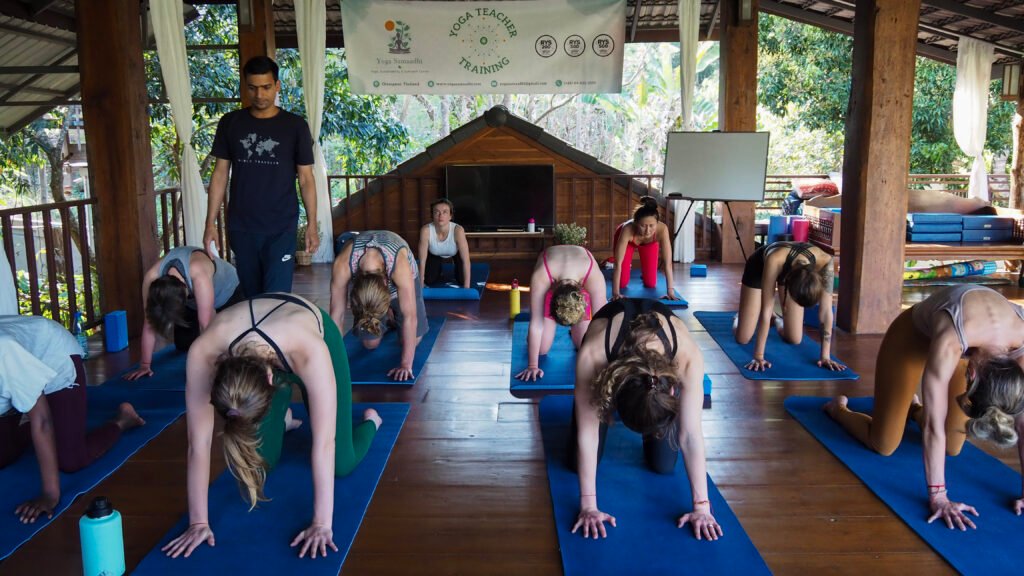
Child’s Pose is a resting position that can be adjusted in several ways. Widen your knees, add support and change your arm position until you find a version that feels easy.
How to practise:
If kneeling bothers your knees or ankles, skip the pose. You can sit on a chair and lean your forearms on a cushion placed on your lap instead.
This short sequence uses the three poses above. There is no required duration. Give each movement enough time to feel comfortable, and leave out any pose that does not suit you.
If you are a beginner, you can start with just one pose. A routine should feel manageable, not like another obligation.
A daily routine does not have to mean a full yoga class every day. A few minutes of comfortable movement may be easier to maintain than a long session that is difficult to fit into your schedule.
Consistency can help make yoga part of your routine, but you do not need to practise every day to benefit from movement. Choose a schedule that feels realistic for you.
Everyday stress is common, but you do not have to manage everything alone. Consider talking with a healthcare professional if stress is difficult to cope with, continues for a long time or affects your sleep, work, relationships or daily activities.
Yoga can be one supportive habit, alongside other forms of care and support. If a practice makes you feel more distressed, stop and choose another approach. You can also read more about the connection between yoga and mental health.
Some people find that yoga gives them time to move, pause and focus their attention. Research suggests possible benefits for perceived stress, but results vary. Yoga is not a guaranteed treatment.
There is no single duration that works for everyone. Start with one comfortable pose or a short routine. Add time only if it feels useful and manageable.
There is no one best pose for everyone. Downward-Facing Dog, Puppy Pose and Child’s Pose are three options from this guide. Choose the one that feels comfortable, or use a supported variation.
Not always. Yoga may be one part of a wider approach, but ongoing or overwhelming stress may need support from a qualified health professional.
Stop focusing on your breath and return to natural breathing. You can place your attention on the floor beneath you, your hands or another comfortable sensation. If discomfort continues, end the practice.
A daily yoga routine can be a simple way to make room for mindful movement during a busy day. Downward-Facing Dog, Puppy Pose and Child’s Pose can all be adapted with support, but you do not need to practise all three or hold any pose for a fixed time.
Start with movements that feel comfortable, keep your routine realistic and change it when your needs change. If stress becomes difficult to manage, seek support beyond yoga as well.
If you are exploring yoga for weight loss, it helps to begin with realistic expectations. Yoga can be one part of an active lifestyle and may support habits such as regular movement, body awareness and stress management. But the effect varies from person to person, and yoga alone does not guarantee weight loss.
Yoga styles also differ. A gentle, restorative class may feel very different from a faster Vinyasa session. Rather than looking for one “best” pose or a quick fix, choose a practice that feels suitable for your body and that you can maintain over time.
This guide explains what yoga may contribute, how different styles compare and how to start a simple routine alongside other sustainable health habits.
Research suggests that yoga may support weight management for some people. Studies have included different groups, yoga styles and practice schedules, so the results should not be taken as a promise that a particular class or pose will lead to a specific change.
Yoga can provide movement and, depending on the style, may challenge strength, balance or stamina. It can also make some people more attentive to how they feel and to everyday habits. These are possible ways yoga may fit into a broader weight-management plan, not guaranteed mechanisms or medical outcomes.
Weight is affected by many factors, including eating patterns, daily activity, sleep, stress, health conditions, medications, age and environment. A yoga practice can complement other habits, but it cannot account for all of them.
Yoga is a way to move your body. More active styles may feel physically demanding, while gentle styles may focus more on mobility, balance and relaxation. Both can have a place in a routine, depending on your goals and needs.
Some yoga poses ask you to support your body or hold a position with control. Over time, regular practice may help you become more familiar with your balance, coordination and movement. The experience depends on the poses, class pace and your individual practice.
Enjoyment matters when you are building an activity habit. If you find a style and schedule that feel manageable, it may be easier to keep moving consistently. You do not need to practise every day or choose the most intense class.
Some practitioners use yoga to pause and notice their breathing, movement and choices. This may support awareness of daily routines, including eating and activity habits. It does not mean that yoga reliably changes appetite or produces weight loss on its own.
There is no single yoga style that is right for everyone. Classes can vary by instructor, pace and sequence, even when they share the same style name.
Hatha classes often move at a more measured pace, with time to learn and adjust poses. This can be a useful starting point if you want to become familiar with basic movements.
Vinyasa links movement with breathing and may move at a faster pace. Some classes feel vigorous, while others are slower. Ask the instructor about the class level and pace before joining.
Ashtanga follows a structured sequence and can be physically demanding. It may not suit everyone, especially if you are new to yoga or need a gentler approach. Learning with a qualified instructor can help you adapt the practice.
Yin and restorative classes usually move more slowly and may use longer-held or supported positions. They can be options for gentle movement and relaxation. They should not be described as weight-loss workouts by themselves.
Hot yoga takes place in a heated room. Sweating more in a heated class does not mean that more body fat is being lost. Heat can make a session feel challenging, so consider your comfort, hydration and health needs before taking part.
This short sequence includes standing, seated and floor-based movements. It is intended as a general movement practice, not a guaranteed weight-loss workout. Move at a comfortable pace and use a wall, chair or folded blanket for support.
You can practise with a wall behind you or sit down onto a sturdy chair and stand back up slowly.
Use a shorter stance or keep your front knee less bent if that feels more comfortable.
If your wrists or shoulders feel strained, skip this pose or ask a qualified yoga teacher for a suitable alternative.
Finish by lying on your back or sitting comfortably. Let your breathing return to its usual rhythm. Rest is part of the practice, not a test of how long you can hold a pose.
Stop any movement that causes sharp pain, dizziness or unusual discomfort. If you have an injury, health condition or have recently had surgery, ask a healthcare professional or qualified yoga instructor how to adapt your practice.
For general health, adult physical activity guidance commonly recommends at least 150 minutes of moderate-intensity activity per week, plus muscle-strengthening activity on at least two days. This is a general reference, not an individual weight-loss prescription. Your appropriate activity level may differ.
Yoga is not a diet plan. A weight-management approach may also involve eating patterns, sleep, daily movement and stress management. The right approach depends on the person.
Rather than following a fad diet or eliminating whole food groups without guidance, consider habits that are balanced and realistic for you. If food, body image or weight concerns are causing distress, seek support from an appropriately qualified health professional.
Some medical conditions and medications can affect weight. If your weight changes unexpectedly or you have concerns about your health, discuss them with a healthcare professional.
There is not enough basis to promise that yoga will increase metabolism in a way that leads to weight loss for everyone. Different practices place different demands on the body.
Sweat is part of the body’s temperature regulation. It does not show how much body fat a person has lost. A heated environment can increase fluid loss, so choose a class based on comfort and safety rather than sweating.
A yoga pose can work particular muscles, but that does not mean it selectively removes fat from that area. Avoid promises of spot reduction.
Yoga may contribute to an active lifestyle, but weight management is influenced by more than one factor. No yoga style or pose can guarantee an outcome.
You do not need to perform advanced poses to take part in yoga. Comfortable, well-adapted movement is a valid practice.
There is no single best style for everyone. A more active Vinyasa or Ashtanga class may feel more vigorous than a restorative class, but the pace varies. Choose a class that matches your ability and that you can practise safely.
Yes. Beginners can start with an introductory class or a simple home routine. Learn basic alignment, use modifications and avoid comparing your practice with advanced demonstrations.
The right schedule depends on your health, available time and experience. Begin with a realistic routine and adjust gradually. Practising more often is not automatically better if it leaves you exhausted or uncomfortable.
Yoga involves physical movement, and energy use varies by style, duration and individual factors. It is better not to treat a pose or class as a predictable calorie-burning tool.
Yoga may be one part of a broader approach. Other factors, such as food habits, daily movement, sleep, health conditions and medications, can also matter. A healthcare professional can help you choose a suitable plan.
Yoga for weight loss is best understood as one possible part of a broader, sustainable routine. It can offer movement, strength and body awareness, but its effects vary and no pose guarantees weight loss.
Choose a style that feels appropriate for you, begin at a manageable pace and give yourself time to build a consistent practice. Pair yoga with other supportive habits where suitable, and seek personalised professional guidance when you have health concerns.
Read our articles on different topics of yoga, sustainability and community updates…
More Details
Learn about yoga teacher training and how it guides you to a harmonious lifestyle…
More Details
Find out more about hill tribes, their ways of life and how we can take part in their progress…
More Details
Find spirituality in sustainability, living in harmony with nature and adopting mindfulness…
More Details