
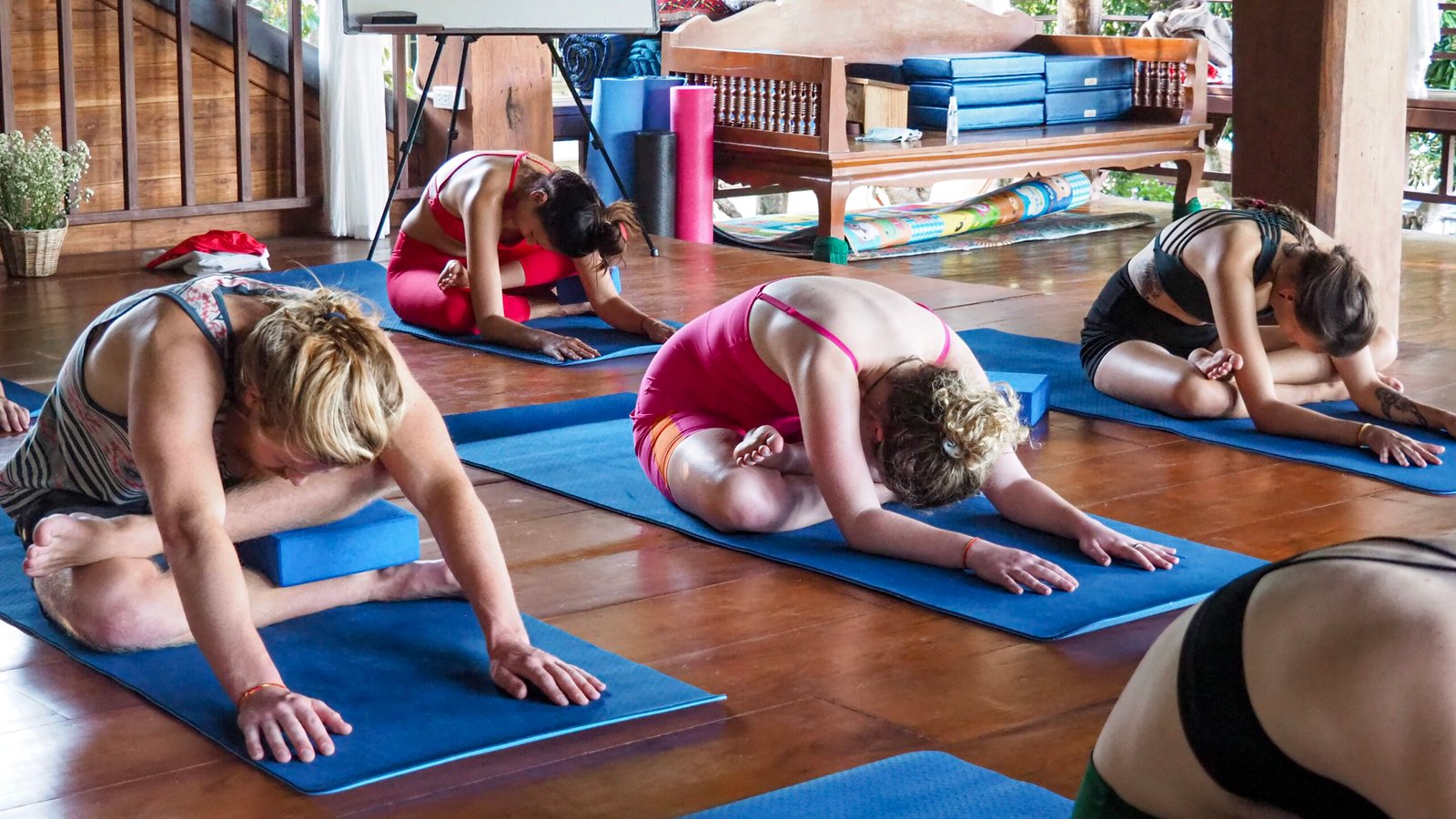
Just think of waking up to the sound of relaxing waves gently hitting golden beaches, a gentle breeze blowing the smell of tropical flowers as you unroll your yoga mat under the gentle shaking of palm trees. Welcome to paradise Thailand where your desire to become a certified yoga instructor can come to life surrounded with stunning views and rich culture. In this blog post, we are taking an exciting trip around the dynamic world of yoga teacher training in Thailand. Whether you are on the path to personal development or you want to share your interest in wellness with the rest of the world, you might find a lot to like in this Southeast Asia destination which has been gaining popularity among the travelers who come to South East Asia to hone their skills as a yogi. Are you ready to change your practice and even your life? Let’s explore together!
Introduction: The popularity of yoga teacher training in Thailand
Can you just imagine the sun shining on your body surface, waves rolling over your feet and the breeze lightly passing through palm trees? Such a picturesque panorama is not the only beach background of the rich vacation but also a launching pad of an incomparable journey of many educators hoping to become yoga teachers. Learning to teach yoga in Thailand has become a boon to those who not only want to advance their practice, but also mull in the beauty of Southeast Asia. With its breathtaking sceneries, cultural encounters and inspired communities which are all committed to health, it is no wonder that Thailand is the preferred choice that so many of them prefer to go to in order to transform themselves.
In this blog post, you will find out why yoga retreat in tropical settings is not only about learning to perform the asanas but also about personal development and bonding with like-minded individuals who strive to achieve the same goals. Ready to find out more why training here is so special? So, we have a look.
Benefits of doing a yoga teacher training in Thailand
Thailand is a paradise for yoga lovers. The beautiful views and peaceful coastlines make a perfect setting to become more in-tune with your practice.
Such another advantage you get during yoga teacher training in Thailand is the chance to be familiar with nature to the greatest extent possible. Imagine exercising on sun-filled beaches, the soft rolling waves granting quiet resonance to the surroundings.
Most of the programs also have drastic curriculums, and they incorporate traditional teachings in curriculums with modern methods. This well-rounded style expands the knowledge on yoga logic and its ascetic practices.
Training in Thailand also leads to building of community among individuals with similar mindset across the world. Each of you will make deep long-term friendships as you share your experience and knowledge, friendships you will keep long after the mat is put away.
Finally, it is awesome to be immersed in the culture of vibrant Thailand. You will discover the world through shopping or eating in local markets, seeing how different people lead their lives, and it all helps one to change and develop personally during the training process.
Accommodation and Location options for yoga teacher training in Thailand
There is a wide variety of rooms available to yoga teacher trainees in Thailand. Secluded jungle hideaways or beachfront bamboo bungalows, there is a place to suit every yogi.
Popular places to train include Koh Samui, Phuket and Chiang Mai. These destinations are not only breathtakingly beautiful but also give access to local markets and cultural experiences as well.
Others want luxury and some resorts have added indulgences with their yoga programs. Alternatively, inexpensive hostels are available to interact with other trainees and keep the costs down.
The location of where one will stay is a critical decision. Think about the location of your training studio and which character you prefer: active or quiet. This option will enrich your experience in general as you invest in practice and pleasure at this stage of your transformation.
Overview of the curriculum and certification process
Yoga teacher training in Thailand are usually multi-faceted, combining many areas of study. Expect to get into asanas, anatomy, and alignment principles. The curriculum usually consists of philosophy, teaching methodology and sequencing.
A great number of schools stress the significance of practical exercises. There will be a considerable number of practices to teach peers to get ready to enter actual classes. This real life experience creates confidence.
The process of certification differs depending on program but usually involves completion of a specific number of hours to the tune of 200 or more. After graduating successfully, you will be Yoga Alliance certified.
There are more advanced programs in some schools that allow advancing the knowledge people already have. Before you choose an institution, you must carefully select an accredited institution that suits your interests as well as values in yoga practice.
Immersing yourself in Thai culture during the training
Yoga teacher training in Thailand offers more than just physical practice. It’s a gateway into the rich and vibrant Thai culture.
Visit the local markets to discover more fruits and exotic spices as you train. Taste street-side food like Pad Thai or green curry. The food is an experience of the culinary history of Thailand.
Talk with locals who can be very friendly and pleasant hosts and will tell about their customs and traditions. Attend festivals when and where you can, especially when your training takes you near them; the understanding of the community can be enriched by attending the festival.
See temples with bejeweled decorations and gold Buddhas. These spiritual places will help you to find peace in the thick of your busy day and enrich your yoga or cultural experience.
Look to take classes in the traditional crafts in addition to yoga. The experiential element is also another way of getting closer to the ground and enhancing the whole process.
Tips for preparing for a yoga teacher training in Thailand
Being ready to take yoga teacher training in Thailand is an interesting process. Start at home with a regular practice. Become acquainted with the different schools and approaches of yoga.
Study a particular program you will enter. All of them are specific, therefore, it is useful to know what you can expect in each one.
Pack smartly; it is hot and you will need to wear light materials. Don’t leave out the necessities such as a quality mat, water bottle, and anything personal that you need so you feel good.
Consider the learning of basic Thai phrases It is a good way to meet locals and maximize your time spent when not in activities.
Be open and prepared to learn new things- both in life and in yoga. His training is not only of a teaching kind it is also a growth and exploration one in a beautiful place.
Personal experiences and testimonials from previous trainees
Most people have seen the change in their lives after taking yoga teacher training in Thailand. It was a life changing choice to abandon the everyday routine and settle in this wondrous nature.
One trainee remembers finding herself awake to the beat of the waves on the beach. Every morning started with morning yoga which was something magical. The combination of nature and practice created strong bonds between the delegates.
One described how she grew in confidence through teaching courses. They reported that they were initially nervous but got comfort in instructors and other learners making nervousness turn into excitement.
Cultural outings are usually another highlight cited by the trainees. Not only did this experience their trip, but they also interacted with each other, shared any pumped-up and felt closer.
These first person accounts go beyond training, they demonstrate a process of self-exploration within the context of the striking Thai landscapes.
Also Read: 300 Hour Yoga Teacher Training in Thailand
Alternative destinations for Yoga Teacher Training
Thailand is a very popular choice among yoga teachers in-the-making, but you can find other locations that provide just as amazing a training environment.
Bali, Indonesia, commonly referred to as the Island of the Gods, is a green paradise with rich culture. Yoga retreating here has a touch of traditional as well as modern approaches.
India is the motherland of yoga and offers a true experience of its origins. Rishikesh and Mysore are famous for their intensive programs full of ancient philosophy.
Costa Rica is a place rich with natural beauty and a responsible lifestyle. Training classes are usually conducted in the tropical jungles or splendid beaches.
The coastal region of Portugal called Algarve is also gaining in popularity, with its spectacular coastline providing a blissful background that makes practice very enjoyable.
Each destination will offer its own cultural offerings that will enhance the learning process. Adventurous persons will find it an opportunity to explore local culture in the context of their yoga experience
Conclusion: Is a Yoga Teacher Training in Thailand right for you?
Taking the decision to attend a yoga teacher training in Thailand is a life-altering challenge. Thailand also provides a beautiful setting with its beautiful beaches, beautiful landscape and colorful culture to enhance your practice.
The combination of the intensive study and harmonious environment enables you to get acquainted not only with yourself but also with your colleagues. After waking up to the sound of crashing waves, you then prepare to face a day of yoga classes – that will test and excite you.
To others, this training is not only about obtaining the certification, it is about personal development. Others can regard it as an avenue to the site of teaching or even a traveling procession thereabout. Regardless of your purpose, diving yourself in Thai culture makes the experience deeper.
Wait before you make your choice, by reflecting on the benefits you want to get out of this training. Do it as a way to evaluate how well it fits into your plans, aspirations or ambitions, as a way to assess the lifestyle changes involved in such a venture.
Regardless of whether you are an explorer or you are in search of knowledge, yoga teacher training in Thailand can be a solution you are looking for. The adventure can give you more than just expertise; it is also an opportunity of new discoveries of yourself in one of the most fantastic settings in Southeast Asia.
Are you prepared to be set on a path of transformation that will further enrich your practice and enrich your teaching? Imagine this: golden beaches, dense lush greenery and the tranquil noises of nature as you embark on yoga teacher training in Thailand. However, before you lay out your mat on these impeccable shores, there is one very important aspect you need to take into consideration, and that is how to pack! Regardless of whether you are an experienced yogi or one who is only starting out, the right gear can be a crucial factor to your experience. At this packing list of essentials needed during yoga teacher training programs in Thailand, we are going to ensure that you are prepared with all that you may require on your journey of growth, connection, and awareness. The essentials, hacks and hints not only helping you get by but to make the best out of the Thai environment, the packing is going to be intelligent, so you can gear your mind on what counts- the practise!
Introduction to Yoga Teacher Training in Thailand
Are you ready to move on the next level of your yoga practice? Undergoing a Yoga Teacher Training in Thailand is a truly life-changing experience not only because the course that you will be taking will grant you a deeper knowledge of the practice of yoga, but also because the experience will change your life in a wonderfully tropicalsetting. Just imagine that you will be in the atmosphere of lush sceneries, sunny beaches, diversity of cultures, and develop your art as an instructor.
However, before you unroll your mat to this beautiful location, one thing must be done and that is packing! To get ready to this life-changing experience, it is important to think through what he or she can take. No matter whether you are an experienced yogi or just at the beginning of your yoga journey, it is essential to have the right gear to drive you to a new level. This is a comprehensive list that covers all necessities as well as these and other items that can add value in the course of the stay.
It is time to begin with ensuring that you have prepared everything that is needed to make your adventure memorable!
Must Read: 200 Hour Yoga Teacher Training in Thailand
Essential Items to Pack:
Travelling to Yoga Teacher Training in Thailand, it is important to pack the correct necessities. Start with yoga wear that has mobility and ventilation. Shun heavy garments and fabrics which trap moisture.
Never miss such accessories as a good mat, strap, and blocks in case you frequently use them. A lot of studios supply equipment, yet it may help to have your own.
Toiletries are a necessity as well. Pack an adequate amount of travel sized shampoo, conditioner, soap and other personal care products you can not live without. You will need to keep hydrated during your training and the reusable water bottle will aid you in doing so.
Electronic devices also are significant factors as regards to Meyers Taylor|_ murder Give thought to bringing a laptop or a tablet as a way to take notes and connect back home. An Actual filming of gorgeous moments of your travel in Thailand can be documented through a camera.
Have travel documentation well; bring photocopies of your passport, visa (where needed) and health insurance documents, as well as cash or cards to spend on the road.
– Yoga Clothing and Accessories
What you pack to go to Thailand to study yoga teacher training is what will breathe and move with you. The ideally lightweight garments of moisture-wicking material are a necessity. They will help you feel great when your session is being held in the hot South African sunshine without sweating all over.
It is ideal to bring several pairs of yoga pants or leggings. Choose styles that are both flexible and comfortable yet not by sacrificing the support. Tops are also important to have a variety, tank tops, crop tops, or a well-fitting tee would do wonders.
Don t overlook your accessories! A high-quality yoga mat is an essential requirement in case you are sensitive to your practice. Also, eye pillow and straps can assist you during meditations and stretching.
Finally a few layers of extra clothes, evenings may be a bit cooler than you like. Lightweight hoodies or long sleeved shirts provide additional warmth and comfort to you as you sit in after practice.
– Toiletries and Personal Care Products
Personal care goods and toiletries are a necessary part of your packing before going on the Yoga Teacher Training in Thailand. Prioritise the fundamentals. A toothbrush, toothpaste, shampoo, conditioner and soap come first on the list.
Use travel-sized bottles as an alternative to space saving. They are portable and comply with the regulations of liners. A good moisturizer cannot be forgotten as the climate in Thailand is harsh.
Sunscreen is important because you are going to be outdoors a lot. Opt to use reef-friendly sunscreens in order to safeguard the sea life even as you have fun in the sun.
Besides the common products, consider what special needs you might require such as skin care or hair styling products that are best suited to you.
Finally, bring with you feminine menstrual supplies as they may not be easily available and appropriate in the local stores.
– Electronics (laptop, camera, etc.)
As you pack your bag to travel to Thailand in order to take your teacher training, the following are some of the electronics devices you should not leave behind. A laptop comes in handy to monitor notes and/or assignments. It also enables you to be in touch with your family and friends back home.
A camera can have more than one purpose Captivate stunning nature, special moments with co-trainees, or even capture your road of yoga practice.
It may also be a good idea to bring a portable charger with you; days packed with classes may run dry your devices sooner than anticipated. Noise-cancelling headphones come in handy when travelling and when studying to create a quiet getaway.
Finally, make sure to carry along universal adapters that will easily fit Thai electrical sockets-this simple accessory can free you of trouble in the future! Being ready means that everything you experience will be enjoyable because you will not be burdened by some tech-related issues.
– Travel Documents and Money
Before choosing yoga teacher training in Thailand it is essential that you make sure you buy proper travel documents as well. Start with the passport. It is supposed to be valid for at least six months after your proposed departure date. Save a PDF file with your phone or send yourself an email with it.
Visa needs may differ depending on countries and staying time and it is essential to prepare in advance. There will be a possibility that you will require a tourist visa or even a student visa in case you have a long term course.
And donit overlook travellers insurance. It is necessary to have peace of mind in your trip and training process.
Regarding money, carry a few of Thai Baht to spend in the local markets and tipping. Using an ATM may be a convenient method but make your bank aware of international transactions so as not to encounter problems using your cards overseas.
Optional Items to Consider:
There are optional accessories when getting ready to yoga teacher training in Thailand. Insect repellent needs to be ready and usedì The tropical climate tends to invite the annoying mosquitoes A decent repellent will make outdoor practices pleasant to go through.
And astronaut sunscreen should be on your list. When out practicing yoga or visiting an exotic location under the force of blazing sun beams, it is essential to protect the skin.
And take some power ups in form of snacks and add ons. Energy sources according to healthy snacks may include nuts or even protein bars among others If wellness is your thing, you may want to bring any supplements with you so that you can still maintain a habit.
The books or study materials may provide further knowledge whenever free. Even anatomy, philosophy, meditation techniques, and more, the more one has resources available to continue their education the greater insight they have to what they are learning in the classroom.
Also Visit: 300 Hour Yoga Teacher Training in Thailand
– Insect Repellent and Sunscreen
Thailand has beautiful weather due to its tropical climate but it has its own share of pests. You will need insect repellent when you are on yoga teacher training. Mosquitoes may be rather persistent, especially in the evening. A sure recipe will put those little nuisances at bay.
Sunscreen is also a must in this sunny heaven. The sun is very powerful and any form of protectiveness on your skin must be considered a priority. Use a waterproof high SPF since you want to be able to sweat through your yoga moves.
Look at options that are environmentally friendly too. Most brands have products that are made of natural ingredients which will not negatively affect the environment or Marine life when you go to the beaches after class.
Pack these necessities early so you are ready to go at any outdoor practice or exploration around the beautiful landscape of Thailand!
Tips for Packing Light and Efficiently
Travelling light can alter travelling your experience. Start with a versatile clothing which you may combine and mix. Give thought to layers, not weights.
Have packing cubes in order to organize your items. This maintains all the access and maximizes space in your luggage.
Take the weight of your items. Pack lightweight toiletries or take them out in smaller bottles to save space. Each ounce is vital.
Drop your clothes rather than fold them; the decoration technique will save space and cut down wrinkling.
Electronics is not to be forgotten, only what you require should be brought along with you A tablet can substitute both a laptop and classic books in case you are someone able to work with apps.
And finally, reserve a space in your bag so you can fit the souvenirs/ necessary items you may acquire along your way. Travelling is not supposed to be a headache!
What Not to Pack: Items Prohibited in Thailand
In packing to attend your yoga teacher training in Thailand, it is important that you realize what you cannot carry. Some are absolutely forbidden or they can cause undesired trouble.
Drugs including recreational drugs are illegal in Thailand. The consequences of possession are serious ones. You should not carry anything illegal that may expose you to risk or into jail.
Fire arm, knives, or any other associated weapons are to be left at home. Violating the weapons regulations leads to severe consequences as the laws in use in the country are strong.
Also, immodest clothing is not appreciated and must comply with the local culture. These include exposing swimming wear in places where they are not allowed like at beaches or swimming pools.
Finally, do not bring any religious artifacts unless you have a clue about what they mean and how they are considered culturally. Observing local cultures will help the training process more enjoyable in the training process.
Conclusion: Ready to embark on your Yoga Teacher Training journey!
Choosing to take an interest in a Yoga Teacher Training process in Thailand will be an interesting experience. By making the right plan, it is possible to make sure that nothing can go wrong with the process of packing. The basic components will equip you to comfortably attend daily lessons, as well as take care of your personal needs, and optional items are available to make your stay even more comfortable.
Traveling light is not part of forsaking comfort and preparing. By streamlining your possessions, you will be able to concentrate more on your training rather than load the unnecessary baggage. As a reminder, it is critical to review local laws before packing any restrained products, to come by without any difficulties.
As you begin this life changing experience, be open in heart and mind to the journey you are going to take! Your period in Thailand will be characterised by personal and professional development, since it will be further practised in terms of yoga.
Happy travels!
Have you ever felt that something is needed to supplement your yoga workout? Maybe you have changed the mats, style, or routine, but something seems wrong. What I am about to tell you is that it is quite possible that the solution is not in your technique, but on your plate. The yogis are understanding the efficacy of the combination of diet and mindfulness as more of them seek holistic ways to boost their practice. In this post we are going to explore my personal experience of meeting a vegetarian diet, and learning why it not only helped me improve my physical mobility and mental space, but also gave me a greater sense of interconnectedness with yoga as a whole. Get ready and read along with me on how plant-based diet changes both our spiritual and physical lives!
Introduction to the topic and its relevance in today’s world
In a modern hectic world where wellness trends are being born and passed, the relationship between food and lifestyle such as yoga has never been so important. More folks are jumping into yoga, and as they make that step, a lot of them are finding out that what they supply their plates may profoundly effect what is happening in their practice. Cue vegetarianism: the dietary preference not only helps our bodies in the physical sense but is also perfectly complementary to the practice of yoga. Have you ever questioned what a vegetarian diet would have to contribute to an improved yoga practice and a better life? Are you about to do an entertaining and insightful travel? So, now we are going to explore the food vegetarian food and its connection to the power of strengthening our mind-body bond with yoga!
What is a vegetarian diet?
A vegetarian diet is mostly plant-based food. This implies that meat, poultry and fish are not consumed. Otherwise, it consists of numerous fruits, vegetables, grains, legumes, nuts, and seeds.
The reasons why the people make this kind of lifestyle are numerous and health improvement is among the most important one. Vegetarian diets have the potential to be excellent sources of vital nutrients and widely have a reduced quantity of saturated fats.
Vegetarianism also comes in varieties. Others can take in dairy products and eggs (lacto-ovo vegetarians), and others cannot consume any of them. Both the variations have distinct nutritional gains.
One of the main aspects of achieving a balanced nutrition in the vegetarian system is a focus on unprocessed rather than processed foods. Looking into different cuisine opens up the world and makes meals enjoyable.
Benefits of being a vegetarian for overall health and wellbeing
Going vegetarian has many health advantages that are felt in both body and the mind. Lessening of chronic diseases is one such benefit. Research indicates that vegetarians tend to be free of the heart disease, diabetes, and some forms of cancer.
Besides the physical health, a meat-free diet can also enhance the mental health. A healthy diet with more plant involvement contains a high level of antioxidants and nutrients helping the brain. It may contribute to stabilization of the mood and lower levels of anxiety.
It is also easier to manage weights. Vegetarian foods are usually less in calories but rich in fiber that gives a person a sense of fullness without taking up a lot of extra calories.
In addition, being a vegetarian also helps to be mindful about the food you eat. By doing this you will develop a more healthful eating habit in general, and feel more connected to your food and where it comes from.
Connection between vegetarianism and yoga practice
Vegetarianism and yoga has a longstanding relationship that cuts beyond food habits. The two are both concerned with harmony, in our bodies, or the world around us.
Vegetarian food naturally complements yoga with its beliefs in mindfulness and respect towards all living creatures. Considering the advantages of serving plant-based meals, practitioners tend to develop compassion towards animals as well as support their spiritual progress.
In addition, the practice itself also requires energy and vitality. Including nutritious food in a diet supports physical activities in asanas by supplying the body with essential nutrients.
Vegetarian food is known by many yogis to contribute to thinking more clearly and staying balanced emotionally. This clarity of mind can enhance meditation sessions in addition to creating a feeling of calm on and off the mat.
The overlap of these two directions leads to a mutually enhancing experience as mindful eating supports deliberate movement.
How a vegetarian diet can enhance your yoga practice
Vegetarian diet has a lot of nutrients which can enhance your yoga practice. The plant-based food includes vitamins, minerals and antioxidants that help to maintain muscle recovery and general vitality.
The energy levels are sustained because of the focus on whole grains, fruits and vegetables. That assists in sustaining during lengthy sessions or hard poses.
Flexibility can also be increased by eating lighter meals. The next way of eating as a vegetarian is that you need to eat less of what is heavy that it could slow you down on the mat.
Also, most yogis tend to connect better with their mind and body after they select vegetarian food. The conscious choice of healthy ingredients perfectly fits into the concepts of yoga.
Another important element that is boosted by the foods rich in plants is hydration. Such parts of fruits as watermelon and cucumber hydrate and benefit skin, which become visible both inside and outside the studio.
Also Visit: 300 Hour Yoga Teacher Training in Thailand
Tips for incorporating a vegetarian diet into your lifestyle
Becoming a vegetarian might be an adventurous process. Begin with little steps and implement meatless meals several days per week. This you should gradually bring up to a level where you are comfortable with your new lifestyle.
Discover new food and cuisine offering a lot of choice of vegetarian food e.g. Mediterranean, Indian or Thai cuisine. They provide great tastes and nice meals that make the transition positive.
Fill your pantry with staples like legumes, grains, nuts and fresh produce. They are the ingredients of numerous delicious recipes.
Planning should not be overlooked. Meal prep will allow you to make healthy choices available so that leading a healthy lifestyle is an option.
And finally, talk to others going through the same journey by attending cooking classes or online social groups. You can be motivated through exchanging ideas and experiences in boosting your culinary repertoire.
Common misconceptions about being vegetarian and practicing yoga
Most individuals think that vegetarian diet does not have the required proteins to support the active lifestyles such as yoga. Nonetheless, vegetable-based foods such as lentils, beans, and quinoa are good protein sources.
The other myth is that vegetarians are incapable of acquiring muscles. As a matter of fact, many athletes live on vegetarian food and are able to produce unsounding results regarding the power in their training programs and their flexibility.
There is an opinion that being vegetarian is restrictive in terms of the diversity of food. Quite on the contrary, it creates access to a wide range of dishes with their colors and textures of vegetables and grains.
Additionally, it is also believed that vegetarians form nutritional deficiencies. When the food decisions are carefully made -such as including ground nuts, seeds, and green leafy vegetables the issues are reduced to a bare minimum.
Finally, it has been thought that you have to be a complete believer in vegetarianism to be able to do yoga. Other yogis have found the balance by slowly introducing more plant-based foods in their diets but nonetheless indulging in animal produce on a few occasions. Flexibility is used not only on yoga positions but also in the eating habits of a person.
Must Read: 200 Hour Yoga Teacher Training in Thailand
Personal experiences and success stories from yogis who follow a vegetarian diet
A vegetarian diet improves their practice and well being according to many yogis. In the example of Maya. She found that her energy level also improved when she changed her food to become a vegetarian in her asanas. Her endurance level rose quite astonishingly.
Then there is Raj who was rigid until he opted to use a vegan diet. He attributes this to his colourful diets full of fresh vegetables and grains that enable him to execute those hard poses that he perceived unlikely.
Nina speaks about how the meditation sessions became intense when she adopted vegetarianism. Her conception of what is pure in her food relates to clarity in the head on mat.
Just not the physical improvements, these stories focus on emotional and spiritual growth as well. Other practitioners note that when they eat nutritive plant-based meals, they feel connected to the world around them and themselves. This relationship makes them want to learn more of what yoga entails in terms of practice rather than the postures.
Conclusion: The power of mindful choices in nourishing both body and soul through a vegetarian lifestyle.
Being conscious about what we eat may make a significant difference on our health. Vegetarian diet does not only mean removing meat, but also leads to a healthy lifestyle that is nutritious and kind. This solution is beneficial to the body and the soul, complementing your yoga practice at the same time.
Most yogis have also discovered that vegetarian food regimens have made them more connected to their bodies when practicing yoga. Vigor in the form of plant-based meals stimulates a clear mind, flexibility, and vitality. It also opens the doors to restful meditation and improved meditation levels related to self-awareness.
When you come to this change of diet, please bear in mind that you should listen to what your body is telling you. Try out new food and recipes and meal plans till you find what suits you. Avoid being alone, surround yourself with resources; be it books, online or local forums where you can share an experience or seek support when the need arises.
Becoming vegetarian does not imply that you have to forego taste or enjoyment. Being surrounded with limitless possibilities today (healthy grains, colorful vegetables), you will find pleasure every now and then with everything you put in your mouth and at the same time nourishing yourself in a holistic sense of body, mind and spirit and doing yoga.
Vegetarian lifestyle is a choice and an important one at that which we can choose to make and identify with. With the increase in awareness regarding the importance of food as a health choice and a spiritual choice, people are now finding out how rewarding this decision is not only to themselves but also to the world which they share together.
Welcome to the peaceful universe of yoga and its every single pose provides some kind of a story and every exciting stretch lets you be closer to your inner you. Among such revolutionary postures is a position usually wrongly neglected the Fish Pose (Matsyasana) a blissful inverted position that will not only leave your chest expansive but all the doors of flexibility will open up in your body and soul. No matter whether you are an experienced yogi or a beginner of the practice, it will help you to find out how this graceful pose can improve your well-being, lead to the emotional release, and make you closer to the breath. Go ahead and take a great big breath, get ready to take the plunge down into the depths of relaxation, and get ready to find out why combining Fish Pose into your practice may be the ticket you need to a better flexible life!
Introduction to Fish Pose
Have you ever had a desire to know more freedom in your yoga training? In that case Fish Pose may be what you are looking for. Beautiful asana not only opens up your heart and lungs but it has a variety of other benefits that no longer remain solely physical. It is one of those poses, the practice of which could completely change your practice, improve your body and mind, and open new terrains of freedom in you.
And when you enter the realm of Fish Pose, be ready to learn its proud history and background, receive an instruction on how to practice it and read about a wide range of mind-blowing advantages that it offers. This universal pose appeals to both the experienced yogis as well as those new to the approach as it has its very own peculiarity to it. Ready to dive into the abyss of why the Fish Pose is a yoga exercise you cannot live without?
History and Origins of Fish Pose
Matsyasana or the Fish Pose dates many years back in the old Indian yoga science. Its name is translated to fish, which it represents in its flowy and smooth motions of water creatures.
Scientifically, the pose is associated with different Hatha Yoga texts which are dated centuries ago. Yogis considered it the necessary means of spiritual awakening and increase of control over the breath. The posture acts like a mirror of the natural shape of a fish body, which opens the heart region and throat.
Under earlier teachings, it is said that poses such as Fish Pose can be counter poses to positions, which are seated, such as Padmasana (Lotus Pose). Such balance assists the practitioners in meeting the point of effortlessness and stress within the practise.
In the course of time, it became popular not only in India. In the current world, Matsyasana is used in most modern types of yoga because it is transformative. It reminds us about unity with nature as well as inner strength and flexibility of the spirit through conscious movement.
Must Read: 200 Hour Yoga Teacher Training in Thailand
How to Perform Fish Pose
In order to do Fish Pose, assume a sitting position on your mat with your legs stretched out in front of you. Remain straight with a spine and ground yourself.
Bend your elbows, and rest your forearms on the mat, behind you. Your fingers will be turned downwards towards the floor so as to support your upper body.
Move your back very slowly and bend it upwards while you raise your chest upwards against the sky. Rest your head crown on the floor lightly. This is the one where you will get that nice strain in the throat and the chest.
Use your central muscle to gain stability and ensure that you keep a relaxed face.
It is important to breathe deeply during this pose allowing greater openness to each breath. Release any feeling of strain, and continue to sink in the Fish pose, and enjoy its healing nature.
Benefits of Fish Pose for Flexibility
Fish Pose is an extraordinary asana, which improves flexibility, especially in the spine and shoulders. This pose opens up your chest and arches your back allowing space in an area where most of the tension is held.
Gravity helps you stretch these out advances of yours as you make your way into the Fish Pose. The soft extension incites the lengthening in the spine enabling improvement in the posture with time.
Furthermore, it utilizes vital muscles located in the shoulders and at the neck. This activity is used to counter the stiffness which arises when there is a long sitting or the use of desks.
With frequent use of Fish Pose, you will be able to feel the increased amount of movement. You will have a feeling of being more limber and prepared to do other yoga postures or be ready in everyday activities.
Increased flexibility acquired due to Fish Pose opens the gateway to deeper breathing as well. With your chest opened up, you will be able to take deep breaths- This will bring both physical and mental insightfulness to your workout.
Other Physical Benefits of Fish Pose
There are a number of physical advantages to Fish Pose besides flexibility. It opens the chest and increases lung capacity, which is one very big asset. This is capable of improving the ability of breathing and deep breaths can be taken with ease.
Also the muscles in the back and the neck are strengthened by this pose. Through this action of lifting your chest and holding your head, you end up activating some of the major muscle groups that will in turn lead to improved posture with time.
The smooth stretch by the way of the spine will also help on the removal of the tension after a long work at the desk or slouching. Several practitioners believe that Fish Pose helps relieve any pain one may have when there is tightness in these parts.
Furthermore, Fish Pose improves the digestion, and the health of the body, in general, since it activates the abdominal organs such as the liver and kidneys. A combination of these advantages makes it a worthy addition to the yogic routine.
Mental and Emotional Benefits of Fish Pose
Fish Pose is an incredible yoga position in terms of mental and emotional practices. This pose allows deep breathing because the chest and the throat are opened. Deep breathing is able to decrease stress and level of anxiety to a great extent.
Fish pose also opens the heart and makes the person feel vulnerable and accepting. It enables the practitioners to relate more with their feelings. This relationship creates self awareness and catharsis.
In addition, there is a possibility of improved mood regulation due to the pose. When you are doing Fish Pose, you probably will feel having a change of perspective. Such transition can be quite insightful in difficult moments.
By performing Fish Pose regularly, it is possible to develop the ability to deal with wrongful thoughts or emotions. The soft relieving of the upper body with the help of the yoga position will make you feel alive in the best way possible; mentally and emotionally.
Modifications and Variations of Fish Pose
Fish Pose can be modified to fit many levels and needs. These new people can also bend their knees, reclining to the mat. The modification decreases the load on the lower back, which further increases access to the benefits of the pose.
To obtain a wider stretch, a rolled blanket or bolster should be placed under the shoulder blades to increase comfort and support. It helps them stretch their necks tenderly without carrying tensions.
It also has variations that can be attempted by stronger yogis, such as the supported Fish Pose where there is the option of straight legs overhead. Another option is to place the feet on a wall and active core muscles by keeping the chest open.
Experimenting with hand placements also adds diversity: fingers interlaced behind your head creates more lift through the chest, enhancing expansion throughout the torso.
Also Visit: 300 Hour Yoga Teacher Training in Thailand
Incorporating Fish Pose into Your Yoga Practice
The Fish Pose can be used as part of your yoga routine to improve body flexibility and relaxation. It is a flexible pose, which can be used with other asanas and, therefore, is a great inclusion in any flow.
You may want to incorporate it between forward twists and seated stretches. This will allow not only opening the chest, but also offsetting the tension produced by such poses.
Fish Pose is another example of the restorative option that you can consider at the end of the session as well. Simply just lie on the mat all you need is to lay down and have the gravity do the rest, get your breath deeper as you relax your shoulders.
In order to commence practice, allocate at least five minutes of time to this pose at each sitting. Concentrate on breathing steadily as you relax in releasing the distractions by staying in the position longer and longer.
Also, test yourself with some variations: use blocks to make it more comfortable to hold, or go more into backbends in case you want to challenge yourself.
Precautions and Contraindications for Fish Pose
The Fish pose should not be taken lightly even though it may appear to be simple. The pose is not recommended to people with neck injuries or a qualified instructor needs to offer assistance.
This posture is not recommended during the later stages of pregnancy as expectant women would not want to strain the abdomen and lower back with the pressure that it exposes them to.
This pose is not recommended unless you are healthy with severe back problems or conditions such as the herniated discs. This arch in your spine could contribute to more pain in case of incorrect practice.
Always pay attention to your body. When you stretch, you should feel stretchy and not a pain, so make a slight move. Adjustments can be made anytime they are necessary; one should not be shy to make adjustments when poses are not in your best interest.
Knowing these precautions guarantees that practicing yoga is secure and pleasant as it involves revealing the advantages of Fish Pose.
Conclusion: The Power of Fish Pose in Unlocking Flexibility
Fish Pose will offer more than a spot on the mat; with it, you will gain access to a better flexibility and general well-being. Practicing Fish Pose on a regular basis will allow you to stretch up the spine and open up the chest, thereby alleviating stress that creeps every day in the routine. The deep breathing which comes with this pose allows more capacity in the lungs and stimulates relaxation.
In the further path of discovering the physical advantages of the yoga poses, e.g. correct posture and flexibility, we also find out the mental ones. Fish Pose is a relaxing pose and facilitates more awareness and emotional stability, and it is a great element in any yoga routine.
If you want variations or how to effectively include Fish Pose into your practice, something is in it for everyone. Do not forget to listen to your body, be patient towards the pose.
Harness the strength of fish poses on your way to increased flexibility and inner peace. Through commitment, you will discover that besides becoming a better individual physically, you will also have a calm mind that translates in the rest of life outside the mat.
Swing by as strength and grace meet on the yoga mat! In case you want to become more confident in your practice and learn more about physical balance and expansion, Ashwa Sanchalanasana, also known as the Equestrian Pose, is going to become your latest asset. Besides improving flexibility, this dynamic pose is also a core building exercise therefore a compulsory practice among any level yogis. Whether you want to become an expert on the topic, or you simply want to take on the first steps in practicing Ashwa Sanchalanasana, we are going to explore the concept with the focus on this incredible pose that will make both you and your body feel better than ever before. Well, we are going to have the saddle and ride into the world of yoga!
Introduction to Ashwa Sanchalanasana (Equestrian Pose)
Ashwa Sanchalanasana, or Equestrian Pose, is a special yoga position that would encourage you to feel strong and graceful. Think of yourself as a rider on horseback, solid standing, and ready. This asana not only improves your physical conditions, but it also makes you connect to your breath and the spirit.
Based on the ancient customs, Ashwa Sanchalanasana poses a unique opportunity to develop strength, as well as flexibility to its practitioners. This pose offers benefits to a beginner yoga practitioner as much as it does to an experienced yogi. Prepare to dive into its interesting history, its many advantages, and handy hints to learning how to execute the art of Ashwa Sanchalanasana in your practice. So, come along with me!

History and origins of the pose
Equestrian Pose or Ashwa Sanchalanasana is a very old Indian yoga pose. Its name is described as Horse Rider Pose since the same position is associated with riding horses.
In Hindu culture, in the past, the pose is related to the activity of warriors. Words about physical positions full of power and elegance that were covered in ancient writings even in times when warriors were idols.
That pose is dynamic and a combination of balance and stability. It takes its cue on the equestrian techniques to maneuver rugged terrains by horse riding.
Ashwa Sanchalanasana in some schools of yoga is an exercise focused both on the development of physical skills and concentration. This is because it is a favorite whenever there needs to develop a resilience combined with flexibility according to the practioners.
References to this pose may be traced in such classical sources as Hatha Yoga Pradipika, establishing its fixed position in traditional yoga tradition but evolving to fit the contemporary practice.
Benefits of Ashwa Sanchalanasana for the body, mind, and spirit
Ashwa Sanchalanasana also known as Equestrian Pose has myriad of advantages and is not limited to the physical level.
In terms of physical condition, this pose will enhance the strength of legs, core, and back besides making the hips and thighs more flexible. It makes your body open in case of deeper stretches and better posture.
Mentally, Ashwa Sanchalanasana brings in a sense of concentration and integration. The grounding aspect assists to slow racing thoughts as you coordinate your breath with motion.
Spirually, this pose is good as it promotes mindfulness. Every change offers a chance to be in touch with inner power and perseverance.
Moreover, it enhances circulation of energy in the body. This refreshing nature can give you a positive feeling and get rid of dizziness.
By adopting this pose into the regimen, one will achieve a sense of well-being by striking an equilibrium between the body-mind connection, and a balance of self-awareness; at all levels.
Step-by-step guide on how to perform the pose correctly
The posture allows beginning Ashwa Sanchalanasana in a standing position. Exhale and move your right foot back making it rest on the ground. Your heel must be elevated but your toes must be outward.
The left knee should bend upward in the line such that it is positioned directly over ankle. Make sure your hips are square and forward facing. In the standing position, both feet are to be grounded.
Keep breathing in deeply as you put your arms over the head and extend through the fingertips. Take the shoulders down to allow room in the upper section.
Look in front with purpose. Experience the straightening of your back and stretch through your hip flexors of the back leg. Staying in this posture, take some breaths, sinking more and more with each out-breath.
then come out carefully as you step back and stand up facing the opposite direction.
Must Read: 300 Hour Yoga Teacher Training in Chiang Mai
Modifications and variations for different levels of experience
Ashwa Sanchalanasana modifications will help improve your experience of this pose and suit the needs of different skill groups. One of the things the beginners may concentrate on is a broader position that is stable and balanced. Such adaptation makes it possible to be closer with the ground.
In case your hips or hamstrings are tight, you may put blocks underneath your hands to give them additional support. This modification allows one to find matching without stressing.
People who want to incorporate an extra challenge should strive to bring the back leg up even farther as they use their core. This variation makes the pose more intense and makes it stronger.
Advanced practitioners could also add variation of arms in that one arm is straightened and the other is stretched behind. This complicates it and makes it more involve both the body and the mind.
You should listen to your body on the practice; it should not be difficult, and adjustments must be caring. Discover these variations sensitively to see which one appeals to you best in Ashwa Sanchalanasana.
Tips for improving strength and flexibility in this pose
In order to strengthen yourself and become more flexible in Ashwa Sanchalanasana, a good warm-up exercises should be done. Clinching hip flexors and hamstring with dynamic stretches will help you to prepare.
Lock in the core muscles in the pose. Having a firm centre provides support to the balance and stability which enables you to maintain the pose longer.
Be thinkful of incorporating resistance training into your schedule. Training the legs can be done through normal exercises such as lunges or squats that create strength in the legs, which allows easier descent into the Equestrian Pose.
Do not have a hurry in progress. As you are more comfortable, hold each variation of Ashwa Sanchalanasana longer. Progress with the stretch and keep it in alignment.
The most important thing is breathing; take large gulps of air, it will relax the tight parts of your body, and as time passes, it makes your body a lot more flexible. Concentrate on deep breathing as you open to the pose and breath out slowly to relieve tension.
Common mistakes and how to avoid them
Ashwa Sanchalanasana practice can be life-changing, but there are generally incorrect ways to perform it, which can harm your growth. The one common mistake happens to the front knee alignment. Make it sit right above the ankle so that your joints are not strained.
The other error is failure to use the core muscles. This pose helps improve flexibility and strength as stability and balance are achieved by the strength of the core of the body.
Most practitioners also do not pay attention to the position of the back leg. Become sure that you have a stable stance with a heel that is on the ground. This assists to keep the form correct during the stretch.
During the training as well, breath control is sometimes overlooked. You may concentrate on slowly breathing in and breathing out to make your Ashwa Sanchalanasana more relaxing and profound.
Finally, do not be in a hurry when changing things. Enter and exit the pose mindfully; this gives awareness of body postures as well as avoids injuries or pain during the process.
Precautions and contraindications for practicing this pose
Practicing Ashwa Sanchalanasana, one must learn to listen to his/her body. This posture involves balancing and close attention, and one should use caution if one has just an injury or chronic ache in knees, hips or low back.
Pregnant women are advised not to use this pose too because a pressure on the abdominal part can be caused. Even new movements should be applied during pregnancy only with the consultation of a healthcare expert.
You may want to adjust the pose and avoid posting it with an experienced instructor in case you suffer high blood pressure or some heart issues.
New people might have their problems with the details, so it is convenient to use helpers such as blocks. When performing this dynamic posture, being well aligned is important in order to avoid straining and injury. Your security is what matters most when you are digging deep into Ashwa Sanchalanasana.
Conclusion: The transformative power of Ashwa Sanchalanasana in your yoga journey.
The positive effect of Ashwa Sanchalanasana, in your yoga practice, cannot be overemphasized. It is a posture that helps to build a bridge between the strength and flexibility that helps to stimulate growth in the body and the mind. When you make this dynamic pose to your practice, you are likely to realize that it improves your well being.
Ashwa Sanchalanasana can make you closer to the earth with regular practice and enable you to come up gracefully. It also instills strength in and out of the mat and teaches you how to pick yourself up when facing adversity. The pose is beneficial to all yoga practitioners either at the beginner or advanced level.
Finding Ashwa Sanchalanasana is not just a skill of the sequence, it is an experience that will draw you to intrigue the spirit of yoga itself and this involves balance, control and an open heart. Whenever you decide to enter this pose, just keep in mind that it is not always about being perfect, it is more about moving towards higher awareness of yourself and how you are in need of harmony in your life. Take every breath, feel that it carries you further in its truth and develop the power and flexibility of your practice.
For More info about Ashwa Sanchalanasana you can join 200 hour yoga teacher training in Thailand
Are you up to the challenge of doing yoga higher than ever before? Unless you have never looked at the beautiful arch of the Wheel Pose (Urdhva Dhanurasana)and wondered how the yoga practitioners get such a gorgeous backbend, you have not been alone! This empowering pose is not only impressive to look at, but it is a mine of bodily and mind perks as well. Regardless of whether you want to get stronger, more flexible, or you are just intimidated to get on the mat and test, the Wheel Pose can lead you to opportunities, which you will enjoy. In this blog post, we will deconstruct all the possible things a beginner should know about it: what are its mind-blowing advantages, how one is supposed to learn it, step-by-step guidelines, and most important suggestions on how to master it. So unroll your mat, and be prepared to be both empowered and focused within your cores of yoga, you will not regret the trip to balance and strength that it brings!
Introduction to the Wheel Pose
Urdhva Dhanurasana is also known as the Wheel Pose and is probably the most thrilling and empowering yoga posture. It opens your heart, opens your whole body and tests both physical and mental boundaries. Whether you be more interested in increasing flexibility, gaining strength, or simply need a reprieve of blissful escape against the pressures built up by everyday life this pose has so many solutions. Have you ever seen more experienced yogis seamlessly jump into this colourful backbend and think that you would never be able to do the same? Then think no more! After suitable preparation and instructions, any person may learn to perform the Wheel Pose. The time has come to wrap all the advantages of this life-changing pose, tips on how to execute it and even some more advanced versions to make the practice of yoga appear even more beautiful to you.
Must Read: 300 Hour Yoga Teacher Training in Chiang Mai
Benefits of the Wheel Pose
A wide range of physical benefits can be listed as the effect of the Wheel Pose. It increases arm, shoulders and legs strength, and body flexibility as well. When you come into this backbend, the spine elongates and you expand which leads to a better posture.
Practicing the Wheel Pose can be a mind-changing thing on the psychological level. The fact that it is a challenge is an asset to gaining confidence in the yoga journey. Every completed job gives confidence and a positive attitude.
Also, the pose is a good stress reliever. Opening the heart space and relieving the body of its tension opens the space to mindfulness and clarity amid distractions in everyday life.
When you practice the Wheel Pose, you do not only change the way you experience your body but your spirit is also elevated, and that is why it is a helpful practice in any regimen.
– Physical benefits (strengthening, flexibility)
The Wheel Pose is a body transformation vehicle. It works several groups of muscles, which helps to be strong. As you go in this backbend, you will be able to feel how your arms and legs have to work to lift your body.
This pose mainly works out the back, shoulders and the core. Through regular workout, these regions get stronger and hard.
The other amazing advantage of Wheel Pose is flexibility. Flexors of the hip and chest can easily increase the range of motion. You will also find other poses with more ease.
The stiffness of these regions starts to dissolve out as you penetrate into this pose. This not only assists in yoga but also helps to perform our everyday movements such as bending or reaching forward without having to tweak anything.
Strength and flexibility are transformed over time and commitment to the task of perfecting the Wheel Pose and so this pose is an important member of any yoga routine.
– Mental benefits (stress relief, confidence)
The Wheel Pose is an exceptional yoga exercise that is associated with amazing mental advantages despite its bodily requirement. This is a difficult pose to follow, and stress levels can be lowered when this is done. The expansive length and opening of the heart center releases a sense of freedom that enables you to release any stored up tension gathered during the day.
Confidence is what you will probably feel as you perfect the Wheel Pose. Once you accomplish such an iconic pose, a certain feeling of accomplishment transcends into the rest of your practice and into your life. You could become more open to challenges, not only on the mat.
Besides, breath attention during the pose contributes to mindfulness. It is through this that your mind is at peace and this leads into a form of calmness and one is more able to manage ups and downs that are brought about in life in a graceful manner. These are some of the mental aspects that need to be embraced and they will not only boost your yoga practice but also your well-being.
More Details: 200 Hour Yoga TTC in Thailand
Preparing for the Wheel Pose
Before you go to the Wheel Pose, you should prepare your body. Begin with the warming up exercises when you stretch your spine and hips. Such poses as Downward Dog and Cobra establish a good base.
Do concentration on stretching chest and shoulders. To technically work on those areas without having to strain it, use Bridge Pose.
This is a simple pose and if you have never done it before, then here are some of the modifications which can make you run easily. Having blocks under your hands or practicing on a wall is supportive and allows one to gain strength.
The most important aspect during this period is to listen to your body. When something is incorrect, and it does not feel right, do not insist on shoving through the pain; instead, it is vital to wait to make progress gradually.
Such types of preparations do not only make your journey through the Wheel Pose safer, but also increase confidence when it is time to go further.
– Warm-up exercises
It is vital to warm your body before going into the Wheel Pose. The warm-ups are used to facilitate blood flow and flexibility.
Begin by warming your spine with such stretching poses as Cat-Cow. It loosens tensed muscles and also connects your core, which is a good step towards more difficult poses.
then add a few backbends using a Cobra or the Sphinx Pose. They will also expand your chest and shoulders which require some additional efforts when moving into the Wheel Pose.
Hip-openers are not to be forgotten as well. Pose as Butterfly or Pigeon will serve to relieve the hip tension and therefore it will be less complicated to execute the pose with proper alignment.
Lastly, perform breathing exercise. Take long breaths and get mentally and physically ready to do this empowering posture.
– Modifications for beginners
Although the Wheel Pose is an intimidating pose to begin with, the modifications will make it friendly. Start by resorting to the bridge pose. It assists you to get your back strong and your chest nearly open.
Prop yourself up on blocks under your hand to give yourself more solid ground. This makes it easier to align more and it creates less stress when you lift into the pose.
To bend the knees during lifting up is a consideration. This change reduces the strain on your lower back, thus allowing you to concentrate more on opening up via your heart space.
When you are not comfortable having your wrists bare under your own weight then use a folded blanket or towel as a cushion. You need to remember that it is imperative that you are attentive to your body as you make these changes.
Breathe in and out and work with further variations of this energizing pose, slowly. Respect every little step taken on the way of mastering the Wheel Pose.
Steps to Mastering the Wheel Pose
In order to perfect the Wheel Pose, one should lie down on the floor and put his or her back on the ground. Knees should be bent and feet in a hip-width position. Make sure you put them directly under your knees.
Then keep your fingers pointed on your shoulders and keep your hands near to your head. Squeeze your midsection and utilize your palms and your feet as you lift the hips off the mat.
Let attention be given to correct position. The shoulders need to be piled on top of wrists and the spine ought to have a natural curve. Relaxation of the chest to allow it to open will promulgate enlargement of the heart.
As you become comfortable, breath profusely during every section of this posture. This assists in not only stability but relaxation as well.
Here, strengthening exercises such as bridge pose can be used to develop the required muscle needed as support. Flexibility is also important; daily stretching of arms, and legs would help in gaining full range motion without a struggle.
– Proper alignment and form
In the Wheel Pose proper alignment is very important to safety and efficacy. You can start by lying on your back with the knees bent with the feet flat on the floor, hip distance apart. Press your heels near to sitting bones.
Immediately before you are getting into the pose, put the hands behind your head with your fingers pointing towards your shoulders. When planting your wrists, make sure they are in the same x to your shoulders.
You will get the core muscles to engage by pushing through your feet and hands. This aids to safeguard the lower back followed by stability in the pose.
Have an open chest, bringing shoulder blades together and down (away) toward the ears. It is important to keep the straight line between the head and the toe when doing this vigorous stretch.
Use your breath to concentrate and have each breath expand more room in the body whilst keeping the shapes through the movement.
Common mistakes and how to avoid them
The mistake that every person does regularly in the Wheel Pose is excessively stretching their lower back. This may cause pain and damage. Instead, focus on the use of core muscles, and this acts as support and stability.
The other fault concerns dropping so much weight on the hands instead of being spread out evenly over the feet and shoulders. Make sure to press hard on them to balance.
The alignment of the legs is also forgotten by most beginners. Make sure that your knees are right on top of your ankles when you are lifting to the pose.
And lastly, make sure that you do not jump into it without warm up. By forgoing warm-up activities the attainment of this sophisticated position may prove harder and unsafe.
Knowing about these pitfalls allows you to improve your practice with fewer risks of practising wrong form.
Conclusion: The Wheel Pose as a powerful pose in your yoga practice
Wheel Pose can be defined as one of the strong poses of yoga. It does not only make one stronger and more flexible physically but also promotes clear thinking and confidence. When you embark on this pose, bear in mind that it requires time to master. Take the trip with patience and commitment.
No matter whether you are starting to practice yoga or have been a yogi for long, the benefits of doing Wheel Pose are massive. Concentrating on correct positioning, considering warm-ups, and adjusting when necessary, you will be able to move on practising safely.
The Wheel Pose is a beginner pose that can be made part and parcel of your practice, with some diligence and concentration, you can look forward to difficulty cum experience. So put on your mat and begin to practice all that can be done with this magnificent pose!
Welcome to the serene world of yoga, where every pose is a journey and each breath is a step towards inner harmony. Today, we’re diving into the transformative power of Halasana, or Plow Pose—a posture that not only stretches your body but also stimulates your mind. Imagine bending gracefully while breathing deeply; this ancient asana invites you to explore new depths within yourself, enhancing flexibility, strength, and calmness in ways you never thought possible. Whether you’re a seasoned yogi or just starting out on your mat, join us as we uncover how mastering Halasana can elevate your practice and leave you feeling rejuvenated both on and off the mat. Get ready to bend, breathe, and benefit!
Introduction to Halasana (Plow Pose)
Halasana, also known as Plow Pose, is a transformative yoga posture that invites you to bend, breathe, and benefit in ways you might not have imagined. As you find yourself lying on the mat with your legs overhead, there’s an exhilarating sense of surrender. This ancient pose offers more than just a quirky angle; it serves as a gateway to deeper physical and mental benefits.
Whether you’re an experienced yogi or just beginning your journey, Halasana can elevate your practice. It encourages flexibility while grounding you in the present moment. Let’s explore how incorporating this unique pose into your routine can enrich both body and mind—bringing balance to the chaos of daily life and enhancing overall well-being. Ready to dive into the world of Halasana? Let’s go!
Benefits of Halasana for the Body and Mind
Halasana, or Plow Pose, offers a wealth of benefits for both the body and mind. This transformative pose enhances flexibility by stretching the spine and hamstrings. As you deepen into Halasana, you’ll notice improved posture—an essential element for overall wellness.
The calming effect of this pose can help alleviate stress and anxiety. As you breathe deeply in Halasana, your mind begins to quieten, fostering a sense of peace.
Additionally, this asana stimulates digestion by compressing the abdominal organs. This gentle pressure aids in boosting metabolism and promoting regularity.
Strengthening core muscles is another remarkable benefit. Engaging your abdominals during Halasana supports spinal health while building resilience throughout the torso.
Embracing Halasana can lead to profound shifts not just physically but emotionally as well—encouraging mindfulness with every breath.
– Improved flexibility and posture
Halasana, or Plow Pose, is a remarkable asana for enhancing flexibility. As you transition into this pose, your spine undergoes a gentle stretch. This elongation helps release tension accumulated throughout the day.
Additionally, Halasana opens up the hamstrings and shoulders. These areas often hold tightness due to prolonged sitting or poor posture. With regular practice, you’ll notice an increase in mobility within these muscle groups.
Posture benefits are equally significant. By encouraging proper spinal alignment during Halasana, it reinforces awareness of body mechanics. This mindfulness can translate into everyday activities.
As you become more familiar with this pose, you may find standing tall feels more natural and effortless. Improved posture boosts confidence too—an added benefit that enhances both physical presence and mental well-being.
– Relief from stress and anxiety
Halasana, or Plow Pose, offers a unique way to combat stress and anxiety. When you transition into this posture, your body adopts an inverted position that promotes relaxation. This inversion stimulates the parasympathetic nervous system, which calms the mind.
As your heart rate slows and breathing deepens, tension begins to melt away. The gentle stretch of the spine also releases built-up tension from daily activities.
Moreover, Halasana encourages mindfulness by requiring focus and concentration. As you hold the pose, distractions fade into the background. Your thoughts become clearer as you breathe deeply.
The act of surrendering in Halasana fosters a sense of trust in your body’s abilities. It reminds you to embrace stillness amidst chaos—an essential tool for managing everyday stressors effectively. Embracing this pose can lead not just to physical benefits but also emotional resilience over time.
Must Read: 200 Hour Yoga TTC in Thailand
– Stimulates digestion and metabolism
Halasana, or Plow Pose, is more than just a striking position; it plays an essential role in enhancing digestion. When you fold your body over itself, it creates gentle pressure on the abdomen. This encourages better blood flow and stimulates digestive organs.
The inversion shifts gravity’s effect on your internal systems. As you hold Halasana, the abdominal muscles engage, which can help tone them and support healthy digestion.
This pose also aids in relieving constipation by promoting peristalsis—the wave-like muscle contractions that move food through the digestive tract.
Moreover, with improved circulation comes increased nutrient absorption. As oxygen-rich blood flows to vital organs, their efficiency boosts overall metabolism too.
Embracing this pose regularly may lead to enhanced energy levels throughout the day as your body effectively processes what you consume.
– Strengthens the back and core muscles
Halasana, or Plow Pose, offers exceptional benefits for strengthening your back and core muscles. As you transition into this pose, the alignment encourages engagement of the spinal muscles. This helps build stability and resilience in your back.
When your legs are extended over your head, gravity works to activate deep core muscles. This not only improves strength but also enhances balance during other yoga poses. A strong core supports posture and can reduce the risk of injury.
Additionally, Halasana stretches the spine while simultaneously toning abdominal muscles. The gentle pressure on the abdomen promotes blood flow, invigorating organ function as well. Incorporating this pose regularly cultivates a robust foundation for overall physical health.
Embracing Halasana can lead to greater confidence in challenging postures down the line. Strengthening these key areas ensures that you practice safely and effectively as you progress through your yoga journey.
How to Practice Halasana Safely
To practice Halasana safely, start by ensuring your space is clear of obstacles. This will allow for a smooth transition into the pose.
Begin lying flat on your back with arms alongside your body. Engage your core and lift your legs toward the ceiling at a 90-degree angle.
Slowly roll onto your shoulders, bringing your feet over to touch the ground behind you. Keep your neck relaxed and avoid putting pressure on it.
If you’re new to this pose, use a folded blanket under your shoulders for added support. This modification helps in maintaining comfort while you learn the position.
For those with pre-existing health conditions like neck injuries or high blood pressure, consult with a yoga instructor before attempting Halasana. Listening to your body is crucial; never force yourself into any position that feels uncomfortable or strained.
– Step-by-Step Guide
Begin by lying flat on your back, arms resting alongside your body. Ensure you’re on a comfortable surface like a yoga mat.
Bend your knees towards your chest, taking a deep breath in. As you exhale, lift your legs overhead gently. Engage your core as you move into the pose.
Support your lower back with your hands for stability. Keep your elbows close to the ground and press into them for balance.
Once you’re steady, extend both legs straight up toward the ceiling. Breathe deeply, feeling the stretch through your spine and hamstrings.
Hold this position for several breaths while maintaining focus on alignment and relaxation. When ready to exit, slowly roll down one vertebra at a time until you’re back on the mat.
– Modifications for Beginners
Starting with Halasana can feel daunting, but modifications make it accessible for everyone. Begin by using a folded blanket under your shoulders. This provides cushioning and support as you lift into the pose.
If reaching the floor feels out of reach, bend your knees slightly while keeping them close to your chest. This adjustment maintains safety and comfort without compromising the essence of the pose.
Consider placing bolsters or cushions beneath your feet to elevate them. This added height allows you to experience the benefits of Halasana without straining.
Always listen to your body. If any discomfort arises, ease out of the pose or revert back to a more familiar position like Child’s Pose until you’re ready again.
Take your time exploring these modifications. Each step brings you closer to mastering Halasana in due course.
– Cautions for those with certain health conditions
Before practicing Halasana, it’s essential to consider any pre-existing health conditions. Individuals with neck issues should avoid this pose, as it puts considerable pressure on the cervical spine.
Pregnant women are advised against attempting Halasana due to potential strain on the abdomen and changes in balance. Those with severe back problems or herniated discs should consult a healthcare professional before incorporating this pose into their routine.
If you have high blood pressure or eye conditions like glaucoma, Halasana may not be suitable for you either. Always listen to your body; if something feels off during practice, it’s wise to stop immediately.
Consulting a yoga instructor familiar with your personal health history can provide tailored advice. Safety should always come first in your yoga journey, allowing for growth without risk of injury.
Incorporating Halasana into Your Yoga Practice
To fully enjoy the benefits of Halasana, it’s essential to integrate it thoughtfully into your yoga routine. Begin with gentle poses that focus on warming up your spine and legs. Poses like Downward Dog or Forward Fold prep your body for the deep stretch ahead.
As you transition to Halasana, consider sequencing it near the end of your practice. This allows your body to be adequately warmed up while also benefiting from its calming effects after more vigorous movements.
Pay attention to how Halasana feels within a flow. You might want to pair it with restorative poses such as Child’s Pose afterward for a soothing cooldown.
Experimenting with different variations can keep things fresh and engaging, enhancing both flexibility and strength over time. Embrace this pose’s versatility; each session offers an opportunity for growth in both body and mind.
– Recommended poses to warm up for Halasana
Warming up properly for Halasana can enhance your experience and prevent injuries. Start with gentle stretches to prepare the body.
Child’s Pose is a fantastic way to ease into your practice. It relaxes the spine and opens the hips, setting a calm tone.
Next, try Downward-Facing Dog. This pose lengthens the spine while stretching the hamstrings and calves—muscles that play an essential role in Halasana.
Follow it with Shoulder Bridge Pose. This movement strengthens your back and engages your core, both crucial for maintaining stability in Plow Pose.
Lastly, incorporate Legs-Up-the-Wall Pose to create awareness of leg mobility while promoting relaxation. Each of these poses gradually prepares you for Halasana’s benefits without overwhelming your body from the start.
– Sequencing tips for a well-rounded practice
When incorporating Halasana into your yoga routine, it’s essential to create a balanced flow. Start with gentle warm-up poses that open the shoulders and hips. Poses like Downward Dog or Supta Baddha Konasana prepare your body for the deeper stretch.
Transition smoothly from standing postures to seated ones before moving to Halasana. This helps ground you mentally while enhancing flexibility in your spine and legs.
After practicing Halasana, counter-pose it with restorative stretches such as Fish Pose or Child’s Pose. These will help release any tension created during the pose and bring harmony back to your practice.
Remember, listen to your body throughout this sequence. Adjust timings based on how you feel, ensuring each transition is fluid and intentional. Keeping these tips in mind can elevate both your experience of Halasana and overall practice quality.
Hello and welcome to us all. This post is for anyone practicing yoga, no matter their level; there’s a special pose that will make your yoga experience even better and that’s Cobra Pose (Bhujangasana). The backbend stretches your back, opens your chest and lungs and fills your body with energy. Yet, being flexible isn’t the main goal of Cobra Pose; you also need to be aware, aligned and patient. In this guide, we’ll explore each part of this asana so you can get the most from it. Feeling inspired for a challenge? We will walk through the steps one at a time!
Introduction to Cobra Pose and its Benefits
Bhujangasana, also known as Cobra Pose, is a basic part of many yoga workouts. The pose’s arch opens your heart and strengthens your back. No matter if you’re advanced or just getting started with yoga, learning Cobra Pose can have great benefits for your body and mind.
Envisage yourself resting well on your mat, supported by the ground, as you get ready to try this strength-building position. Tone your core muscles and curve your body upward to breathe well and reflect on what’s happening within you.
We are going to learn how to improve our Cobra Pose, step by step. You will get ideas to help with good body positioning, common things to watch out for and suggestions for different levels of flexibility, making this pose work no matter what with every practice!
Understanding the Basic Alignment for Cobra Pose
Paying attention to how you align yourself in Cobra Pose, known as Bhujangasana, helps you gain the greatest benefits. For your back to become healthier and more flexible, make sure you practice good positioning.
Start by placing your stomach down and lengthening your legs behind you. Press the top of both feet nicely into the mat. This base keys in the upward movement of the pose.
Your hands help a lot during the process. Hold them directly lower than your shoulders and have your elbows against your ribs. It helps you to lift more when your hands are pulled upward.
Keep your core activated during every part of the exercise. A properly strengthened core safeguards the lower back and makes the pose more stable.
When you lift, connect your energy from the lowest point in your pelvis all the way up to the top of your skull. As a result, you feel happier and not just use brute force.
Watch how each part of your body works together during this stretch.
Step 1: Start in a Prone Position
You should choose a comfortable area on your yoga mat as you get ready for Cobra Pose. Lay face down with your full body flat and stretched out. Make sure you are deeply relaxed and have a sensation of being calm.
When you’re lying face down, make sure your head is in line with your spine. Keep your forehead resting on the mat and your neck elongated.
Place your arms either beside you or out to the side a little. Notice how the ground holds you in place, providing support as you do what’s next.
Breathe deeply and calm yourself during this moment. Filling your lungs with air by breathing into your nose gives both your body and mind extra energy for what is next. Understanding what happens in the beginning is important to move smoothly into Cobra Pose.
Step 2: Place Your Hands Under Your Shoulders
Now that you’re in the prone position, work on where your hands will be. Correct alignment and support can only be achieved in this critical stage.
Put your hands under your shoulders gently. Open your fingers all the way to make a sturdy holding position. Lie with your palms straight on the ground.
Keep your elbows shallow to your sides instead of letting them point out from the body. It keeps your shoulders safe as you are about to lift.
Get in touch with the ground beneath you. Applying pressure with your hands will give support for your body as you move into Cobra Pose.
Ensure that your arm makes a straight line from each wrist to elbow and shoulder to strengthen and increase your balance for the pose. After positioning yourself, check that your balance is okay to begin lifting chest and head.
Step 3: Press Your Pelvis and Thighs into the Mat
Strengthening your base is very important as you continue to move into Cobra Pose. Own Contract Group Press your pelvis and thighs into the mat. That sense of foundation is essential for being stable.
Sense your lower body pushing you down to the floor. It supports your spine, so you don’t overwork it and cause strain. Working these muscles strengthens you to lift your body.
Imagine your energy moving from the lower back, up through the crown of your head. Keeping the connection will allow you to stretch your back further without losing good alignment.
Try to let go of unnecessary tensing in your shoulders or neck too. Edit: Keep your foundation strong with your lower body while letting the upper part relax.
It’s important to heed balance: your muscles must both support and flex as you focus on making each body part collaborate in this pose.
Step 4: Lift Your Chest and Head Up, Engaging Your Core Muscles
It’s time now to start lifting your chest and head. As you move, try to imagine your spine expanding. Every vertebra should be placed in a straight line just above the last.
Working your core is essential at this part. It helps to defend your lower back and also keeps your pose strong. Experience how they work hard to keep the rest of your body balanced.
Maintain your breathing smoothly when practicing this movement. Take a deep breath as you go up; let your exhalation keep you from floating out of the pose.
Take your time; progress can be lovely and rewarding. Try to be working to your limit, so that it’s challenging but also relaxing.
Keep your eyes on your shoulders as you go up. Place your hands palms down and let your shoulders and neck unwind, without putting strain on your ears in Cobra Pose.
Common Mistakes and How to Fix Them
One common mistake in Cobra Pose is overextending the lower back. This can lead to discomfort and strain. To avoid this, focus on engaging your core muscles. This stabilizes your spine and protects your back.
Another frequent error is lifting too high without proper alignment. Aim for a gentle lift rather than forcing yourself into an exaggerated arch. Keep your shoulders away from your ears to maintain space in the neck.
Many practitioners also forget to press their pelvis and thighs firmly into the mat. This connection helps ground you and provides a solid base for lifting upwards.
Lastly, remember to breathe deeply throughout the pose. Holding your breath can create tension, making it harder to achieve that fluid movement essential in yoga practice.
Modifications for Different Levels of Flexibility
Modifying Cobra Pose can make this powerful stretch accessible to everyone, regardless of flexibility. If you’re new or feeling tight, start with a gentle version. Keep your elbows bent and close to your body as you lift just halfway.
For those with more experience but still seeking comfort, try a lower elevation by keeping the forearms on the mat. This variation supports your back while allowing for deeper breathing.
Advanced practitioners might explore lifting higher into the pose. Ensure that your shoulders stay relaxed away from the ears while fully extending through your spine.
Use props like yoga blocks under your hands if needed. They can provide extra support and help maintain proper alignment without straining yourself too much.
Listen to your body; modifications are not signs of weakness but rather tools for growth in every yoga journey.
Tips for Improving Balance and Strength in Cobra Pose
To enhance your balance and strength in Cobra Pose, focus on your foundation. Distribute your weight evenly between your hands, pelvis, and feet. This solid base is crucial for stability.
Engaging your core muscles while lifting can make a significant difference. Draw your belly button toward the spine to support the lower back as you elevate.
Breath control plays an essential role too. Inhale deeply as you lift into the pose, allowing expansion in the chest area. Exhaling helps ground you during longer holds.
Practice slowly transitioning into and out of Cobra to build muscle memory and confidence. Hold each position briefly at first before gradually increasing duration.
Finally, incorporate complementary poses like Downward Facing Dog or Child’s Pose to improve overall body awareness and flexibility, enhancing your practice of Cobra Pose over time.
Incorporating Cobra Pose into a Flow or Sequence
Cobra Pose is a welcome part of many yoga routines. By increasing spinal flexibility and expanding the chest, this pose helps you change from one pose to another with ease.
Try working with Cobra and Downward Facing Dog as a flowing pair of steps. Simultaneously stretching and strengthing your body is possible when you move between each movement.
Practicing Cobra alongside Child’s Pose or Forward Fold will also help you relax the body. When you make these movements, your breath gets deeper and there is less tension in your back.
While including Cobra in sequences, give attention to your body’s alignment. As a result, you reduce the risk of being hurt and still gain all the exercise benefits.
You are welcome to try out other Cobra Pose flow styles! No matter the combination, every session offers its own special ups and downs, so practice stays exciting.
Conclusion: Embracing the Journey to Perfecting Cobra Pose
Learning Cobra Pose benefits your mind and body. Remember to take it easy on yourself when you are developing your skills. All forms of yoga give you a way to grow and learn about yourself.
Start with the basics, ensuring your body is correctly placed every step of the way and that you’re breathing smoothly and regularly. New variations can make this posture simple for everyone, while practicing day after day will help you build strength.
This asana strengthens your spine and at the same time encourages a more open heart for deep breathing and renewal. Both when it is part of a sequence and when held as a separate pose, Cobra helps build a deeper and more valuable yoga experience.
Mark your little steps of progress as you go. Cobra Pose teaches you things about determination and being aware of yourself which help you outside of your practice. Continue your practice, continue breathing and enjoy improving at this posture.
For More info about Cobra Pose you can join 200 hour yoga teacher training in Thailand and 300 hour yoga teacher training in Thailand
Many people face stress as a regular part of their daily life because our current rapid-paced environment brings increasing deadlines alongside multiple responsibilities. A potent remedy against stress exists through the means available to you. Exercise functions as an outstanding remedy to fight against anxiety while reducing tension. Physical activity provides multiple health benefits beyond fitness along with being a powerful stress-relieving remedy that can be experienced through walking in the park and gym workouts and passionate dance classes. This exploration examines the powerful effects of physical exercise until we understand how body movement transforms mental calmness along with mood enhancement and better overall wellness. Achieving tranquility may require only a single workout.
Introduction to the Connection Between Exercise and Stress
The presence of stress continues to be an unchangeable factor within contemporary living. People encounter numerous demands which easily create overwhelming feelings between their work deadlines and personal responsibilities. Feet exist within sneakers while the solution exists to lace these sneakers. The physical benefits of exercise are widely recognized yet people fail to recognize its remarkable ability to reduce stress along with anxiety. Physical activity offers more than muscular development because it allows you to create an effective mechanism to fight both mental pressure and emotional distress.
When your heart beats during exercise it gradually starts dissolving your tension. Stress relief from physical exercise creates effects which extend far beyond normal assumptions. Understanding the impact of body movement on psychological recovery and wellness improvement during times of life’s difficulties. Every workout style offers relief from stressors because both cardiovascular activities that boost blood circulation and peaceful stretching techniques help individuals find mental peace. The upcoming exploration will unveil how physical activity reshapes our mental health state.
Understanding Stress: Causes and Effects
Life brings stress to everyone without exception. Stress develops from three main areas including work-place demands and relationships with others and financial concerns. Such elements generate mental and physical tensions simultaneously.
The buildup of stressors activates a physical fight-or-flight response in a person. Our system receives an excessive flow of two hormones known as cortisol and adrenaline through this physiological reaction. The usefulness of these hormones becomes dangerous when exposure extends beyond short-term instances.
Regular exposure to stress causes permanent changes in mental health functions. Feelings of anxiety increase until they lead people to develop both depression and burnout. Physical body signs could present as headaches together with exhaustion or stomach problems.
Learning the origins of stress enables people to reach suitable answers. Better awareness of stress lets us implement effective coping approaches by exercising and practicing mindfulness.
Must Read: Why Incorporating a Daily Yoga Routine Can Help You Better Manage Stress
How Does Exercise Help Manage Stress?
Exercise acts as a natural stress reliever. When you engage in physical activity, your body releases endorphins. These hormones create feelings of happiness and euphoria.
Moreover, exercise reduces levels of the body’s stress hormones like cortisol. This dual action helps combat the effects of stress more effectively than many traditional methods.
Physical activity also serves as a distraction. It offers an opportunity to break away from daily worries, allowing your mind to reset and recharge.
Engaging in regular workouts promotes better sleep patterns too. Quality rest plays a crucial role in managing stress levels.
Lastly, exercising can enhance self-esteem and confidence through improved fitness levels and body image. Feeling good about yourself naturally alleviates anxiety and tension.
Types of Exercise for Stress Relief (Cardio, Strength Training, Yoga)
Cardio exercises are a favorite for many when it comes to relieving stress. Activities like running, cycling, and dancing get your heart pumping and trigger the release of endorphins. This natural mood booster can help you feel more relaxed and energized.
Strength training also plays a significant role in managing anxiety. Lifting weights or doing bodyweight exercises not only builds muscle but boosts confidence as well. As you progress, you may find yourself feeling empowered and capable of tackling daily challenges.
Don’t overlook yoga’s calming benefits either. It combines movement with mindful breathing techniques that reduce tension in both body and mind. Practicing yoga enhances flexibility while fostering a deeper connection between mental awareness and physical presence.
Each type offers unique advantages that contribute to an overall sense of well-being, making them effective tools in the quest to relieve stress and anxiety.
Benefits of Regular Physical Activity on Mental Health
Regular physical activity significantly enhances mental well-being. Engaging in exercise releases endorphins, the body’s natural mood lifters. These chemicals help combat feelings of sadness and anxiety.
Moreover, working out can boost self-esteem. Achieving fitness goals, whether big or small, instills a sense of accomplishment. This newfound confidence often spills over into other areas of life.
Exercise also offers a break from daily stressors. Focusing on movement allows for mental clarity and an escape from overwhelming thoughts.
Routine physical activity can improve sleep quality as well. Better rest contributes to improved cognitive function and emotional stability.
Lastly, exercising fosters social connections when done in groups or classes. Building relationships through shared experiences creates a supportive network that benefits overall mental health too.
Tips for Incorporating Exercise into a Busy Lifestyle
Finding time for exercise in a hectic schedule can be challenging. Start small with short, manageable workouts. A 15-minute session is better than none at all.
Consider integrating activity into your daily routine. Take the stairs instead of the elevator or walk during lunch breaks. These little changes add up over time.
Plan workout sessions like appointments. Schedule them on your calendar and treat them as non-negotiable commitments to yourself.
Try high-intensity interval training (HIIT) for maximum benefits in minimal time. Just a few bursts of intense effort can elevate your heart rate and mood quickly.
Lastly, make it fun! Join a class or invite friends to get moving together. Enjoying the process makes it easier to stick with it amidst life’s demands.
Additional Strategies for Combating Stress (Meditation, Mindful Breathing)
Incorporating meditation into your routine can significantly enhance your ability to manage stress. Just a few minutes of focused breathing allows the mind to settle and creates a space for clarity. This practice encourages you to observe thoughts without judgment, helping reduce anxiety levels.
Mindful breathing is another effective strategy. By concentrating on each inhale and exhale, you draw attention away from overwhelming emotions. This simple act brings awareness back to the present moment, grounding you when life feels chaotic.
You don’t need much time or equipment for these practices; just find a quiet spot where you feel comfortable. Regularly setting aside moments for mindfulness can transform your daily interactions and improve overall mental health.
Experiment with different techniques until you find what resonates with you most. Each small effort counts toward building resilience against stress and anxiety.
Conclusion: Making Exercise a Priority for Managing Stress
Making exercise a priority can be transformative for managing stress and anxiety. When you engage in physical activity, your body releases endorphins—those wonderful chemicals that promote feelings of happiness and relaxation. By integrating regular workouts into your routine, you not only enhance your physical health but also fortify your mental well-being.
Choosing activities you enjoy ensures consistency. Whether it’s brisk walking, dancing, or yoga, finding joy in movement makes it easier to stick with it. Even short bursts of activity can have a remarkable effect on stress levels. It’s about creating habits that work for you and fit into your lifestyle.
Remember to pair physical activity with other stress-relief techniques like mindful breathing or meditation for maximum benefit. Together, these practices build resilience against daily pressures.
So take the first step today—choose an exercise plan that excites you and prioritize it in your life as a natural way to relieve stress and anxiety while enhancing overall happiness.
Learn to know more about yoga poses so you can visit the best yoga school in Thailand and join 200 hour yoga teacher training in Thailand.
Discover the Serenity of Balasana: Your Step-by-Step Guide to Perfecting Child’s PoseIn a world that often feels chaotic and fast-paced, finding moments of peace can be a true challenge. Enter Balasana, or Child’s Pose—a soothing refuge that invites you to reconnect with your breath and cultivate inner tranquility. Whether you’re a seasoned yogi seeking to deepen your practice or a curious beginner looking for respite from daily stressors, this gentle pose offers something for everyone. In this step-by-step guide, we’ll unravel the secrets to mastering Balasana, helping you unlock its full potential while reaping the countless benefits it has to offer. Prepare to embrace stillness as we lead you through techniques and tips that will elevate your experience on the mat—let’s dive in and discover how Child’s Pose can transform both your practice and your mind
Introduction to Balasana (Child’s Pose)
Balasana, commonly known as Child’s Pose, is more than just a resting position in yoga. It invites you to pause, reflect, and connect with your breath. With its calming embrace, this pose offers a sanctuary from the hustle and bustle of everyday life. Whether you’re seeking relief from stress or simply wanting to deepen your practice, mastering Child’s Pose can be transformative.
Imagine curling into yourself like a gentle wave crashing onto the shore—each breath bringing serenity and grounding energy. In this guide, we’ll take you through everything you need to know about perfecting your Balasana practice. From understanding its numerous benefits to exploring proper alignment techniques and common mistakes to avoid, you’ll soon find that Child’s Pose is not just an essential part of yoga but also a powerful tool for self-care. So roll out your mat and let’s dive into the world of Balasana!
Benefits of Practicing Balasana
Practicing Balasana, or Child’s Pose, offers a sanctuary of calm for both the body and mind. This gentle pose encourages deep relaxation while stretching the spine, hips, and thighs.
One of its most notable benefits is stress relief. As you sink into the pose, tension often melts away, allowing your thoughts to settle. This makes it an excellent choice during hectic moments in your practice.
Additionally, Balasana promotes better digestion by gently compressing the abdominal organs. The position can help alleviate discomfort from bloating or other digestive issues.
Balasana also cultivates mindfulness. With each breath taken in this pose, you have an opportunity to reconnect with yourself and embrace stillness amidst chaos.
Its restorative qualities make it suitable for all levels—whether you’re just starting out or are a seasoned yogi looking to recharge.
Step-by-Step Guide to Perfecting Your Balasana Practice
Begin your journey into Balasana with proper alignment. Sit back on your heels, allowing your knees to gently spread apart. This creates space for your torso to rest comfortably between them.
As you bend forward, extend your arms ahead or let them relax by your sides. Feel the stretch in your spine as you surrender into the pose.
Breathing is crucial here. Inhale deeply through the nose, letting each breath fill up your abdomen and chest. Exhale slowly, releasing any tension held in the body.
To enhance benefits, hold Balasana longer than a few breaths if it feels right. Aim for a duration that allows you to sink deeper into relaxation without strain.
Explore variations like stacking fists under the forehead for support or using props such as blankets for extra comfort. Each adjustment can personalize this restorative experience to suit different needs and levels of practice.
– Proper Alignment and Modifications
Proper alignment is crucial in Balasana, or Child’s Pose, to ensure both comfort and effectiveness. Start by kneeling on your mat with your big toes touching and knees spread apart. This positioning allows for a deeper stretch along the back.
As you fold forward, focus on extending your arms out in front of you or resting them alongside your body. Make sure that your forehead rests gently on the ground, creating a straight line from your hips to the crown of your head.
If you find it difficult to reach the floor comfortably, consider placing a cushion or folded blanket under your forehead for added support. You can also use blocks beneath each hand if needed; this modification helps alleviate tension while maintaining proper form.
Listening to what feels right for you will enhance both relaxation and engagement during this restorative pose.
– Breathing Techniques
Breathing is a fundamental aspect of practicing Child’s Pose. It enhances relaxation and deepens the stretch.
As you settle into Balasana, focus on slow, intentional breaths. Inhale deeply through your nose, allowing your abdomen to rise. Feel the gentle expansion in your ribs.
Exhale slowly through your mouth or nose, releasing tension with each breath out. Picture stress leaving your body as you exhale completely.
Try counting during your breaths to create a rhythm. Inhale for a count of four, hold for two, and then exhale for six. This technique calms the mind and promotes mindfulness.
If you’re feeling particularly tight or stressed, visualize breathing into areas of discomfort as you inhale. Imagine warmth spreading through those regions with every breath out.
Let each breath guide you deeper into relaxation while maintaining awareness of how it feels in different parts of your body during this restorative pose.
– Holding the Pose for Maximum Benefits
To truly reap the benefits of Child’s Pose, it’s crucial to find the right duration for holding the pose. Aim for at least 30 seconds, but feel free to extend beyond that if you’re comfortable.
As you settle into Balasana, focus on releasing tension. Allow your body to sink deeper with each breath. This gentle pressure helps calm the mind and encourages relaxation.
Listen to your body during this time. If discomfort arises, adjust your position rather than pushing through pain. Use props like cushions or blocks under your torso for added support.
Maintaining a steady breath is essential while in this pose. Inhale deeply and exhale slowly; let every breath guide you further into stillness and peace.
The experience can vary from day to day. Embrace whatever feelings arise as you hold the pose longer—this adaptability enhances both physical and mental well-being.
– Variations of Balasana for Different Levels
Balasana offers several variations to accommodate different skill levels and needs. For beginners, a supported version can enhance comfort. Place a bolster or cushion between your thighs and chest for gentle relief.
Intermediate practitioners might explore the extended arm variation. Stretch your arms forward, reaching through your fingertips while grounding through the hips. This adds length to the spine and deepens relaxation.
For advanced yogis, consider incorporating a twist into Child’s Pose. As you settle back onto your heels, thread one arm beneath the opposite side of your body. This engages deeper muscles in the back while providing an invigorating stretch.
Another option is using props like blocks under each hand for added support. Experimenting with these variations allows you to find what feels best on any given day, making Balasana more versatile in your practice journey.
Common Mistakes to Avoid
When practicing Child’s Pose, paying attention to shoulder placement is crucial. Many people tend to scrunch their shoulders towards their ears. This can create tension in the neck and upper back. Instead, allow your shoulders to relax down and away from your ears.
Knee placement also matters significantly. Some practitioners might splay their knees too wide or keep them too close together. Ideally, they should be aligned with your hips for optimal comfort and support.
Neck and back alignment are often overlooked as well. Avoid forcing your forehead onto the mat if it leads to strain. Keeping a slight lift in the head can alleviate pressure on the neck while promoting relaxation throughout the spine.
Being mindful of these common mistakes will enhance your experience in Child’s Pose, allowing you to reap its full benefits without unnecessary discomfort.
– Shoulder Placement
Shoulder placement is crucial for achieving a comfortable Child’s Pose. Start by ensuring your shoulders are relaxed and away from your ears. Tension in this area can lead to discomfort, diminishing the pose’s calming effects.
As you sink into the pose, allow your arms to rest alongside your body or stretch forward on the mat. This choice influences shoulder engagement significantly. If you’re feeling tightness, don’t hesitate to modify arm positions.
Focus on broadening across the upper back rather than hunching forward. This subtle adjustment creates space in between each vertebra and helps release built-up tension.
If you find it challenging to maintain proper alignment, consider using props like a bolster or pillows under your chest or head for additional support. Remember, comfort is key; listen closely to what feels right for your body as you settle into Child’s Pose.
– Knee Placement
Knee placement is crucial for achieving the full benefits of Child’s Pose. Start by positioning your knees comfortably apart, aligning them with your hips. This allows for a deeper stretch in the lower back and promotes relaxation.
If you experience discomfort in this position, consider bringing your knees closer together. This modification can provide additional support for those with sensitive hips or tightness in the lower body.
Pay attention to how your knees feel throughout your practice. If you find any strain, adjust their distance from each other until it feels right.
Remember that everyone’s anatomy is different. What works well for one person may not be suitable for another. Listen to your body and make adjustments as needed to ensure a comfortable experience while practicing Balasana.
– Neck and Back Alignment
Proper neck and back alignment is vital when practicing Child’s Pose. It ensures that you reap the full benefits of the pose without straining your body.
As you lower into Balasana, focus on keeping your spine long and relaxed. Avoid rounding your back excessively; instead, let it find a gentle curve toward the mat.
Your head should rest comfortably on or between your arms. This placement helps maintain neutrality in the neck. Tension can easily build up here, so paying attention to this area is crucial.
If you feel discomfort in either the neck or back, adjust your position slightly. You might need to elevate your forehead with a cushion or block for support.
Always remember that each practice is unique. Listen closely to what your body tells you about alignment as you settle into this nurturing pose.
How Often Should You Practice Balasana?
The frequency of practicing Child’s Pose, or Balasana, can vary based on your individual needs. For some, daily practice may provide a calming respite from the chaos of life.
If you’re seeking stress relief and relaxation, consider incorporating it into your routine every day. Just a few minutes in this gentle pose can work wonders for your mental state.
For those focusing on flexibility or muscle recovery, three to four times a week is beneficial. This allows enough time for your body to adapt while still reaping the rewards.
Listen to what your body tells you. If fatigue sets in or discomfort arises, adjust accordingly. Yoga should never feel forced; rather, it should flow with ease and intention within your lifestyle.
Finding a rhythm that suits you will enhance not just the benefits of Balasana but also deepen your overall yoga practice.
Combining Balasana with Other Yoga Poses
Combining Balasana with other yoga poses can enhance your practice and deepen relaxation. This pose serves as a gentle transition between more intense postures, allowing for recovery and reflection.
Try pairing it with a Downward Facing Dog to stretch the spine and open up the shoulders. After an active sequence, returning to Child’s Pose offers a moment of stillness.
You can also integrate Balasana into a restorative flow. Follow it with supported Bridge Pose or Legs-Up-The-Wall for added tranquility. These combinations promote blood circulation while calming the nervous system.
To build strength alongside flexibility, alternate between Balasana and Warrior II. This dynamic shift not only energizes your body but also encourages mental focus.
Experimenting with various sequences helps you discover what feels best for your body, making each session uniquely yours.
Conclusion: The Importance of Listening to Your Body and Finding Comfort in Balasana
Balasana, or Child’s Pose, is more than just a resting pose. It offers an opportunity to connect with your body and mind. The practice of listening to what your body needs is crucial in yoga. Balasana invites you to explore comfort and stillness.
As you settle into this pose, pay attention to how it feels. Is there tension? Are there areas of ease? Embrace the sensations without judgment. This awareness helps deepen your practice and promotes overall well-being.
Remember that every body is different. Modifications can make a significant difference in achieving comfort during Balasana. Whether you’re looking for support through props or adjusting the placement of your knees and arms, find what works best for you.
Child’s Pose serves as both a restorative break within a flow and a space for introspection on its own. Make it a point to integrate Balasana into your routine regularly—allowing this nurturing posture to become part of your self-care toolkit.
Listening closely will guide you toward mastering not only Child’s Pose but also other aspects of life off the mat too.
Learn to know more about yoga poses so you can visit the best yoga school in Thailand and join 200 hour yoga teacher training in Thailand.
Yoga Samaadhi Upcoming Events Sustainability Activity | Outreach Program | Yoga Teacher Training (Chiang Mai, Thailand)

Read Our Blog
Read our articles on different topics of yoga, sustainability and community updates…
More Details
Yoga TTC in Thailand
Learn about yoga teacher training and how it guides you to a harmonious lifestyle…
More Details
Community Outreach Programs
Find out more about hill tribes, their ways of life and how we can take part in their progress…
More Details
Sustainability Activity
Find spirituality in sustainability, living in harmony with nature and adopting mindfulness…
More Details