
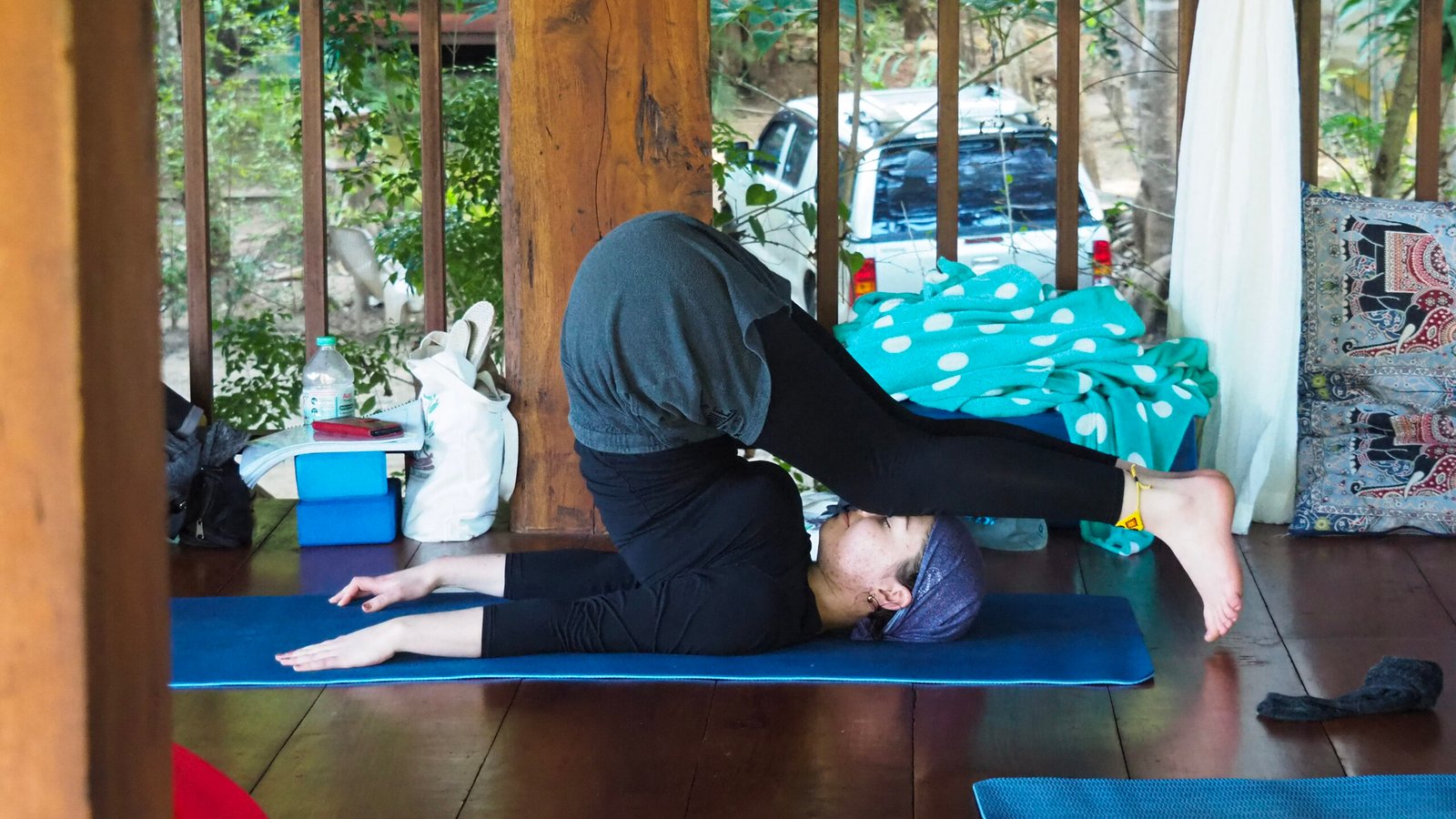
Halasana, also called Plow Pose, is a yoga position where the legs move over the head while the shoulders and upper back stay on the mat. The pose may look simple, but it needs preparation and care, especially around the neck.
Halasana is not a starting pose for everyone. If you are new to yoga or have not practised poses with your legs overhead, learn the setup with a qualified yoga teacher before trying the full pose. Do not force your feet toward the floor or put your body weight on your neck.
This guide explains Halasana, its possible benefits, how to prepare, how the pose is practised and what to keep in mind for safety.
What Is Halasana?
Halasana is commonly translated as Plow Pose. In the pose, you lie on your back and bring your legs overhead. Some practitioners place their feet on the floor behind their head, but you should not force them to reach the floor.
Your neck should stay still while you are in the pose. Depending on the way it is taught, your arms may rest on the mat or help support your back. Because the pose places the body in an unusual position, learn it with guidance from a qualified yoga teacher.
Possible Benefits of Halasana
People may experience Halasana differently. Practise it for comfortable movement and body awareness, not to treat a health condition.
It stretches the back of the body
The pose can create a stretching feeling through the back, shoulders and legs. How much you feel the stretch depends on your body. Do not pull your legs overhead to make it stronger.
It asks the body to work with control
Moving the legs overhead and staying steady asks you to use control through your trunk and shoulders. Move slowly instead of swinging your legs.
It encourages focus on breathing
Halasana asks you to notice your position and breathing. Some practitioners find that focusing on a steady breath helps them feel calmer. People can have different experiences, so this should not be treated as a guaranteed effect.
Traditional views about digestion and metabolism
Some yoga teachers describe Halasana as a pose that may support digestion. The folded position puts gentle pressure on the abdomen, and some practitioners say they feel more comfortable after practising it.
Some yoga teachers also connect Halasana with metabolism, which is how the body uses energy. These are traditional views and practitioner experiences. They do not mean that the pose treats constipation, digestive illness or other health conditions.
Traditional views about the thyroid area
Some yoga traditions connect Halasana with the thyroid area because the chin moves toward the chest in the pose. Practitioners may feel pressure around the throat. That feeling does not show that the pose has changed thyroid function or treated a thyroid condition.
These views and experiences can be included when discussing Halasana. Make clear that people may experience the pose differently, and that it does not replace medical advice.
How to Prepare for Halasana
Warm up and take your time before attempting the full pose. Practise on a clear, non-slip surface. If you have never done Halasana, learn with a qualified yoga teacher who can guide you into and out of the pose.
Warm up gently
Begin with comfortable movements that help you notice how your back and shoulders feel. Gentle Cat-Cow movements and easy shoulder movements can prepare your body. A warm-up does not mean the full pose is right for everyone.
Try simpler positions first
A teacher may ask you to lie on your back and raise your legs partway before attempting Halasana. This lets you practise control without taking your legs over your head. Follow your teacher’s guidance and stay at a stage where you can breathe normally.
Use support only with guidance
Some teachers place a folded blanket under the shoulders, with the head resting on the mat. Use this support only as your teacher shows you. Do not place cushions under your neck or use a support to push your legs farther overhead.
For another posture guide, see our step-by-step article on Cobra Pose. It covers a different kind of backbend and is not a substitute for preparing specifically for Halasana.
How to Practise Halasana Step by Step
Learn the full pose with a qualified yoga teacher, especially if you are new to poses with your legs overhead. This is a common way the pose is taught, but your teacher may guide you differently.
1. Lie on your back
Lie on a yoga mat with your arms alongside your body. Keep your head facing upward and your neck still.
2. Set up your shoulders
If your teacher has recommended a folded blanket under your shoulders, place it as instructed. Keep your head on the mat and avoid putting direct pressure on your neck.
3. Raise your legs with control
Lift your legs only as far as you can without swinging or straining. Continue only if your teacher has shown you how to move your hips and legs overhead safely.
4. Move into the pose slowly
If your teacher guides you to continue, bring your legs overhead gradually. Do not use momentum, pull on your back or force your feet to touch the floor. Keep your head facing upward. Do not turn it to either side.
5. Stay only while comfortable
Breathe normally and stay only as long as you can remain in control. Come out if you feel neck pressure, pain, numbness, tingling, dizziness or difficulty breathing.
6. Come out slowly
Follow the way your teacher has shown you to return to the mat. Do not drop your legs quickly. Once you are lying down, rest in a comfortable position and let your breathing settle.
Seven Common Mistakes to Avoid
1. Trying the full pose without learning it first
Halasana places the body in an unusual position and needs careful control. Learn the setup with a qualified teacher before trying it on your own.
2. Forcing the feet to the floor
Your feet do not have to touch the floor behind your head. Do not push them down to make the pose look deeper.
3. Putting body weight on the neck
The neck should not carry your body weight. If you feel pressure there, come out of the pose and ask a teacher to check your setup.
4. Turning your head in the pose
Keep your head facing upward and still. Do not look around while your legs are overhead.
5. Swinging your legs overhead
Swinging makes the movement harder to control. Move gradually and stop if you cannot lift or lower your legs steadily.
6. Holding your breath
Keep breathing comfortably. If your breathing becomes difficult, come out of the pose.
7. Staying in the pose through pain
Do not ignore pain, tingling, numbness, dizziness or pressure in your neck. Come out and get guidance before trying again.
Easier Ways to Practise
You do not have to do the full Halasana. If you are not ready, practise a simpler position recommended by your yoga teacher. You may stop before your legs move overhead.
Do not bend your knees or place cushions under your feet as a way to force yourself deeper into the pose. Ask your teacher which adjustment is right for you. If any version feels uncomfortable, leave it out of your practice.
Safety and When to Ask for Guidance
Yoga can cause strains and other injuries, especially when a pose is forced or practised without suitable guidance. People with an existing injury, neck or lower-back condition, severe high blood pressure, balance concerns or glaucoma may need to change or avoid some yoga poses. Pregnant people, older adults and people with a health condition should discuss their needs with a healthcare provider and a qualified yoga teacher. Read NCCIH’s guidance on yoga safety.
Ask for individual guidance before practising Halasana if you have concerns about your neck, spine, blood pressure, eyes or balance. Stop if you feel pain, tingling, numbness, dizziness or pressure in your neck. Do not use yoga instead of medical care.
Adding Halasana to Your Yoga Practice
Halasana should be practised only when your body is prepared and you can move into and out of it with control. You do not need to include it in every yoga routine.
After coming out, rest on your back in a comfortable position. Let your breathing return to normal before moving on. Ask your teacher what to practise next instead of rushing into another strong pose.
For another yoga posture guide, read our article on Fish Pose. It explores a different pose involving the chest and shoulders.
Frequently Asked Questions
Is Halasana suitable for beginners?
The full Plow Pose needs careful setup and control. If you are new to yoga, learn with a qualified teacher and do not try the full pose on your own.
Do my feet have to touch the floor?
No. Do not force your feet to the floor behind your head. Practise only the position your teacher has shown you.
Should I turn my head during Halasana?
No. Keep your head facing upward and still while you are in the pose. Come out before changing your position.
Can Halasana help digestion or metabolism?
Some yoga teachers connect Halasana with digestion and metabolism, and some practitioners describe personal benefits. These experiences are not guaranteed, and the pose should not be used to treat a health condition.
Can Halasana improve thyroid function?
Some yoga traditions connect the pose with the thyroid area. Feeling pressure around the throat does not show that thyroid function has changed. Do not use Halasana to treat a thyroid condition.
How long should I hold Halasana?
There is no single holding time for everyone. Follow your teacher’s advice and come out if you feel strain or cannot breathe comfortably.
Practise with Care
Halasana may be part of a yoga practice for people who have learned the setup and can move with control. Do not force your legs overhead or try to hold the pose for as long as possible. Practise with a qualified teacher, keep your neck still and choose a position that feels comfortable.
Yoga Samaadhi Upcoming Events Sustainability Activity | Outreach Program | Yoga Teacher Training (Chiang Mai, Thailand)

Read Our Blog
Read our articles on different topics of yoga, sustainability and community updates…
More Details
Yoga TTC in Thailand
Learn about yoga teacher training and how it guides you to a harmonious lifestyle…
More Details
Community Outreach Programs
Find out more about hill tribes, their ways of life and how we can take part in their progress…
More Details
Sustainability Activity
Find spirituality in sustainability, living in harmony with nature and adopting mindfulness…
More Details