
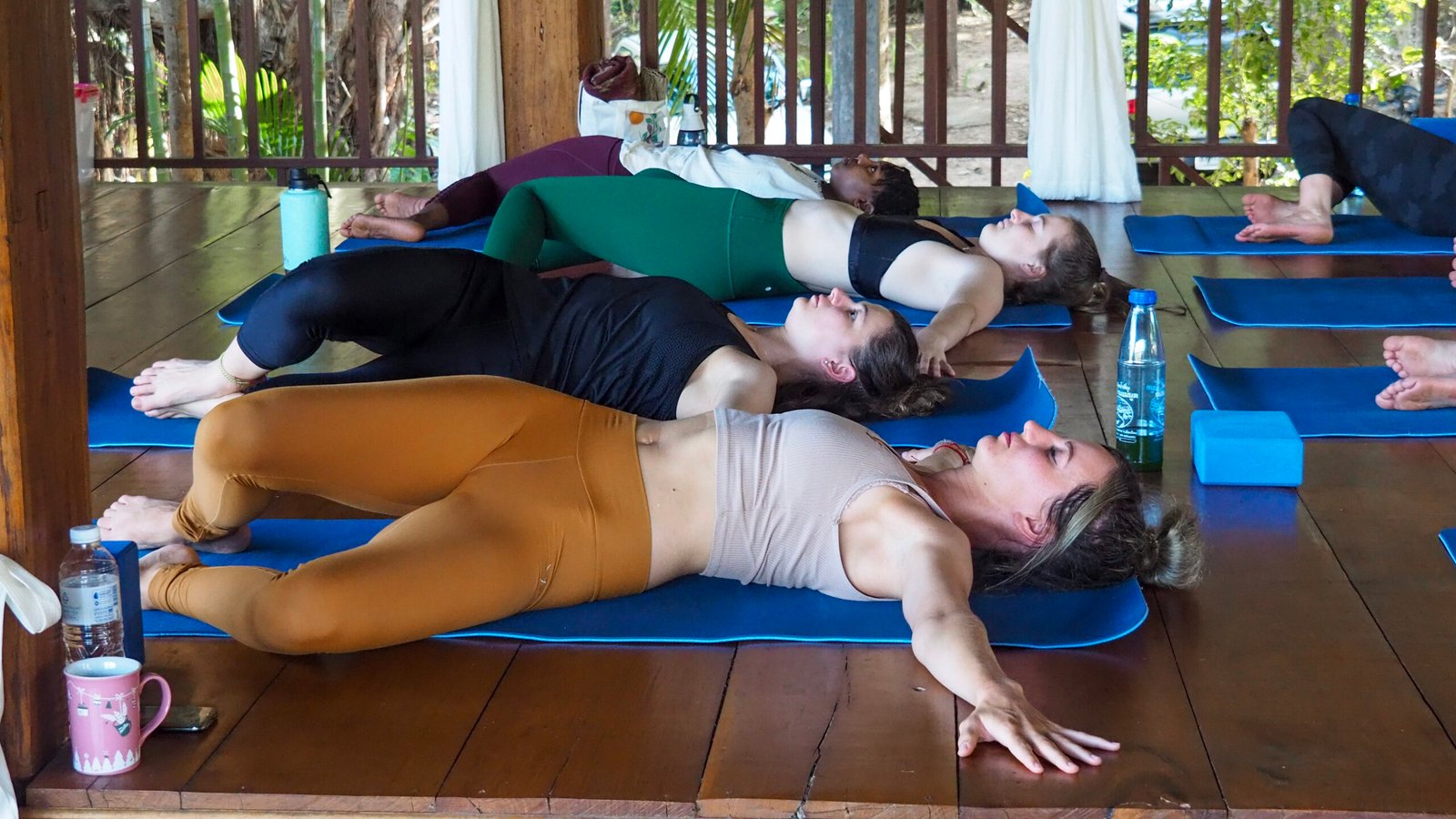
A demanding day can leave your body tense and your mind full of unfinished thoughts. A short, gentle yoga practice may give you a chance to pause, move with awareness and make space for a calmer moment.
Yoga is not a guaranteed way to remove stress, and it is not a substitute for professional support when stress is affecting your health or daily life. But some people find that mindful movement, comfortable breathing and a few quiet minutes help them feel more settled.
You do not need a long session or advanced poses to begin. This guide explains three poses from our original article, offers a simple routine and shares practical ways to build a daily yoga habit at your own pace.
How Yoga May Support Stress Management
Yoga brings together physical movement, attention to the breath and, in some practices, meditation. These elements can help you pause and notice what is happening in your body and mind. Some people use yoga as one part of a broader approach to managing everyday stress.
The experience varies. A pose that feels calming for one person may feel uncomfortable or frustrating for someone else. Keep the practice gentle and choose movements that suit your body.
Movement and yoga poses
Yoga postures, or asanas, involve moving into and out of different positions. A comfortable sequence can invite you to notice areas where you are holding tension and move with more awareness. You do not need to achieve a particular shape or stretch deeply.
Breath awareness
Pranayama refers to yogic breathing practices. For a simple start, notice your natural breath without changing it. If you want to explore a specific method, read our guide to the power of pranayama in yoga.
Meditation and attention
Some yoga practices include quiet reflection or meditation. You might focus on the feeling of your feet on the floor, the movement of your breath or the support of the mat. If focusing on the breath makes you feel tense, choose another point of attention or end the practice.
3 Gentle Yoga Poses to Try
Move slowly and stay within a comfortable range. You can use a folded blanket, cushion or yoga block for support. Stop if you feel sharp pain, dizziness, numbness or unusual discomfort.
1. Downward-Facing Dog
Downward-Facing Dog is a familiar yoga pose that creates a long shape through the arms, back and legs. It can feel strong, so bend your knees and focus on keeping the position comfortable rather than trying to make your heels touch the floor.
How to practise:
- Begin on your hands and knees. Place your hands about shoulder-width apart and your knees under your hips.
- Spread your fingers and press gently through your palms.
- Tuck your toes and slowly lift your hips up and back.
- Bend your knees as much as you need. Keep your spine long and let your head rest between your upper arms.
- Breathe naturally for a few comfortable breaths.
- Lower your knees back to the mat to come out of the pose.
If your wrists feel uncomfortable, try Puppy Pose or rest your forearms on a stable surface. Skip the pose if it causes pain or does not feel appropriate for your body.
2. Puppy Pose
Puppy Pose is a gentle shoulder and upper-back stretch for many people. It is sometimes called Uttana Shishosana. Use a cushion under your chest or forehead if lowering toward the floor feels uncomfortable.
How to practise:
- Start on your hands and knees, with your hips above your knees.
- Walk your hands forward a little at a time while keeping your hips over your knees.
- Let your chest move toward the mat only as far as feels comfortable.
- Rest your forehead on the mat, a block or a folded blanket.
- Keep your arms relaxed and breathe normally.
- To leave the pose, walk your hands back toward your knees.
Avoid pressing your chest down or forcing your shoulders toward the floor. If you have a shoulder, wrist or neck problem, ask a qualified teacher or healthcare professional about an appropriate alternative.
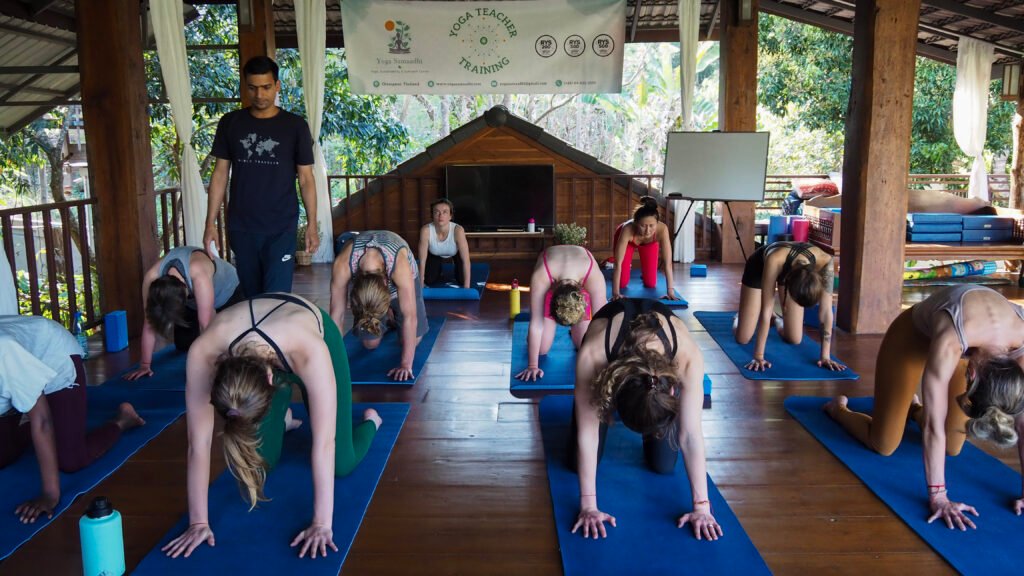
3. Child’s Pose
Child’s Pose is a resting position that can be adjusted in several ways. Widen your knees, add support and change your arm position until you find a version that feels easy.
How to practise:
- Kneel on your mat. Bring your big toes together and separate your knees to a comfortable width.
- Slowly move your hips back toward your heels. Place a cushion between your hips and heels if you need support.
- Rest your chest over your thighs or on a bolster or stacked pillows.
- Place your forehead on the mat or on a cushion.
- Let your arms rest beside your body or reach them forward without straining.
- Stay for a few comfortable breaths, then use your hands to return to a seated position.
If kneeling bothers your knees or ankles, skip the pose. You can sit on a chair and lean your forearms on a cushion placed on your lap instead.
A Simple Daily Yoga Routine for Stress
This short sequence uses the three poses above. There is no required duration. Give each movement enough time to feel comfortable, and leave out any pose that does not suit you.
- Arrive: Sit or stand comfortably. Notice how your body feels without judging it.
- Move into Downward-Facing Dog: Take a few natural breaths. Bend your knees and return to the mat when ready.
- Rest in Puppy Pose: Move gently into the pose and use a cushion if you want support.
- Choose Child’s Pose or a seated rest: Stay for a few comfortable breaths, or choose the chair variation.
- Finish: Sit quietly for a moment. Let your breathing return to its natural rhythm before moving on with your day.
If you are a beginner, you can start with just one pose. A routine should feel manageable, not like another obligation.
How to Build a Yoga Habit That Lasts
A daily routine does not have to mean a full yoga class every day. A few minutes of comfortable movement may be easier to maintain than a long session that is difficult to fit into your schedule.
- Choose a realistic time. Practise in the morning, during a break or in the evening, depending on when it fits your day.
- Start small. Try one pose or a brief routine before increasing the time.
- Prepare your space. You only need enough room to move safely. A mat is helpful but not essential.
- Keep props nearby. A cushion, folded blanket or sturdy chair can make some positions more comfortable.
- Use a simple reminder. Connect yoga with something you already do, such as taking a break after work.
- Adjust your plan. On a tiring day, rest or practise less. A routine should respond to your needs.
- Avoid comparing your practice. Your body and energy can feel different from day to day.
Consistency can help make yoga part of your routine, but you do not need to practise every day to benefit from movement. Choose a schedule that feels realistic for you.
Common Mistakes to Avoid
- Trying to stretch as far as possible: A pose should not require you to force your joints or hold your breath.
- Treating one routine as a cure: Yoga may support wellbeing, but it cannot resolve every source of stress.
- Holding your breath: Keep breathing naturally. If you cannot breathe comfortably, ease out of the pose.
- Pushing through pain: Stop or modify the movement when you feel sharp or unusual discomfort.
- Expecting the same response each day: Your experience may change depending on your energy, mood and circumstances.
- Making the routine too demanding: Begin with a small practice that fits your current ability.
When to Seek Extra Support
Everyday stress is common, but you do not have to manage everything alone. Consider talking with a healthcare professional if stress is difficult to cope with, continues for a long time or affects your sleep, work, relationships or daily activities.
Yoga can be one supportive habit, alongside other forms of care and support. If a practice makes you feel more distressed, stop and choose another approach. You can also read more about the connection between yoga and mental health.
Frequently Asked Questions
Can daily yoga help with stress?
Some people find that yoga gives them time to move, pause and focus their attention. Research suggests possible benefits for perceived stress, but results vary. Yoga is not a guaranteed treatment.
How long should I practise yoga for stress?
There is no single duration that works for everyone. Start with one comfortable pose or a short routine. Add time only if it feels useful and manageable.
Which yoga pose is best for stress?
There is no one best pose for everyone. Downward-Facing Dog, Puppy Pose and Child’s Pose are three options from this guide. Choose the one that feels comfortable, or use a supported variation.
Is yoga enough to manage ongoing stress?
Not always. Yoga may be one part of a wider approach, but ongoing or overwhelming stress may need support from a qualified health professional.
What if breathing exercises make me uncomfortable?
Stop focusing on your breath and return to natural breathing. You can place your attention on the floor beneath you, your hands or another comfortable sensation. If discomfort continues, end the practice.
Conclusion
A daily yoga routine can be a simple way to make room for mindful movement during a busy day. Downward-Facing Dog, Puppy Pose and Child’s Pose can all be adapted with support, but you do not need to practise all three or hold any pose for a fixed time.
Start with movements that feel comfortable, keep your routine realistic and change it when your needs change. If stress becomes difficult to manage, seek support beyond yoga as well.
Yoga Samaadhi Upcoming Events Sustainability Activity | Outreach Program | Yoga Teacher Training (Chiang Mai, Thailand)

Read Our Blog
Read our articles on different topics of yoga, sustainability and community updates…
More Details
Yoga TTC in Thailand
Learn about yoga teacher training and how it guides you to a harmonious lifestyle…
More Details
Community Outreach Programs
Find out more about hill tribes, their ways of life and how we can take part in their progress…
More Details
Sustainability Activity
Find spirituality in sustainability, living in harmony with nature and adopting mindfulness…
More Details